Squat depth is crucial for home lifting safety as it directly impacts muscle engagement and the risk of injury. Proper squat depth ensures that you effectively engage key muscle groups, such as your glutes and quadriceps, while also maintaining core stability. This proper alignment plays a significant role in preventing knee strain and lower back problems. Begin with a comfortable squat depth and gradually increase it as you build strength. By emphasizing correct form and steering clear of common mistakes, you can enhance your workouts and prioritize your safety. Explore more tips to optimize your squat technique and elevate your home fitness routine!
Key Takeaways
- Achieving proper squat depth is crucial for maximizing muscle engagement, making your home workouts more effective and safer for both men and women.
- Keeping your knees aligned over your toes during squats is essential to minimize injury risks and ensure that you maintain proper form while exercising at home.
- Core stability plays a vital role in maintaining spinal alignment, helping to reduce the risk of lower back strain during your squats.
- Progressing gradually in squat depth allows everyone, regardless of their individual flexibility and strength levels, to safely develop muscle and improve their home lifting routines.
- Regularly monitoring your squat depth can help you spot technique errors, thereby reducing the risk of injuries that may arise from improper form during your home workouts.
Understanding Squat Depth and Its Importance
Understanding squat depth is crucial for anyone serious about their home workout routine, as it not only affects performance but also plays a key role in preventing injuries.
Proper depth is generally defined by fitness organizations, requiring your hips to be below your knees to ensure a full range of motion that effectively engages your glutes and hamstrings.
Proper squat depth means your hips should be below your knees to fully engage your glutes and hamstrings.
However, individual anatomical differences mean ideal squat depth can vary from person to person.
While working out at home, it’s important to be mindful of your depth; excessive depth could lead to knee strain and lower back issues.
Developing an internal awareness of your squat depth—perhaps by using markers in your home gym or recording your form—can help ensure safe and effective lifting, allowing you to stay healthy and fit right at home.
Biomechanics of Squatting
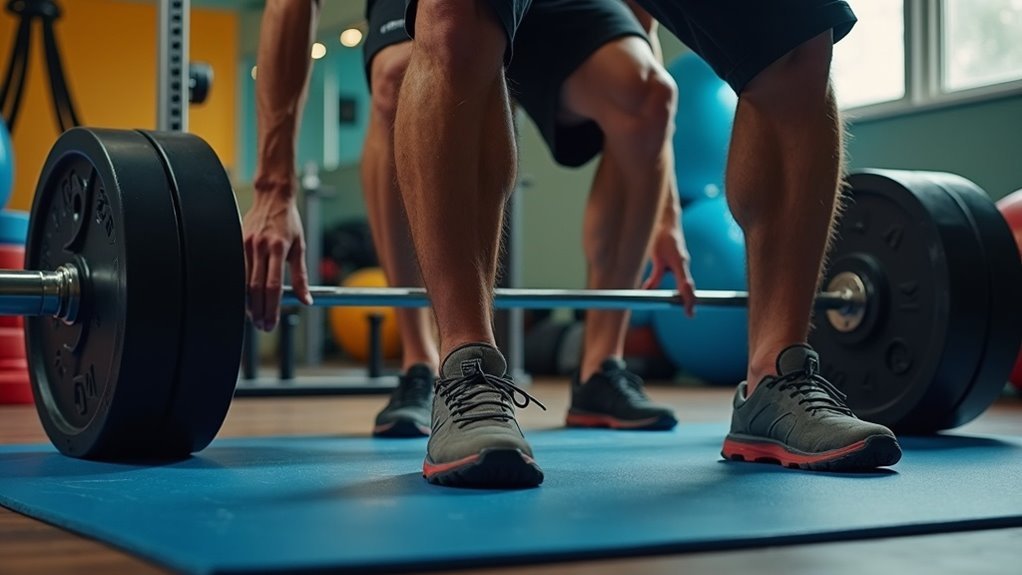
Proper squat depth is crucial for maximizing the effectiveness of your home workouts, as it influences the biomechanics of squatting—a fundamental exercise for building strength and stability. Engaging your gluteal and quadriceps muscles effectively requires a full range of motion, which can be easily achieved with the right home gym equipment.
The posterior chain, including the hamstrings and calves, also plays a supportive role in this exercise.
During the eccentric phase of the squat, your muscles lengthen to control the descent, while they shorten in the concentric phase as you rise back up. Maintaining a neutral spine and aligned knees is essential to prevent injury and enhance force production, especially when exercising at home where proper form might be more challenging without supervision.
Understanding these mechanics allows you to tailor your technique and choose the right equipment, optimizing your performance and minimizing injury risks during your home workouts.
Whether you’re using resistance bands, dumbbells, or a squat rack, focusing on proper squat form will lead to better results and a healthier lifestyle.
Individual Factors Affecting Squat Depth
When it comes to squat depth at home, understanding your unique anatomy and biomechanics is essential for safe and effective workouts.
Individual factors such as flexibility in your hips and ankles, as well as your body weight and muscle distribution, significantly influence how low you can squat without risking injury.
Anatomy and Biomechanics
The unique anatomy and biomechanics of each individual play a crucial role in determining how deep you can safely squat, especially when using home gym equipment. Factors like femur length and hip structure affect your balance while exercising at home, ensuring you maintain stability during workouts. Your Q angle also influences knee alignment, which is vital for preventing injuries. A strong core is essential for maintaining proper spinal alignment, particularly when performing deeper squats. Additionally, your muscle activation patterns dictate your ability to achieve a full range of motion, allowing for effective and safe workouts.
| Individual Factor | Impact on Squat Depth |
|---|---|
| Femur Length | Affects balance and stability |
| Q Angle | Impacts knee alignment |
| Core Strength | Maintains proper form |
| Hip Flexibility | Enables safe depth |
| Muscle Activation | Determines safe depth limit |
Understanding these factors can help you optimize your home workouts and choose the right equipment to support your fitness journey.
Flexibility and Mobility
To achieve ideal squat depth at home, flexibility and mobility are essential, as they directly influence your ability to perform the movement safely and effectively.
Limited hip or ankle flexibility can restrict your capacity to reach full range of motion without compromising form, especially when using home gym equipment. Personal anatomy also plays a role; for instance, femur length and pelvic structure can affect how low you can squat safely.
Incorporating regular mobility and flexibility training into your home workout routine can enhance your ability to squat deeper while minimizing the risk of injury.
Always listen to your body and adjust your squat depth according to your unique limitations to ensure maximum safety and performance during your home workouts.
Common Mistakes and Technique Pitfalls
When you perform squats at home, it’s crucial to maintain proper knee alignment to avoid serious injuries, particularly if your knees tend to collapse inward.
Additionally, ensuring core stability is vital; without it, you may lose balance and put unnecessary strain on your lower back.
Knee Alignment Issues
Proper knee alignment is crucial for safe squatting, especially when using home gym equipment, as misalignment can lead to significant injuries over time.
To achieve the correct depth in your deep squat at home, be mindful of these common mistakes:
- Valgus collapse: knees caving inward due to weak lateral hip muscles, which can be addressed with targeted home exercises.
- Anterior translation: knees shifting excessively forward, risking lower back issues; ensure proper form by adjusting your stance.
- Improper weight distribution: leading to misaligned knee positioning; focus on even weight distribution across your feet.
- Lack of core engagement: making it harder to maintain stability during your squat; incorporate core-strengthening workouts into your routine.
- Neglecting feedback: failing to use mirrors or record yourself to assess form; utilize any available reflective surfaces to monitor your technique.
Prioritizing knee alignment in your home workouts will enhance not only your safety but also your overall squat performance, making your fitness journey more effective and enjoyable.
Core Stability Challenges
Knee alignment isn’t the only factor affecting the safety and effectiveness of your home workouts; core stability plays a crucial role as well. A weak core can compromise your form and heighten the risk of injury, especially to the lower back.
To ensure a full range of motion during your at-home squats, engage your core muscles throughout the movement. Be mindful of common pitfalls like valgus collapse, where your knees bend inward, or anterior translation, where your knees move too far forward.
Utilize mirrors or video recordings to assess your technique regularly, ensuring that you maintain proper alignment and stability for safer, more effective lifts in your home gym.
Safety Considerations for Home Lifters
While you may feel tempted to push your limits at home, ensuring safety is crucial for effective lifting.
Whether you’re a man or woman, keeping these considerations in mind will help you achieve your fitness goals safely:
- Maintain proper squat depth to achieve a full range of motion.
- Assess your unique anatomy and flexibility to determine your ideal squat depth.
- Utilize mirrors or record your workouts to monitor your form and technique.
- Gradually increase your squat depth as your strength improves to prevent injury.
- Focus on engaging major muscle groups to minimize your risk of injury during workouts.
Recommendations for Optimal Squat Depth
Finding the right squat depth can greatly enhance your home lifting workouts. Aim for at least parallel, where your thighs are parallel to the ground, to effectively engage your glutes and hamstrings while ensuring safety.
Consider your individual flexibility and strength; factors like hip mobility and core stability play an essential role in maintaining proper form. Squatting to about 90 degrees of knee bend activates your quadriceps while minimizing strain on your knees and back.
Focus on keeping a neutral spine and aligning your knees over your toes for optimal performance. Gradually deepen your squats as your strength improves, ensuring a full range of motion.