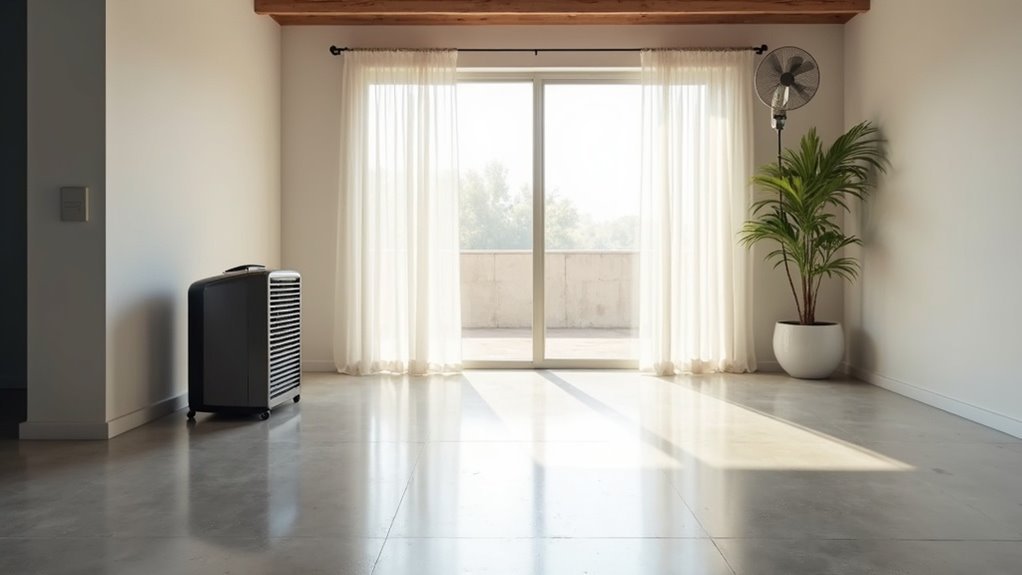
To create a comfortable home gym environment, it’s essential to manage humidity levels effectively. Implementing ventilation setups like exhaust fans and Energy Recovery Ventilators (ERVs) can significantly enhance air circulation by removing stale air and bringing in fresh outdoor air. Additionally, using dehumidifiers helps maintain humidity levels between 30-50%, which is crucial for an optimal workout space. Strategically placed fans can further improve air movement and comfort while exercising. Regular maintenance of these systems ensures they operate efficiently, contributing to a healthier home gym atmosphere. Explore more about effective moisture management solutions to elevate your home workout experience.
Key Takeaways
- Install exhaust fans in your home gym to effectively remove stale air and introduce fresh air, enhancing overall air circulation during workouts.
- Utilize Energy Recovery Ventilators (ERVs) to efficiently exchange indoor and outdoor air while minimizing energy loss, keeping your workout space comfortable.
- Incorporate dehumidifiers to maintain humidity levels between 30-50%, especially in larger home gym areas or spaces prone to moisture build-up.
- Ensure natural ventilation by opening windows on dry days to promote fresh air circulation and enhance your exercise environment.
- Regularly maintain ventilation systems, including filter cleaning and inspections, to ensure optimal performance and a healthy atmosphere for your home gym.
Understanding Basement Ventilation Needs
Understanding the ventilation needs of your home gym is crucial, especially since workout spaces can often generate high humidity due to intense physical activity.
Proper ventilation systems are vital for effective moisture control, as they help maintain ideal humidity levels for a comfortable workout environment. Implementing exhaust fans and Energy Recovery Ventilators can help expel stale air and introduce drier outdoor air, enhancing air circulation and keeping you energized.
Regularly monitoring humidity with a hygrometer ensures you maintain levels between 30-50%, preventing discomfort and promoting a healthier workout space.
Effective Ventilation Strategies
To maintain a healthy home gym environment, implementing effective ventilation strategies is crucial.
Installing exhaust fans helps to remove stale, humid air while drawing in fresh air, promoting better air circulation and reducing moisture levels, which can be detrimental to both equipment and performance.
Installing exhaust fans effectively enhances air circulation, reducing humidity and protecting both your equipment and performance.
Utilizing Fresh Air Ventilators (FAVs) enhances indoor air quality by continuously exchanging stale air with fresh outdoor air, mitigating humidity issues that can affect your workout experience.
Consider Energy Recovery Ventilators (ERVs) for their ability to balance heat and humidity year-round, ensuring that your workout space remains comfortable regardless of the season.
Incorporating strategically placed box fans enhances air movement, mixing stagnant air with drier air, which can help you stay cool during intense sessions.
Don’t forget regular maintenance of your ventilation systems to guarantee effective humidity control and maximum performance, allowing you to focus on your fitness goals.
The Role of Dehumidifiers in Humidity Control
While effective ventilation strategies greatly improve air quality, they often need the support of dehumidifiers for optimal humidity control in home gyms.
Dehumidifiers efficiently remove excess moisture, helping maintain humidity levels between 30-50%, which is crucial for a comfortable and healthy workout environment. For larger home gyms or severe humidity issues, choose a model with a higher capacity to ensure your space remains conducive to exercise.
Energy Star-rated units enhance efficiency, reducing energy costs while you focus on your fitness goals. Ideally, dehumidifiers should drain to a permanent floor drain for continuous moisture removal, ensuring your gym stays dry and fresh.
Regular maintenance, including cleaning and replacing filters, is essential for peak performance, allowing you to concentrate on your workouts without distraction.
Combining dehumidifiers with proper ventilation systems promotes air circulation, effectively reducing humidity and preventing moisture buildup, creating an ideal space for your home fitness routine.
Enhancing Air Circulation Techniques
To enhance air circulation in your home gym, start by strategically placing fans to optimize airflow during your workouts.
Utilize natural ventilation by opening windows on dry days, allowing fresh air to replace stale air.
Additionally, consider incorporating air filtration systems to improve air quality, ensuring a healthier environment while you exercise.
Keeping the air fresh and circulating will help you stay focused and energized during your home workouts.
Effective Fan Placement
Effective fan placement is crucial for optimizing airflow in home gym spaces, especially during intense workouts that can lead to increased humidity and heat.
Position box fans near windows or doorways to create cross-ventilation, allowing fresh air to circulate while pushing out warm, stale air.
Install exhaust fans in areas prone to heat buildup, like near cardio machines, to actively remove hot air, enhancing your workout environment.
Utilize ceiling fans to promote even airflow, preventing stagnant air pockets that can make exercising uncomfortable.
Consider using multiple small fans for localized air movement, which can help increase cooling and improve your overall workout experience.
Regularly adjust fan positions and ensure they remain unobstructed to maximize their effectiveness in maintaining a comfortable and motivating atmosphere for your home gym.
Utilizing Natural Ventilation
Utilizing natural ventilation can significantly enhance the comfort of your home gym, especially when conditions are favorable. By strategically opening windows and vented doors, you can promote cross-ventilation, which helps regulate humidity levels and create a more pleasant workout environment.
Installing air vents can improve airflow, allowing moist air to escape while inviting in fresher, drier air. Positioning fans within your gym area can effectively mix humid air with drier air, reducing humidity and preventing stagnation.
Additionally, using exhaust fans in areas prone to moisture, such as near laundry facilities, can actively remove humid air, thus improving overall air quality. Keeping windows unobstructed and utilizing window fans on dry days can maximize airflow, greatly enhancing your home workout experience by lowering indoor humidity levels.
Air Filtration Systems
Maintaining a healthy home gym environment is essential for your workout routine, and while natural ventilation plays a role, integrating air filtration systems can significantly enhance your space.
Air filtration systems, such as HEPA filters, effectively capture airborne particles, improving air quality and creating a more comfortable workout atmosphere. By combining these systems with dehumidifiers, you can optimize moisture removal, allowing your dehumidifiers to work more efficiently and maintain ideal humidity levels for your exercise area.
Additionally, using energy recovery ventilators (ERVs) alongside filtration systems helps balance indoor humidity by exchanging stale air with fresh outdoor air while minimizing energy loss.
Regular maintenance of filters is crucial for sustaining airflow and ensuring a clean environment free from humidity-promoting contaminants, allowing you to focus on your fitness goals.
Importance of Regular Maintenance for Ventilation Systems
While it might be easy to overlook, regular maintenance of your home gym equipment is essential for maintaining an effective and safe workout environment.
Cleaning and replacing filters in air purifiers or ventilation systems ensures optimal air flow, enhancing your overall exercise experience. You should regularly inspect and clear any obstructions from exhaust fans and air vents to maintain their functionality and prevent stagnant air, which can affect your performance.
Regularly cleaning and replacing air filters enhances airflow, prevents stagnant air, and optimizes your workout performance.
Monitoring and adjusting your equipment settings can improve moisture control, allowing for timely responses to changing humidity levels in your workout space.
Scheduling professional assessments at least once a year helps identify potential issues, guaranteeing efficient operation and extending the lifespan of your gym equipment for effective long-term fitness management in your home gym.
Long-Term Solutions for Moisture Management
To create a comfortable and effective home gym environment, it’s crucial to manage moisture levels, especially in areas like basements.
Start by sealing any cracks and gaps in the foundation to prevent water intrusion, which can lead to mold and mildew.
Additionally, ensure that drainage systems, such as gutters and downspouts, are functioning properly to direct water away from your home.
These long-term solutions are vital for maintaining a dry and healthy workout space, allowing you to focus on your fitness goals without distractions.
Sealing Foundation Cracks
Maintaining a home gym requires a focus on creating a healthy environment for workouts, much like ensuring a dry basement is vital for preventing moisture issues. Just as sealing foundation cracks can prevent water intrusion, investing in quality home gym equipment is essential for fostering an effective exercise routine. Utilizing durable materials in your home gym setup, such as sturdy flooring and reliable machines, can enhance your workout experience while ensuring safety.
Regular maintenance and inspection of your gym equipment is crucial for identifying wear and tear early, enabling timely repairs or replacements to keep your workouts efficient and enjoyable. A well-maintained home gym not only enhances your physical health but also contributes to a positive mindset, making it easier to stay motivated and consistent in your fitness journey.
| Equipment Type | Benefits |
|---|---|
| Weight Machines | Build strength and muscle effectively |
| Resistance Bands | Versatile and portable workout option |
| Regular Maintenance | Ensures safety and longevity of equipment |
Improving Drainage Systems
Creating a moisture-free basement environment goes beyond sealing foundation cracks; it involves improving drainage systems to manage water effectively, ensuring your home gym stays dry and healthy.
To reduce humidity and prevent flooding, consider installing French drains or drainage tiles around the foundation to redirect water away, providing a safe space for your workouts.
Regularly maintain gutters and downspouts to avoid clogs, ensuring rainwater flows away from your home gym area.
Landscape grading is vital—slope the terrain away from the foundation to divert surface runoff and protect your equipment.
Additionally, applying waterproof coatings on walls and floors can block moisture penetration, preserving your workout space.
Finally, installing a sump pump in flood-prone areas actively removes accumulated water, keeping your basement dry and comfortable for your fitness routine.