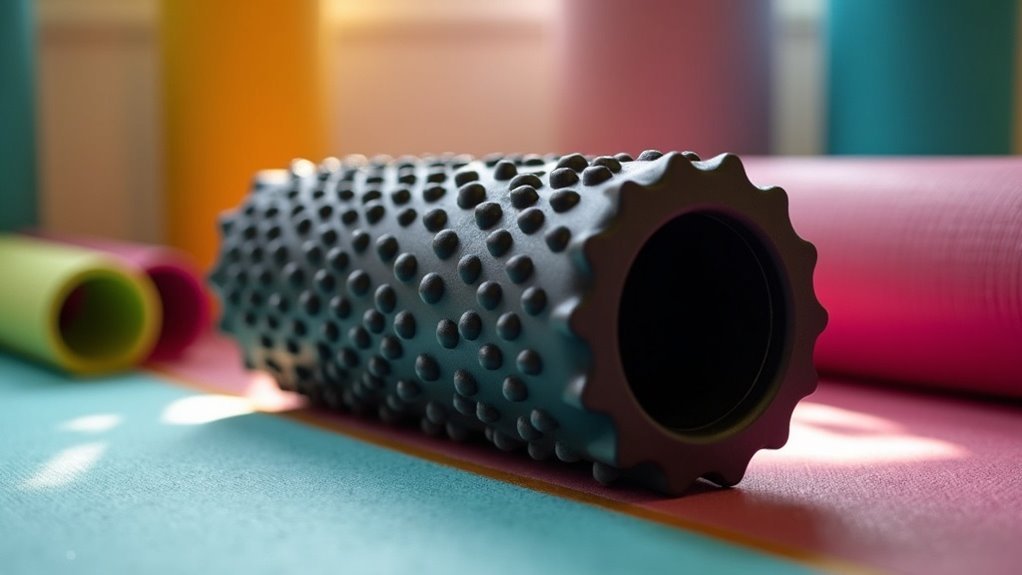
When choosing the right foam roller density for your home recovery routine, it’s essential to consider your muscle sensitivity and fitness experience. For beginners, soft rollers provide gentle relief, making them an excellent starting point. If you have moderate muscle tightness, a medium-density roller strikes a balance between comfort and effectiveness. For those with more experience in foam rolling, high-density rollers offer a deeper tissue massage that can effectively target tension and soreness. It’s important to regularly evaluate your recovery needs, as alternating between different densities can enhance your results. By understanding these key factors, you can optimize your foam rolling practice and improve your overall health and fitness journey at home. Discover more tips on selecting the best foam roller for your specific needs!
Key Takeaways
- Beginners looking to enhance their home workout recovery should start with soft foam rollers to comfortably ease into self-myofascial techniques and minimize discomfort.
- Medium-density rollers are perfect for those aiming to alleviate muscle tightness while enjoying a comfortable rolling experience, making them great for post-workout recovery at home.
- More experienced fitness enthusiasts seeking deep tissue relief can benefit from high-density rollers, which provide effective muscle tension release after intense home workouts.
- Regularly evaluate your recovery goals and muscle sensitivity to determine if a transition to a different roller density is necessary for your home gym routine.
- Always apply moderate pressure and avoid rolling over joints to ensure safety and reduce the risk of injury while using your foam roller at home.
Understanding Foam Roller Density
When selecting a foam roller for your home gym, understanding its density is crucial for optimizing your recovery and enhancing your workout routine.
Foam rollers come in a range of densities, from soft to firm. Soft rollers are perfect for beginners or those with sensitive muscles, providing gentle pressure to prevent discomfort while rolling out tight spots.
Medium-density rollers offer a balanced approach, delivering effective relief while remaining comfortable for most users, making them a versatile choice for anyone looking to improve their fitness at home.
Medium-density rollers provide effective relief and comfort, making them a versatile choice for enhancing your home fitness routine.
For those experienced in exercise and seeking a deep-tissue massage, a high-density roller is ideal, applying greater pressure to effectively relieve muscle tension and aid recovery.
Choosing the right density is essential for targeting specific muscle groups and improving your overall fitness experience in your home gym.
Benefits of Different Densities
Choosing the right foam roller density can significantly enhance your home workout recovery and overall fitness routine.
Soft foam rollers are ideal for beginners or those with sensitive muscles, providing a gentle, relaxing massage that can be easily incorporated into your home gym regimen.
Medium-density foam rollers strike a balance between comfort and effectiveness, making them perfect for relieving muscle tightness without causing excessive discomfort—great for both men and women looking to maintain their fitness at home.
On the other hand, firm foam rollers are designed for experienced users who require targeted massage for deep-tissue relief, effectively breaking up knots and adhesions after intense workouts.
Choosing the Right Density for Your Needs
How can you determine the right foam roller density for your home workout recovery needs? Consider these factors:
- Sensitivity: If you’re new to foam rolling or have sensitive muscles, start with a soft foam roller to avoid discomfort during your home exercise sessions.
- Balance: Medium-density rollers strike a good balance between comfort and effectiveness, making them ideal for relieving general muscle tightness after workouts.
- Intensity: For those who are more experienced with home workouts, firm rollers offer a deep-tissue massage, effectively targeting muscle knots and tension built from intense training.
Selecting the right density is crucial for effective recovery.
Be sure to assess your comfort levels and recovery goals to enhance your foam rolling experience and support your overall fitness journey.
Transitioning Between Foam Roller Densities
As you embark on your foam rolling journey at home, mastering the transition between roller densities can significantly enhance your recovery process and overall fitness.
Begin with soft rollers to familiarize yourself with self-myofascial techniques, which are essential for anyone working out at home. As your muscle tolerance improves, transition to medium-density rollers. This change strikes a perfect balance between comfort and effectiveness, reducing the risk of injuries while helping you achieve deeper muscle relief after your home workouts.
Regularly evaluate your recovery needs based on your workout intensity and muscle soreness. This will help you decide whether to stick with your current roller density or move to a firmer option.
For those more experienced in foam rolling, high-density rollers can be an excellent choice for providing a more intense deep-tissue massage, specifically targeting stubborn knots and trigger points that may arise from your home exercise routine.
Safety Considerations When Using Foam Rollers
What precautions should you take when using foam rollers to ensure a safe and effective experience at home?
Keeping safety considerations in mind is essential for everyone looking to enhance their home workout routine. Here are three key points to follow:
- Avoid joints: Steer clear of rolling directly over joints to minimize the risk of injury.
- Use moderate pressure: Apply just enough pressure to feel relief, especially with firmer rollers, to prevent bruising and discomfort.
- Monitor your body’s response: Be aware of any sharp pain or discomfort, and adjust your technique as needed to ensure you’re rolling safely and effectively.
If you’re uncertain about your technique or have pre-existing injuries, it’s a good idea to consult a fitness professional for guidance on using foam rollers safely, helping you make the most of your home gym experience.