To accurately assess squat depth at home, the camera angle is crucial. Positioning your camera at hip height and parallel to your thighs offers the clearest view of your form. A side angle is particularly effective, as it clearly shows the relationship between your hip crease and knee, making it easier to gauge depth. However, front angles can sometimes obscure important details. For the best results, consider using a 45-degree rear oblique angle. This setup provides precise evaluations, which can enhance your home workout experience. Stay tuned for more tips on improving your squat assessments and overall fitness at home!
Key Takeaways
- Positioning the camera at hip height provides a clear view of the hip crease, which is essential for accurately assessing squat depth when using home gym equipment.
- A side view angle is preferred for evaluating squat depth, as it clearly shows the relationship between the hips and knees, ensuring proper form while exercising at home.
- Filming from a 45-degree rear oblique angle enhances clarity and allows for an unobstructed view of the squat, making it easier to monitor technique.
- Avoid high tripod placements that can obscure visibility of the hip crease, as this may lead to incorrect depth judgments and hinder progress in your home workouts.
- Using colored markers can help indicate acceptable squat depth levels, improving visual clarity for assessments and promoting better exercise habits at home.
The Importance of Camera Angle in Squat Assessment
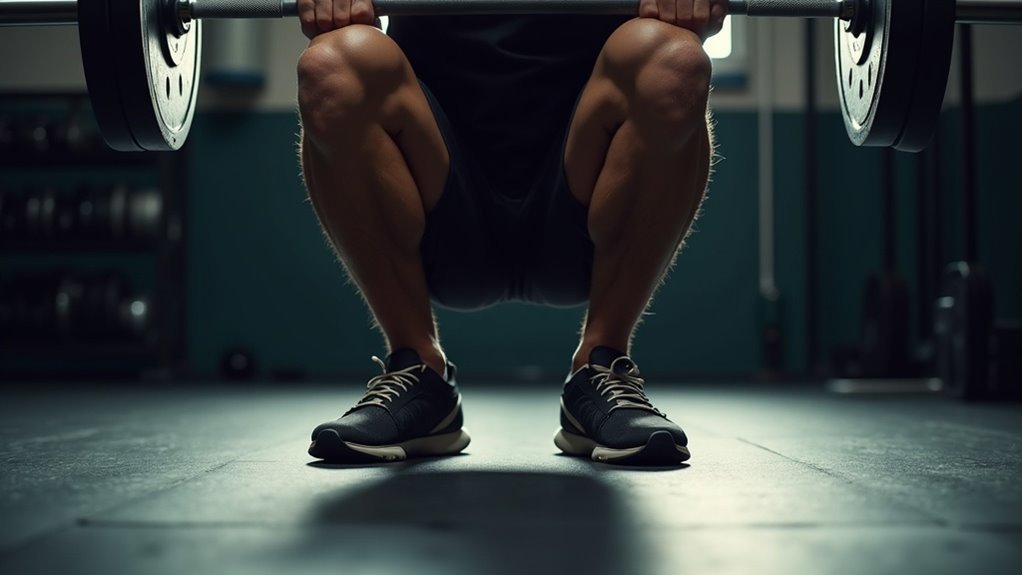
When evaluating squat depth at home, the camera angle is crucial for ensuring accurate assessments, especially when using home gym equipment. A camera positioned parallel to the thigh enhances your judgment of whether your squat meets the necessary depth standards.
It’s vital to clearly see the hip crease, as this helps you understand the hip joint’s position relative to the knee during your squat. Filming from hip height allows for precise depth determination, aligning with the standards you might find in a gym or competition setting.
Clearly observing the hip crease is crucial for assessing squat depth and ensuring proper form during your workout.
Misalignment in camera angle can lead to incorrect assessments, highlighting the importance of positioning that mimics a trainer’s perspective to facilitate accurate evaluations according to established fitness criteria.
This attention to detail can significantly contribute to your home workout effectiveness, helping you stay healthy and fit.
Experiment Setup for Evaluating Squat Depth
To accurately evaluate squat depth in the comfort of your home gym, it’s essential to set up your experiment meticulously to eliminate any variables that could skew your results.
Position two cameras 105 inches away from your workout area, ensuring the lens height is set at 27 inches for consistent viewing angles during both front and side evaluations.
Perform squats off boxes at heights of 12 ¾”, 13 ½”, 14 ½”, and 15 ¾” to establish defined depths.
Capture ten video clips, labeling each for clarity to enhance the visibility of your hip joint while making any necessary gear adjustments.
This thoughtful setup provides a solid framework for effectively analyzing perceived squat depth from both angles, ensuring you maximize your home workout results while maintaining proper form.
Analyzing Video Clips: Side vs. Front Perspectives
When it comes to assessing squat depth, both side and front perspectives can provide valuable insights, but the side view tends to offer a clearer assessment of the hip crease in relation to the knee.
In our analysis, you’ll see that the side angle allows for a precise evaluation of hip height, ensuring that the hip joint is distinctly positioned below the knee.
The side angle provides a clear view of hip height, confirming the hip joint is below the knee.
In contrast, the front view can create some ambiguity about whether the lifter is achieving the desired depth.
By using consistent camera positions, side clips make it much easier to judge depth accurately, which is essential for anyone looking to maximize their home workout routines and build strength effectively.
Understanding these perspectives can enhance your squat technique, helping you stay healthy and fit while exercising at home.
Feedback and Insights From the Experiment
While evaluating the feedback from our recent home gym experiment, it became evident that viewers found the side angle significantly more effective for assessing squat depth compared to the front perspective. This insight highlights the critical role that angle selection plays in home gym setups for both men and women. Many participants reported challenges with the front view, indicating it may obscure depth perception.
| Angle | Feedback |
|---|---|
| Side View | Easier to assess depth |
| Front View | Difficult to judge depth clearly |
These findings will inform future adjustments to enhance visual clarity for squat assessments, ultimately improving workout effectiveness and ensuring that everyone can achieve their fitness goals at home.
Practical Tips for Accurate Squat Depth Checks
When evaluating squat depth at home, positioning your camera correctly is crucial for accurate assessments. Set the camera at hip height and parallel to your thigh to ensure visibility of your hip crease relative to your knee.
A 45-degree rear oblique angle provides the best clarity on hip joint positioning and depth. Avoid high tripod placements, as they may obscure critical views of your hip crease in relation to your knee joint.
Mimicking a referee’s perspective during your workouts can enhance consistency in your depth assessments. Additionally, consider using colored markers—like a purple line—on the floor to indicate acceptable depth according to your personal fitness goals, ensuring precise evaluations as you work to stay healthy and fit at home.