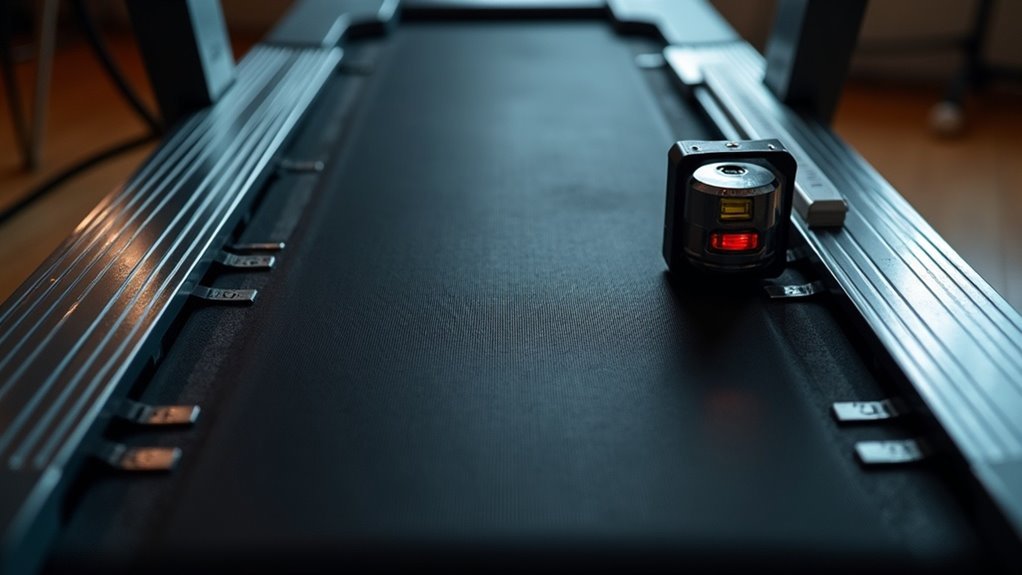
To ensure your treadmill belt is properly aligned for optimal performance in your home gym, it’s crucial to check that the belt remains centered on the running deck, with a consistent 1/4 inch gap on both sides. Watch for even wear patterns on the belt and listen for any unusual scraping noises during use. If you observe lateral movement or experience belt slippage, it’s a clear sign of misalignment. Additionally, a correctly aligned belt should lift approximately 3 to 4 inches when raised in the middle. Keeping these indicators in mind will help you maintain your treadmill in peak condition, ensuring effective workouts for both men and women at home. Dive deeper into this topic to enhance your home fitness experience!
Key Takeaways
- The treadmill belt should stay centered on the running deck, maintaining a consistent 1/4 inch gap on both sides to ensure safety and stability during workouts.
- There should be no lateral movement or drifting of the belt while in use, which is a clear sign of proper alignment for effective home exercise.
- Look for uniform wear on the belt without fraying, as this indicates that it is well-aligned and tensioned, providing a smooth running experience.
- Absence of scraping noises during operation suggests that the belt is properly aligned with the motor, allowing for a quieter workout environment.
- When slightly lifting the belt in the middle, it should raise about 3 to 4 inches, confirming that both tension and alignment are correct, ensuring optimal performance for your home gym.
Signs of Proper Treadmill Belt Alignment
How can you tell if your treadmill belt is properly aligned? First, ensure that the belt stays centered on the running deck, with approximately a 1/4 inch gap on both sides.
While in use, keep an eye out for any lateral movement; if the belt drifts to one side, this indicates misalignment. Look for signs of uneven wear, such as fraying, which may signal alignment issues that could affect your workout.
Additionally, listen for any scraping noises while the treadmill is running; these sounds often suggest misalignment.
Finally, when you lift the belt slightly in the middle, it should rise about 3 to 4 inches, confirming that it’s properly tensioned and aligned for a safe and effective exercise experience at home.
Importance of Even Wear Patterns
Even wear patterns on your treadmill belt are crucial for optimal performance and longevity, especially for those dedicated to maintaining a home gym and a healthy lifestyle.
Here’s why keeping your treadmill belt in top condition is essential:
- Uniform Fraying: A well-aligned belt ensures smooth operation, making your workouts safer and more enjoyable.
- Consistent Wear: Regular inspections can help you catch alignment issues early, preventing costly repairs and downtime.
- Reduced Friction: Proper alignment reduces friction, which not only extends the life of your treadmill belt but also enhances your workout experience.
- Safety: A misaligned belt can pose safety risks, increasing the chances of tripping or injury during your exercise routines.
Maintaining even wear patterns on your treadmill belt is key to achieving your fitness goals while ensuring a safe and effective workout environment at home.
Assessing Belt Centering During Operation
To ensure your treadmill operates at its best, it’s important to regularly check the centering of the belt during your workouts.
Start by visually inspecting the belt while the motor is running; it should remain aligned down the center of the running surface. Keep an eye out for even wear—if you notice excessive wear on one side, it may indicate misalignment.
Also, pay attention to any slipping sensations or unusual noises, such as scraping sounds, which could suggest that the belt isn’t properly centered.
By routinely monitoring these aspects, you can maintain optimal performance and prolong the lifespan of your treadmill.
Keeping the belt aligned is crucial for a safe and effective home workout experience, helping you stay healthy and active.
Evaluating Noise Levels and Slippage
While properly centering the treadmill belt is crucial for optimal performance, assessing noise levels and slippage provides additional insights into its alignment.
Here are four key indicators to keep an eye on:
- Noise Levels: Pay attention to any excessive scraping or grinding sounds, as these can often signal misalignment which may disrupt your workout experience.
- Belt Slipping: If you notice the belt slipping or skipping during your workout, it may be improperly tensioned or misaligned, affecting your exercise routine.
- Maintenance Checks: Regularly inspect for any foreign objects under the belt. Keeping your treadmill clear can help prevent unnecessary noise and slippage, ensuring a smoother workout.
- Smooth Operation: A treadmill that operates quietly and without interruptions is a sign of proper alignment and tensioning, allowing you to focus on your fitness goals without distractions.
Promptly addressing these issues not only enhances your treadmill’s performance but also contributes to its longevity, making your home gym experience more enjoyable.
Maintenance Tips for Optimal Alignment
Maintaining ideal alignment of your treadmill belt is crucial for ensuring both performance and safety during your home workouts.
Regularly check the belt for any signs of wear, such as fraying or uneven smoothness, which can be indicators of misalignment. Make sure there’s a consistent gap on both sides of the running deck to confirm proper alignment.
For precise control over the belt’s position and tension, perform routine adjustments to the rear roller bolts in small increments. After making any adjustments, test the treadmill at various speeds to ensure the belt remains centered and doesn’t slip.
Additionally, keep the treadmill frame level and free of debris to enhance alignment, allowing you to maximize your home exercise experience.