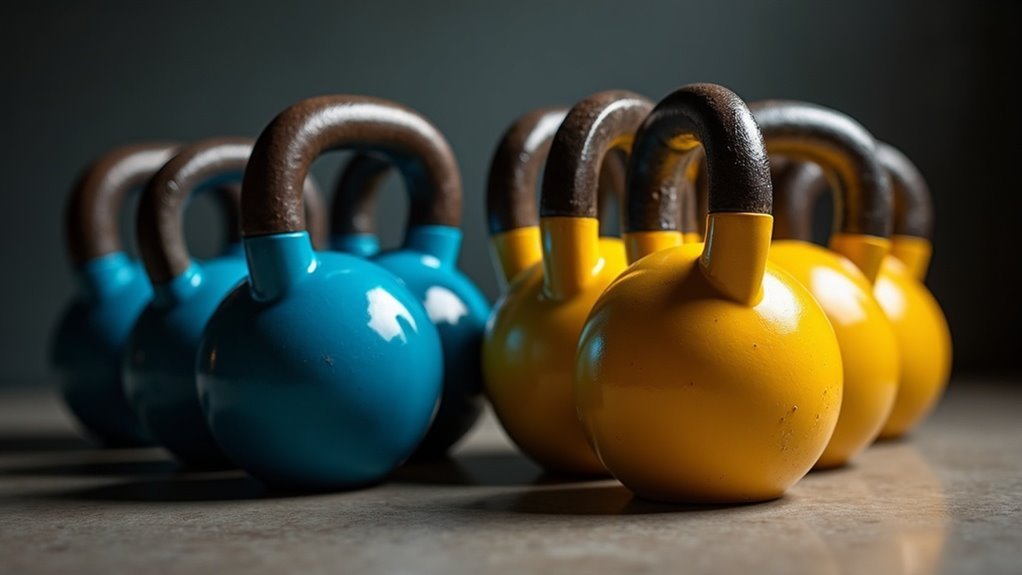
Competition kettlebells are designed with a consistent size and a standardized 33mm handle diameter, which enhances grip comfort and control, particularly during one-arm movements. Crafted from high tensile strength steel, these kettlebells are more durable than traditional cast iron options, resisting chipping and cracking even with regular use. Their flat base offers improved stability during lifts, making them ideal for home workouts. Additionally, the color-coded designs make it easy to identify weights quickly, which is perfect for at-home training sessions. In contrast, cast iron kettlebells come in varying sizes and handle thicknesses, which can complicate your workout routine. To discover more about the unique advantages of competition kettlebells for your home gym, continue exploring their differences.
Key Takeaways
- Competition kettlebells are designed with a consistent size and a uniform 33mm handle diameter, making them ideal for both men and women who want a predictable grip for their workouts. In contrast, cast iron kettlebells come in various sizes and thicknesses, which can lead to inconsistency in your training.
- The rectangular handle design of competition kettlebells minimizes grip fatigue, allowing you to perform longer workouts without discomfort. On the other hand, the thicker, rounded handles of cast iron kettlebells can cause strain, especially during extended use.
- With a wide, flat base, competition kettlebells offer enhanced stability during advanced lifts, making them perfect for those looking to push their fitness to the next level. Cast iron kettlebells, however, may have varying base sizes that could affect your lifting performance.
- Constructed from high tensile strength steel, competition kettlebells are built to last, providing durability and resistance to wear. This makes them a smart investment for anyone serious about building their home gym. In comparison, cast iron kettlebells may not hold up as well over time.
- For quick weight identification, competition kettlebells are color-coded, making it easy for both men and women to switch between weights during their workouts. Cast iron kettlebells generally lack this convenient feature, which can slow down your routine.
Key Features of Competition Kettlebells
When you consider competition kettlebells for your home gym, their unique features distinguish them from traditional cast iron options.
Competition kettlebells maintain a consistent size and handle diameter across all weights, ensuring a uniform grip and technique that enhances your workout experience. Crafted from durable steel, they offer superior resilience compared to cast iron kettlebells, which can be less durable over time.
The rectangular handle design minimizes grip fatigue, making them ideal for high-rep training and technical movements, perfect for those looking to stay fit at home. Additionally, competition kettlebells are color-coded for easy weight identification, streamlining your workout routine.
With a wide, flat base, they provide improved stability during floor exercises, making them a reliable choice for your home fitness regimen compared to the varying base sizes of cast iron kettlebells.
Who Should Use a Competition Kettlebell?
For individuals dedicated to enhancing their fitness routines at home, competition kettlebells can be particularly advantageous.
Whether you’re preparing for kettlebell sport competitions or simply looking to refine your technique, the consistent size across weights makes them perfect for skill development.
If you have smaller hands, the standard 33mm handle design ensures a secure grip, which can enhance your grip strength during various lifts.
Those focusing on one-arm movements will benefit from the stability and control these kettlebells provide.
Furthermore, the uniform dimensions promote familiarity, making your workouts more comfortable and effective.
Whether you’re a competitive athlete or just striving for precision in high-repetition training, the standardized features of competition kettlebells can support your fitness goals right from the comfort of your home gym.
Why Choose a Cast Iron Kettlebell?
Choosing a cast iron kettlebell can significantly enhance your home gym experience, making your strength training routines more effective and enjoyable. These kettlebells are known for their robust and durable construction, providing a budget-friendly option for both men and women looking to stay fit at home. They offer excellent grip dynamics for two-handed exercises, ensuring a secure hold during your workouts. Here’s a summary of the pros and cons of cast iron kettlebells tailored for your home fitness journey:
| Pros | Cons | Best Use |
|---|---|---|
| Durable and long-lasting | Less uniform in size | General fitness routines |
| Budget-friendly | Heavier for some users | Strength training |
| Secure grip for larger hands | Limited weight increments | Home gym setups |
With their fine grip texture and protective coating, cast iron kettlebells are perfect for effective training, helping you achieve your fitness goals right from the comfort of your home.
Who Should Use a Cast Iron Kettlebell?
Cast iron kettlebells are an excellent choice for both men and women looking to enhance their home workout routines. They cater to a wide range of users, making them a practical addition for fitness enthusiasts of all levels.
Beginners learning foundational kettlebell movements will find these weights user-friendly and effective for mastering their technique. For those focused on building strength and power, cast iron kettlebells provide a solid grip that supports heavier lifts.
Individuals with larger hands may appreciate the thicker handles, which accommodate a wider grip for added comfort and control during workouts. Plus, if you’re on a budget and seeking an affordable option for strength training, cast iron kettlebells are accessible and cost-effective, making them a perfect fit for home gyms and personal fitness spaces.
Comparison: Competition vs. Cast Iron Kettlebells
When comparing competition and cast iron kettlebells for your home gym, you’ll notice significant differences that can influence your workout experience.
Competition kettlebells maintain a uniform size and handle diameter across all weights, which enhances grip comfort and reduces fatigue during your home workouts. This consistency can be particularly beneficial for both men and women looking to perform a variety of exercises with ease.
On the other hand, cast iron kettlebells can vary in size and handle thickness, which may affect your lifting experience and overall stability.
If you’re setting up a home gym, it’s essential to consider how these differences might impact your training routine and comfort level. Choosing the right kettlebell can help you stay healthy and motivated while exercising at home.
Size Consistency Differences
While both competition and cast iron kettlebells serve distinct purposes in home strength training, their size consistency differences can significantly influence your workout experience and performance.
Competition kettlebells are designed with a uniform size across all weights, which enhances handling and positioning during exercises. This consistency is particularly beneficial for skill development, especially in high-repetition workouts that you can do at home.
On the other hand, cast iron kettlebells tend to increase in size with weight increments, resulting in variability in grip and resting positions. The standard 33mm handle diameter of competition kettlebells minimizes grip fatigue, making them perfect for technical lifts and one-arm movements, while cast iron kettlebells are often more suitable for two-handed exercises, providing versatility for your home gym.
Material Durability Comparison
Understanding the material durability differences between competition and cast iron kettlebells can significantly enhance your home workout experience.
Competition kettlebells are crafted from high tensile strength steel, providing superior resistance to chipping and cracking compared to cast iron options. While both types are durable, competition kettlebells come with a porous handle design that absorbs chalk more effectively, improving grip and reducing wear during your home exercises.
On the other hand, cast iron kettlebells, though sturdy, are more susceptible to rust and deterioration if not maintained properly. The added durability of competition kettlebells makes them ideal for dynamic movements, making them a great choice for both fitness enthusiasts and those who are serious about their home training routines.
Grip and Handle Design
Selecting the ideal kettlebell is crucial for maximizing your home workout efficiency, and one of the most significant factors to consider is the grip and handle design. For those looking to enhance their strength training at home, competition kettlebells are a fantastic option. They feature a consistent 33mm handle diameter and a rectangular shape, which helps reduce grip fatigue during high-repetition sets. On the other hand, cast iron kettlebells typically have rounded handles that may dig into your wrist, potentially affecting your performance.
| Feature | Competition Kettlebells | Cast Iron Kettlebells |
|---|---|---|
| Handle Diameter | 33mm (consistent) | Increases with weight |
| Shape | Rectangular | Rounded |
| Grip Support | Porous, absorbs chalk | Smooth finish |
When setting up your home gym, prioritize your grip and handle choice to ensure you achieve optimal performance and comfort during your workouts.
Benefits for Commercial Gyms
When considering the needs of a home gym, competition kettlebells offer distinct advantages that enhance the training experience for individuals of all fitness levels. Their consistent size across weights ensures uniformity, making it easy for users to transition between different kettlebell weights as they progress.
The flat, wide base enhances stability during floor exercises, prioritizing safety in a home setting. Constructed from durable steel, competition kettlebells outlast cast iron alternatives, making them a smart investment for those looking to create a long-lasting workout space.
Additionally, their color-coded design allows for quick weight identification, streamlining workouts even in smaller areas. Finally, the standardized handle diameter reduces grip fatigue, supporting high-repetition training essential for varied workout routines, highlighting significant benefits for anyone looking to stay healthy and fit at home.
Major Differences Between Cast Iron & Steel Kettlebells
When comparing cast iron and steel kettlebells for your home gym, you’ll notice significant differences in size consistency, material durability, and handle design that can impact your workouts.
Steel kettlebells maintain a uniform size across all weights, which enhances grip dynamics and makes them easier to handle for both men and women. In contrast, cast iron kettlebells increase in size with weight, which may complicate your training routine as you progress.
Additionally, the handle design varies: steel kettlebells feature a standard thickness that reduces grip fatigue, making them more comfortable for extended use, while cast iron kettlebells often have thicker handles as the weight increases, which can be less ergonomic during your exercises.
Size Consistency Comparison
While both competition and cast iron kettlebells are excellent tools for enhancing strength training at home, their size consistency presents notable differences that can influence your workout experience.
Competition kettlebells feature a uniform size across all weights, which means the handle diameter and spacing remain consistent. This stability is particularly beneficial for grip comfort and performance during advanced lifts, making them a reliable choice for anyone looking to elevate their home workouts.
On the other hand, cast iron kettlebells increase in size with weight increments, which can lead to grip fatigue and affect the mechanics of exercises like swings and presses. The varying base sizes of cast iron kettlebells may also introduce instability during floor exercises.
For those dedicated to achieving their fitness goals at home, competition kettlebells may provide a more consistent and effective training experience.
Material Durability Differences
Material durability is a crucial consideration when selecting kettlebells for your home gym, particularly when comparing competition and cast iron options.
Here are some key material durability differences to keep in mind:
- Strength: Competition kettlebells are crafted from high tensile strength steel, making them more durable than traditional cast iron kettlebells, which is essential for ensuring longevity in your home workouts.
- Resistance: Steel kettlebells provide superior resistance to chipping and cracking, ensuring they endure the rigors of regular use and maintain their performance over time.
- Corrosion: Many competition kettlebells come with a protective finish that prevents rust, helping to keep your equipment looking good and functioning optimally in your home gym environment.
- Grip: The porous design of competition kettlebells allows for better chalk absorption, enhancing your grip during intense workouts and making them a reliable choice for both men and women striving to stay fit at home.
Handle Design Variations
Handle design variations between competition and cast iron kettlebells significantly influence your home workout experience. Competition kettlebells feature a consistent 33mm handle diameter, which enhances stability and minimizes grip fatigue during your exercises. On the other hand, cast iron kettlebells have handles that thicken with weight, which may lead to discomfort, especially as you lift heavier. Their rounded handles can dig into your wrist during lighter lifts, whereas the rectangular shape of competition kettlebells promotes better performance in high-rep workouts. Additionally, the porous handles of competition kettlebells absorb chalk more effectively, improving your grip for those intense sessions. Below is a comparison of these handle design variations:
| Feature | Competition Kettlebells | Cast Iron Kettlebells |
|---|---|---|
| Handle Diameter | Consistent 33mm | Increases with weight |
| Shape | Rectangular | Rounded |
| Grip Support | High | Moderate |
| Balance During Lifts | Excellent | Varies |
Choosing the right kettlebell for your home gym can make all the difference in your fitness journey, ensuring you get the most out of your workouts.