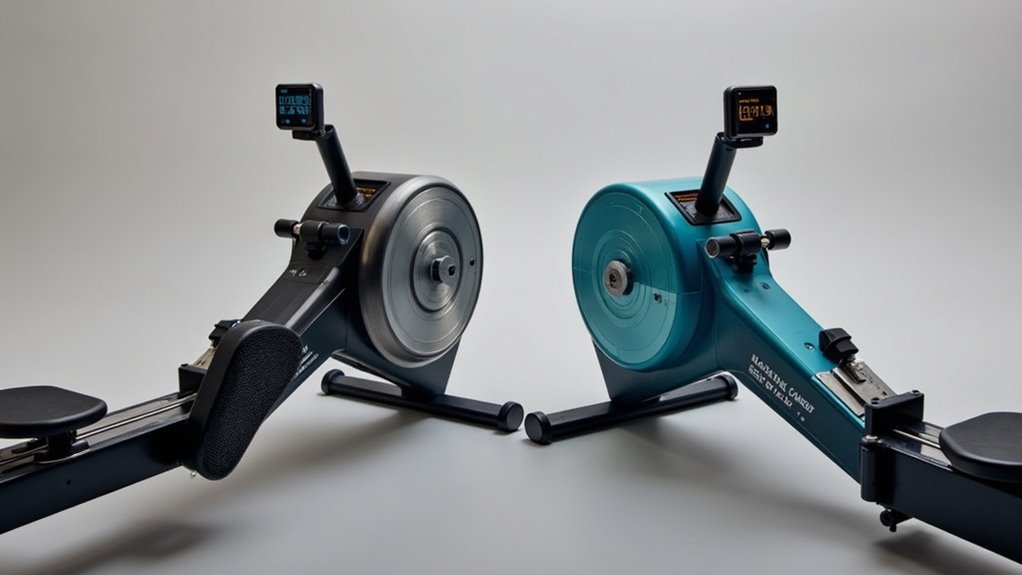
Air rowers utilize dynamic resistance, meaning the intensity of your workout increases based on your effort, making them ideal for those who thrive on variability in their training. In contrast, magnetic rowers provide static resistance levels, offering a consistent workout that’s great for those who prefer predictability in their routines.
If you’re concerned about noise during your workouts, air rowers tend to operate louder, which might be a consideration if you’re exercising in a shared living space. On the other hand, magnetic rowers are quieter, making them a suitable choice for home environments where noise might be an issue.
When it comes to performance tracking, magnetic rowers generally offer more advanced features, including touchscreens and app connectivity, allowing you to monitor your progress and stay motivated. Maintenance is another factor to consider; air rowers often require more upkeep compared to their magnetic counterparts.
Lastly, while both types of rowers come with varying price points, there are some differences in cost to keep in mind. Take the time to explore these options to find the perfect fit for your home gym and fitness goals.
Key Takeaways
- Air rowers utilize dynamic resistance that increases with the intensity of your workout, making them ideal for those looking to push their limits. In contrast, magnetic rowers feature static resistance, providing a consistent training level that can be great for beginners or those focusing on technique.
- If you prefer a quieter workout environment, magnetic rowers operate quietly, making them perfect for home gyms where noise might be a concern. On the other hand, air rowers create loud whooshing sounds during use, which may not be suitable for all settings.
- For tech-savvy users, magnetic rowers often come equipped with advanced performance tracking features, such as HD touchscreens and Bluetooth connectivity, which can enhance your workout experience. In comparison, air rowers typically have more basic monitors.
- When it comes to maintenance, air rowers require more attention and care, while magnetic rowers are designed for lower upkeep, making them a convenient choice for busy individuals.
- In terms of pricing, air rowers can range from $1,298 to $2,898, catering to various budgets. Meanwhile, magnetic rowers are generally more affordable, with prices typically ranging from $1,298 to $2,198, making them an attractive option for those setting up a home gym.
Understanding Air Rowers
When you engage with air rowers at home, you’ll discover they create resistance through a fan-based flywheel, meaning that the faster you row, the more resistance you face.
This dynamic workout experience is further enhanced by the damper setting, which allows you to adjust airflow for a more authentic rowing sensation.
The damper setting enhances your workout, letting you customize airflow for a more realistic rowing feel.
Air rowers are excellent additions to any home gym, particularly appreciated for high-intensity workouts due to their unlimited resistance levels.
While they offer outstanding performance, be ready for the distinct whooshing sound that accompanies your efforts.
Generally, the price range for these machines is between $1,298 and $2,898, depending on the model and features, making them a worthwhile investment for your fitness journey at home.
Understanding Magnetic Rowers
Magnetic rowers are an excellent addition to any home gym, providing a magnetic resistance system that allows you to adjust your workout intensity with precision.
Unlike air rowers, these machines operate quietly, making them perfect for any living environment, whether you’re in an apartment or a house.
With their advanced performance tracking features, magnetic rowers enhance your workout experience by offering valuable insights into your progress, helping both men and women stay motivated and committed to their fitness goals from the comfort of their homes.
Mechanism of Resistance
When examining the mechanism of resistance in rowers, it’s important to comprehend how magnetic resistance functions.
Magnetic rowers feature a magnetic resistance system that interacts with a metal flywheel, delivering a consistent level of resistance no matter your rowing speed. This ensures a stable workout experience, making it perfect for both beginners and seasoned athletes looking to maintain controlled intensity during their home workouts.
You can easily modify the resistance levels using a dial or digital console, with options typically ranging from 8 to 16 settings.
Unlike air rowers, magnetic rowers operate silently due to the lack of friction, making them ideal for shared living spaces and requiring minimal maintenance, which is a great advantage for those committed to staying healthy through exercising at home.
Noise Level Comparison
When choosing the right rowing machine for your home gym, noise level is a crucial factor, particularly if you’re sharing your space with family or roommates.
Magnetic rowers are a fantastic option as they operate quietly, thanks to their frictionless magnetic resistance. This allows you to enjoy your workout without disturbing others in your home.
On the other hand, air rowers produce a noticeable whooshing sound, which can be distracting in a more serene environment.
If you prioritize a tranquil atmosphere while exercising, magnetic rowers are the way to go, enabling you to concentrate on your fitness goals without the interference of unwanted noise.
Performance Tracking Features
When selecting the perfect rowing machine for your home gym, it’s essential to consider not only the noise levels but also the effectiveness of performance tracking during your workouts.
Magnetic rowers stand out with their advanced performance tracking systems, featuring large HD touchscreens that deliver real-time data on crucial metrics such as time, distance, calories burned, and heart rate.
With Bluetooth connectivity, you can easily sync this data with fitness apps for in-depth analysis, helping you stay on track with your health goals.
These machines also come equipped with adjustable resistance levels, allowing for precise customization of your workouts to match your fitness level.
Many premium models offer structured training plans and guided workouts, enhancing your training experience while ensuring a reliable performance tracking system that accommodates various intensities for both men and women looking to stay fit at home.
Key Similarities Between Air and Magnetic Rowers
Air and magnetic rowers present several key similarities that make them attractive options for fitness enthusiasts looking to enhance their home gym experience.
Both types effectively engage major muscle groups and provide low-impact cardiovascular workouts, catering to a variety of fitness levels.
Key similarities include:
- Similar frame designs featuring front-mounted flywheels for a smooth rowing experience
- Compact and foldable designs, ensuring easy storage in any home gym setup
- Basic monitoring systems to help track your performance metrics and progress
- Effective for building muscular endurance and enhancing cardiovascular fitness
- Comparable size and portability, often equipped with transport wheels for convenient movement
These features ensure that users can enjoy their fitness journeys, whether they opt for air or magnetic resistance, making both choices ideal for at-home workouts.
Key Differences Between Air and Magnetic Rowers
When comparing air and magnetic rowers for your home gym, the resistance mechanism significantly impacts your workout experience.
Air rowers provide dynamic resistance that adjusts based on your rowing speed, allowing for a more variable and responsive workout. In contrast, magnetic rowers offer a consistent and adjustable level of resistance, regardless of how fast you row.
For those prioritizing a peaceful home environment, the noise levels are also important to consider; air rowers tend to be louder due to their fan-based operation, making magnetic rowers a quieter option for your home workouts.
Whether you’re a man or woman looking to enhance your fitness routine at home, understanding these differences can help you choose the right equipment for your needs.
Resistance Mechanism Comparison
While both air and magnetic rowers are excellent options for achieving a cardiovascular workout at home, their resistance mechanisms vary significantly.
- Air rowers utilize dynamic resistance systems, meaning the resistance increases as you row harder, providing a more engaging and challenging experience.
- Magnetic rowers, on the other hand, feature static resistance levels, which allow for consistent training intensity and are great for steady-state workouts.
- The intense workout experience offered by air rowers makes them particularly well-suited for high-intensity interval training (HIIT), perfect for those looking to push their limits.
- In contrast, magnetic rowers operate quietly, making them an ideal choice for shared living spaces or early morning workouts without disturbing others.
- Maintenance is generally more demanding for air rowers due to their mechanical components, whereas magnetic rowers are simpler and require less upkeep, making them a convenient option for home gym enthusiasts.
Understanding these differences can help you select the best rower that aligns with your fitness goals and home environment.
Noise Level Differences
The noise level generated during workouts can significantly influence your decision when selecting between air and magnetic rowers for your home gym. Air rowers produce a loud whoosh sound that varies with your rowing intensity, which can be energizing but may disturb others in your home. In contrast, magnetic rowers operate quietly, making them an excellent choice for those who prefer a peaceful workout environment. This difference can greatly enhance your exercise experience, especially in homes with limited sound insulation.
| Feature | Air Rowers | Magnetic Rowers |
|---|---|---|
| Noise Level | Loud (whoosh sound) | Near-silent |
| Resistance Type | Dynamic resistance | Magnetic resistance |
| Vibration | Higher vibration | Minimal vibration |
Making the right choice ensures a harmonious atmosphere for your workouts, allowing you to focus on achieving your fitness goals at home.
Which Rower Is Better for Your Fitness Goals?
Which rower aligns best with your home fitness objectives? Consider these factors when choosing between air and magnetic rowing machines:
- Air rowers excel in high-intensity interval training, providing dynamic resistance that helps build power and endurance, making them a great option for those looking to push their limits at home.
- Magnetic rowers offer a consistent level of resistance that’s perfect for steady-state cardio workouts, ideal for those who prefer a more controlled and smooth workout experience.
- For a realistic rowing experience that also enhances strength training, air rowers effectively simulate progressive resistance, appealing to those seeking to replicate the feel of rowing on water.
- If you value a quiet workout environment, magnetic rowers are ideal for shared spaces, ensuring you can exercise without disturbing others in your home.
- Both types engage multiple muscle groups effectively, but air rowers provide a rhythmic challenge that can make your workouts more engaging, while magnetic rowers offer a smoother experience tailored to your fitness goals.
Choose the rower that best fits your home workout routine and helps you achieve your fitness aspirations!
Pros and Cons of Air vs. Magnetic Rowers
Choosing the right rowing machine for your home gym involves carefully considering the pros and cons of air and magnetic rowers.
| Feature | Air Rowers | Magnetic Rowers |
|---|---|---|
| Resistance | Increases with intensity for a challenging workout | Provides consistent levels for a steady experience |
| Noise | Produces noticeable noise from the fan, which some may find motivating | Operates quietly, ideal for home settings |
| Maintenance Needs | Requires higher upkeep to ensure longevity | Generally has lower upkeep, making it more convenient |
| Price Range | $1,298 – $2,898, offering a range for various budgets | $1,298 – $2,198, typically more affordable |
| Performance Tracking | Features basic monitors for tracking progress | Comes with advanced screens for detailed performance metrics |
Air rowers deliver an authentic rowing experience that can enhance your workouts, while magnetic rowers function quietly and provide superior performance tracking—perfect for anyone looking to stay healthy and fit from the comfort of their own home.