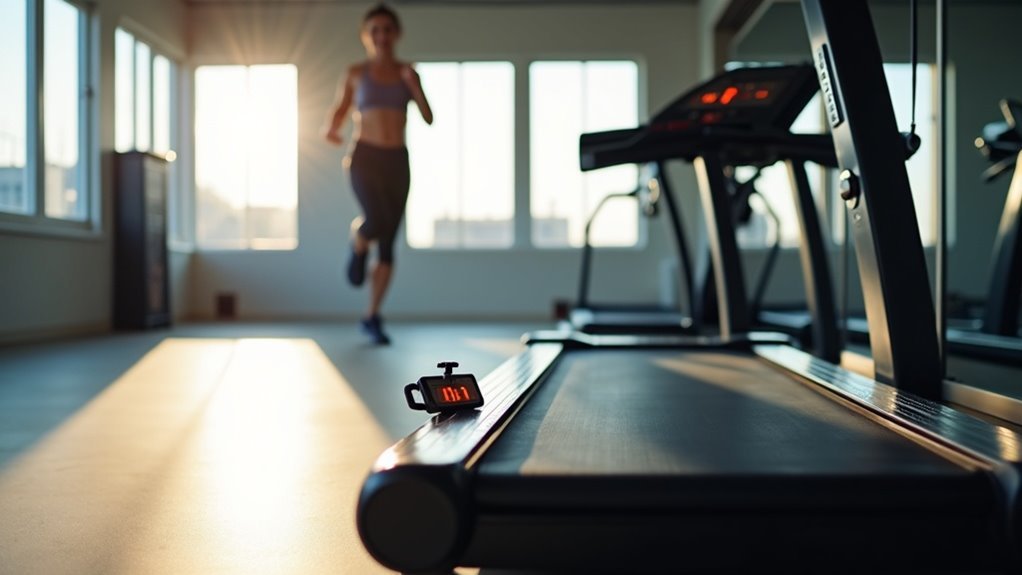
You should recalibrate your treadmill incline settings when you notice inconsistent measurements or feel unusual sensations while running. If the displayed incline doesn’t match your experience, it’s time to take action. Regular fluctuations in incline can impact the intensity and effectiveness of your workouts. Additionally, it’s important to recalibrate after moving your treadmill or if you notice signs of wear. This process not only helps prevent injuries but also ensures that your workouts align with your fitness goals at home. Discover more about maintaining your treadmill for optimal performance and to enhance your home gym experience.
Key Takeaways
- Recalibrate your treadmill’s incline if you notice inconsistent measurements during your workouts, as this can impact your training intensity and overall effectiveness.
- If you experience unusual sensations while running or a decline in workout efficiency, it may be time to recalibrate your machine.
- Any discrepancies between the displayed incline and the actual settings should trigger immediate recalibration to ensure an effective workout.
- Regular fluctuations in incline readings can disrupt your training intensity, making recalibration necessary to maintain your fitness goals.
- It’s also a good practice to recalibrate after moving your treadmill or when it begins to show signs of wear and tear, ensuring you continue to get the most out of your home gym experience.
Importance of Regular Calibration
When you work out on a treadmill at home, the accuracy of the incline settings is crucial for maximizing your workout’s intensity and effectiveness.
Regularly calibrating your treadmill‘s incline ensures that the settings accurately reflect the actual incline, significantly affecting your training results. As your equipment experiences wear and tear, it’s important to make adjustments to maintain precise readings.
Using an inclinometer can help measure incline accuracy, allowing you to implement necessary corrections. Neglecting to calibrate can result in misleading workout data, which may hinder your progress and increase the risk of injury.
Signs Your Treadmill Needs Calibration
If you’re noticing inconsistent incline measurements on your treadmill, it’s crucial to take action.
An unusual running experience or a drop in your workout effectiveness can indicate that your treadmill requires calibration.
By keeping an eye on these signs, you ensure that your equipment delivers accurate performance, helping you stay on track with your fitness goals while exercising at home.
Whether you’re a man or a woman, maintaining your home gym equipment is essential for achieving the results you desire.
Inconsistent Incline Measurements
Inconsistent incline measurements can significantly affect the effectiveness of your home workouts, suggesting potential calibration issues with your treadmill.
If you notice notable discrepancies between the displayed incline settings and your actual experience during exercise, it’s important to take action. Regular fluctuations in incline readings can impede your training intensity, making it crucial to calibrate your treadmill.
Additionally, if changes to incline settings fail to produce the expected variations in workout difficulty or heart rate response, recalibrating is essential.
Utilizing an inclinometer to compare measurements can help ensure accuracy, ultimately enhancing your workout experience and aiding you in reaching your fitness goals from the comfort of your home gym.
2. Unusual Running Experience
Experiencing unusual fatigue or difficulty maintaining your usual pace during home workouts can indicate that your treadmill’s incline settings may not be functioning accurately.
If you notice a significant discrepancy between the incline and your perceived effort, it might be time for a recalibration. A consistent inability to reach your target heart rate at a specific incline suggests a malfunction.
Additionally, if your treadmill feels easier or harder than expected at different incline levels, it’s wise to check for accuracy.
Regularly monitoring changes in workout intensity and perceived effort when adjusting incline settings can help highlight the need for recalibration and enhance your overall home exercise experience.
Staying on top of your treadmill’s performance is essential for maximizing your fitness journey at home.
3. Decreased Workout Effectiveness
When you notice a decline in your workout effectiveness, it’s crucial to consider that your treadmill may need recalibration. Inaccurate incline readings can create unexpected challenges or ease, throwing off your fitness goals. If you find your results stagnating despite consistent effort, it’s a good idea to evaluate your equipment.
| Signs of Decreased Effectiveness | Actions to Take |
|---|---|
| Difficulty reaching target heart rate | Review and adjust incline settings |
| Unforeseen changes in workout intensity | Recalibrate the incline |
| Persistent lower performance results | Conduct a recalibration |
| Discrepancy between effort levels and workout intensity | Refer to the user manual |
Taking the time to address incline calibration ensures you maximize your home workout effectiveness, helping you stay on track with your fitness journey.
Tools Required for Calibration
To ensure precise calibration of your treadmill’s incline readings, it’s important to have the right tools at your disposal. An inclinometer is essential; you might want to use an app like Kinni, which includes this functionality.
Before you start calibrating or checking the incline settings, make sure your treadmill is placed on a level surface for accurate measurements. When measuring the incline, position the device parallel to the foot rails.
Be sure to record both the minimum and maximum incline values, which typically range from 0-2% for minimum and can go up to 20% for maximum.
Lastly, enter these values into the Kinni app by activating the Override Incline feature to ensure your workout data is as precise as possible. This will help you get the most out of your home gym setup and support your health and fitness goals.
Step-by-Step Calibration Process
To begin the calibration process for your home treadmill, first, gather the necessary tools, such as tape strips and a stopwatch.
These items will help you accurately measure the treadmill belt length and speed, ensuring a reliable workout experience.
Required Calibration Tools
Calibrating treadmill incline readings is essential for ensuring accuracy and reliability in your home workout routine.
To achieve this, you’ll need a few specific tools: an inclinometer, a level surface, and access to your treadmill’s advanced settings.
Begin by placing the inclinometer on a flat area of the treadmill, parallel to the foot rails, to capture the minimum incline reading at Level 0.
Next, adjust the treadmill to its maximum incline and take another measurement to find the maximum incline value.
Once you have these readings, input them into the Kinni app for enhanced workout data precision.
Regularly using these calibration tools will help you maintain accurate incline readings, allowing you to optimize your home exercise sessions and achieve your fitness goals effectively.
Incline Measurement Techniques
With the right calibration tools at your disposal, measuring the incline of your treadmill is a simple yet essential step for optimizing your home workouts. Begin by placing an inclinometer on a flat area, parallel to the foot rails of your treadmill. Start at Level 0 for minimum incline readings, which typically range from 0-2%. After recording this value, increase the incline to Level 20 for maximum measurements. Make sure to input these values into the Kinni app by enabling the Override Incline feature. Regular calibration ensures accurate readings, helping you achieve better performance and results in your fitness journey.
| Step | Action |
|---|---|
| 1. Level the Treadmill | Ensure it’s on a flat surface |
| 2. Measure Minimum | Set to Level 0 and record value |
| 3. Measure Maximum | Set to Level 20 and record value |
| 4. Input Data | Utilize Kinni app for calibration |
Common Limitations and Issues
While treadmills are designed to provide precise incline readings, several common limitations and issues can affect their performance, especially in a home gym setting.
Regular use can lead to wear and tear, causing discrepancies in treadmill speed and effort measurements. Over time, treadmill belts may stretch or misalign, making it essential to perform regular recalibrations to ensure the incline is set correctly.
Heavier users may also place added strain on the motor, which can further impact incline accuracy. Additionally, environmental factors like uneven flooring can hinder performance.
It’s important to note that different treadmill models may have varying calibration standards, so periodic checks are crucial to maintain consistent and reliable incline settings across your home gym equipment.
Benefits of Accurate Incline Readings
Accurate incline readings on your treadmill significantly enhance your home workout experience, allowing you to better simulate outdoor running conditions.
With precise incline measurements, you can tailor your workouts to match specific training intensities, leading to improved performance and fitness results.
Precise incline measurements allow you to customize workouts for optimal training intensity, enhancing performance and fitness outcomes.
Regular calibration of your treadmill helps prevent any discrepancies from wear-and-tear, ensuring you can adjust your workouts according to your fitness levels and any pre-existing conditions, which is vital for preventing injuries.
Reliable incline settings also improve the accuracy of heart rate data, allowing you to effectively match your effort levels whether you’re indoors or outdoors.
This leads to more efficient interval training and supports your overall fitness progression over time, making your at-home exercise routine more effective and enjoyable.
Community Insights and Experiences
How often do you recalibrate your treadmill’s incline settings? Insights from our community highlight the importance of regular recalibration, particularly after extensive use or if your treadmill shows signs of wear.
Many users have reported discrepancies in incline measurements over time, prompting them to recalibrate for more accurate workouts. Additionally, a number of runners suggest adjusting the incline settings when transitioning from outdoor to indoor running, as this change can significantly impact your perceived effort.
Anecdotal evidence from fellow fitness enthusiasts indicates that recalibrating can enhance your workout effectiveness by aligning your training data with your outdoor experiences.
Moreover, recalibrating your treadmill after relocating it ensures consistent performance metrics, ultimately helping you achieve your fitness goals more effectively.