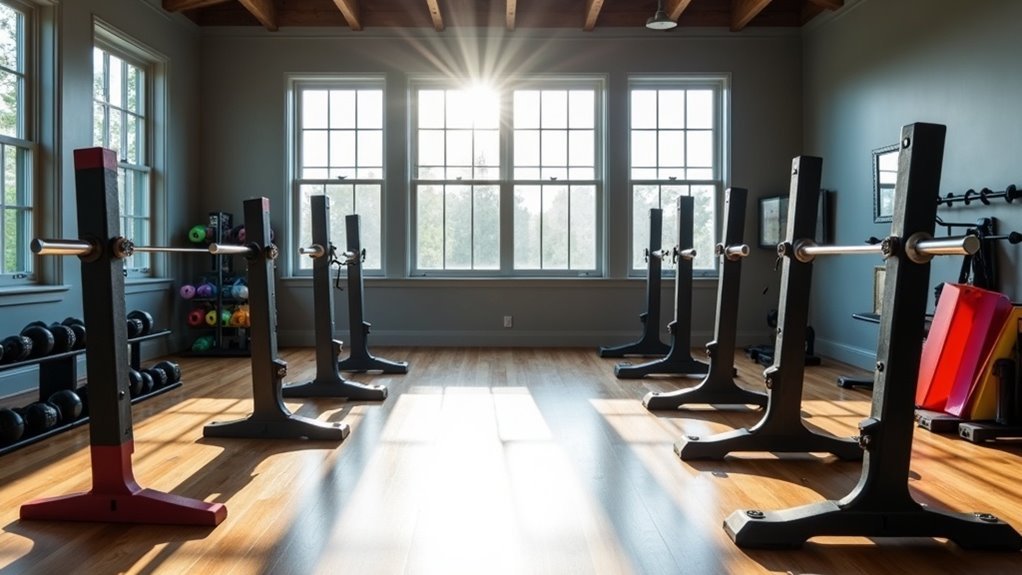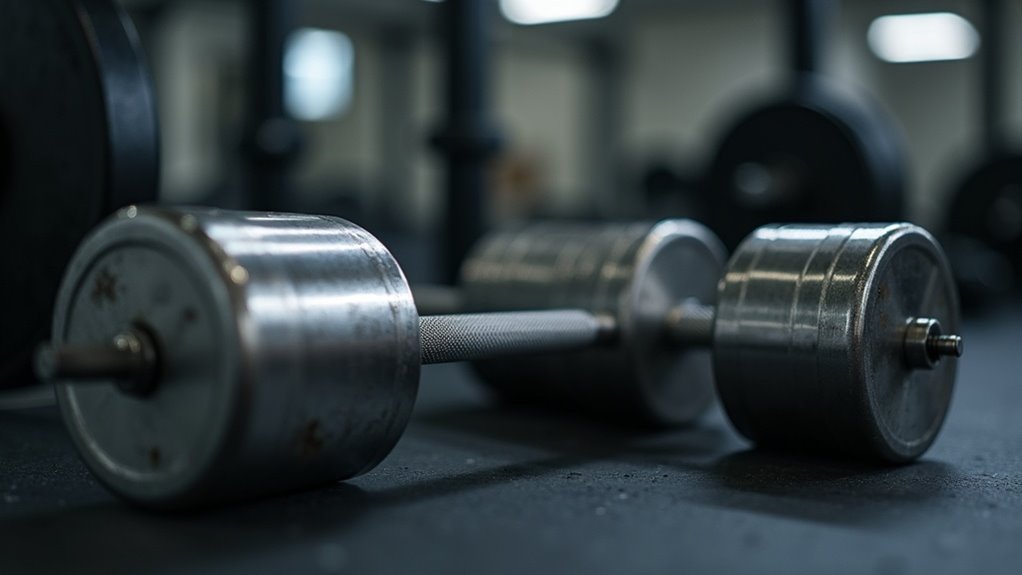
To maintain optimal performance of your home gym barbells, it’s recommended to rotate the sleeves every 4-6 months for heavy lifting and every 6-12 months for lighter workouts. Be attentive to signs such as excessive spin resistance, visible wear, or uneven movement; these can indicate that it’s time to rotate the sleeves. Regularly rotating your barbell sleeves not only prolongs the lifespan of your equipment but also enhances safety during your lifts. For those looking to maximize their home workout experience, there are additional best practices and tips for effectively maintaining your barbells that you may find useful.
Key Takeaways
- Rotate your Olympic bars every 6 months to a year to promote even wear; if you’re engaging in heavy lifting, consider rotating every 4-6 months for optimal performance.
- Regularly inspect the sleeves for excessive spin resistance or any visible damage—these are clear indicators that it’s time for a rotation.
- Keep an eye out for uneven sleeve wear or wobbling during your lifts; these signs suggest that rotation is necessary to maintain safety and effectiveness in your workouts.
- Maintain a log of your usage and the frequency of rotations to help you stay on top of necessary maintenance.
- During each rotation, apply a light lubricant to the sleeve mechanisms to enhance their performance and minimize friction, ensuring a smooth lifting experience.
Understanding Sleeve Wear and Its Impact on Performance
When you exercise at home with weights, sleeve wear can significantly affect your barbell’s performance and durability. This wear results from the friction and rotation of weights during lifting, which can impact overall stability.
Regularly checking for uneven spinning or wobbling is crucial to catch potential issues early. Rotating the sleeves helps distribute wear evenly, preventing localized damage that can compromise spin and control.
It’s recommended to rotate or inspect sleeves after every 1,000 to 1,500 lifts, depending on how intensively you use them. Proper maintenance not only enhances your lifting performance but also ensures smooth rotation and reduces joint strain, ultimately benefiting your home workout routine and your overall health journey.
Signs It’s Time to Rotate Your Barbells
When you’re utilizing your barbells at home, it’s important to monitor for signs of uneven sleeve wear, as this can impact the safety and effectiveness of your lifts.
If you experience excessive spin resistance or notice visible damage, it’s time to consider rotating your barbells to ensure optimal performance.
Addressing these issues early on will help keep your home gym equipment in top shape, allowing you to maintain a safe and effective workout routine.
Uneven Sleeve Wear
To ensure you achieve optimal performance and maintain safety during your home workouts, it’s crucial to keep an eye out for signs of uneven sleeve wear on your barbells. Look for visual indicators, such as one sleeve showing more wear than the other. If you experience excessive play or wobbling, or if weight plates seem to shift more on one side, it’s time to take action. Conducting regular maintenance checks every few months can help you identify these issues early on.
| Signs of Uneven Sleeve Wear | Recommended Actions |
|---|---|
| Visual wear on one sleeve | Rotate or replace sleeves |
| Excessive wobbling | Inspect and adjust |
| Weight plates shifting | Reassess barbell usage |
Excessive Spin Resistance
If you hear grinding or rattling noises while using your barbell, it’s a strong indication that excessive spin resistance could be impacting your workout performance.
Additionally, if the sleeves don’t rotate smoothly when you give them a flick, it suggests there may be issues with the internal mechanics. You might also notice that it takes more effort to initiate spin than it used to, which is another sign that it’s time to inspect or rotate the sleeves.
Regular checks for wobbling or uneven spin can help you catch problems early, ensuring a safer and more effective lifting experience.
Visible Damage or Wear
Excessive spin resistance can often indicate deeper issues, but visible damage or wear on your barbell is an immediate concern that needs your attention. Check for dents, cracks, or rust on the sleeves—these can compromise your safety and hinder performance during your workouts. Regular inspections ensure your home gym equipment remains in optimal condition, allowing you to focus on your fitness goals.
| Signs of Damage | Action Required |
|---|---|
| Dents or Cracks | Rotate or replace sleeves |
| Significant Knurl Wear | Rotate bar or replace |
| Rust or Corrosion | Inspect and address immediately |
Taking prompt action on visible damage enhances the safety of your home gym, ensuring a better experience for everyone involved in your fitness journey.
Benefits of Even Sleeve Wear
Maintaining even sleeve wear on barbells is essential for ensuring consistent performance during your home workouts. It helps prevent uneven loading that can lead to imbalances, potentially compromising your lifting technique.
By keeping sleeve wear uniform, you extend the lifespan of your Olympic bar, reducing strain on the rotation mechanism and minimizing the risk of mechanical failures. Regular rotation of the sleeves ensures optimal rotational characteristics, promoting smooth and controlled movements that are crucial for joint health.
Furthermore, even sleeve wear contributes to a stable lifting experience, reducing wobbling or instability during your exercises. Ultimately, this practice enhances your training efficiency and performance, leading to better results in strength and technique development—key elements for anyone dedicated to staying fit and healthy at home.
Best Practices for Rotating Barbells
Regular rotation of barbells is crucial for maintaining the longevity and performance of your home gym equipment.
To ensure even wear on the sleeves, it’s recommended to rotate your Olympic bars every 6 months to a year, particularly if they’re used frequently.
Rotate your Olympic bars every 6 months to a year for even wear and enhanced performance.
Make it a habit to inspect the sleeves regularly for any signs of wear or damage, as uneven wear can affect stability during your lifts.
When rotating, consider alternating between bars used for different lifting styles to help distribute wear evenly across your equipment.
Applying a light lubricant to the sleeve mechanism during rotation can enhance smooth operation and extend the lifespan of your bars.
Lastly, keeping a log of your usage and rotation frequency will help you stay organized and ensure timely servicing when needed, allowing you to maintain a safe and effective home workout environment.
Frequency of Rotation Based on Usage
How often should you rotate your barbells for optimal performance in your home gym?
For those engaging in heavy lifting, it’s advisable to rotate the sleeves every 4-6 months to ensure even wear on both ends of the barbell.
If you’re using barbells with weight plates for lighter to moderate workouts, consider rotating every 6-12 months, although this can vary based on your lifting volume.
Regular maintenance checks are crucial; always inspect the sleeves for signs of wear or uneven spinning and rotate them as needed, even before the suggested timeframe.
If your workout routine includes explosive movements, it’s wise to increase the rotation frequency to accommodate the added strain on the sleeves.
Keeping your equipment in top shape will help you stay healthy and make the most of your home workouts!
How to Assess Sleeve Condition
To assess the condition of your gym equipment sleeves, begin with a detailed visual inspection for signs of uneven wear, such as grooves or rough patches that may affect performance.
Next, perform a spin test: gently flick the sleeve to see if it rotates smoothly without any grinding noises.
Keeping an eye on these indicators will help you decide when it’s time to consider rotating or replacing the sleeves, ensuring your home workout remains safe and effective.
Visual Inspection Techniques
While inspecting barbell sleeves in your home gym, it’s important to look for signs of uneven wear or damage, such as grooves or rough patches.
To effectively assess sleeve condition, keep these techniques in mind:
- Check for smooth rotation; excessive friction can indicate potential issues that may affect your lifts.
- Look for uneven wear patterns; if one side is more worn, it might be time to rotate the sleeves for balanced performance.
- Assess sleeve alignment; misalignment can lead to uneven wear and impact your workout stability.
- Monitor bar performance during your lifts; if you notice instability, it could be a sign of sleeve problems that need attention.
- Inspect for noise during rotation; unusual sounds may hint at wear that could affect your training.
Performance Test Methods
Understanding the condition of your barbell sleeves is crucial for optimal performance and safety during your home workouts.
Start by performing a simple spin test: flick the sleeve and ensure it rotates smoothly, stopping without any grinding or rattling sounds. Regularly check for wobbling or uneven spins, as these can signal wear and tear in your equipment.
It’s also important to measure the sleeve’s resistance to rotation; excessive friction may indicate that the bearings or bushings need maintenance. Don’t forget to inspect the end caps for wear, as they protect the sleeve’s inner components.
If you feel increased strain on your wrists or joints while lifting, it’s a strong indication that the sleeve rotation has deteriorated, which can affect your workout performance and safety.
Keep your equipment in top shape to ensure you get the most out of your home exercise routine!
Maintaining Your Barbells for Longevity
Maintaining your barbells properly is essential for extending their lifespan and performance, especially for those committed to building a home gym.
To ensure that your bar shaft and sleeves remain in top condition, follow these guidelines:
- Regularly inspect the sleeves for signs of wear, such as uneven spinning or wobbling, to ensure safe and effective workouts.
- Rotate the sleeves every 6 months or after heavy use to promote even wear and maintain functionality.
- Apply a lubricant specifically designed for barbells to prevent rust and ensure smooth rotation, enhancing your lifting experience.
- Store your barbells in a dry environment to minimize moisture exposure, protecting them from corrosion and damage.
- Clean the sleeves after each use to remove sweat and debris, keeping your equipment in prime condition for your next workout.