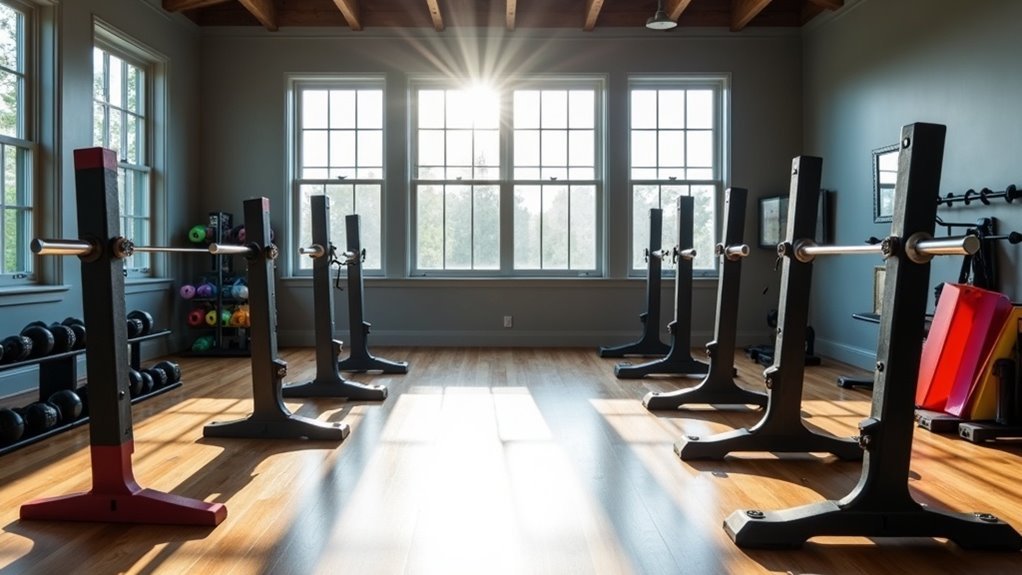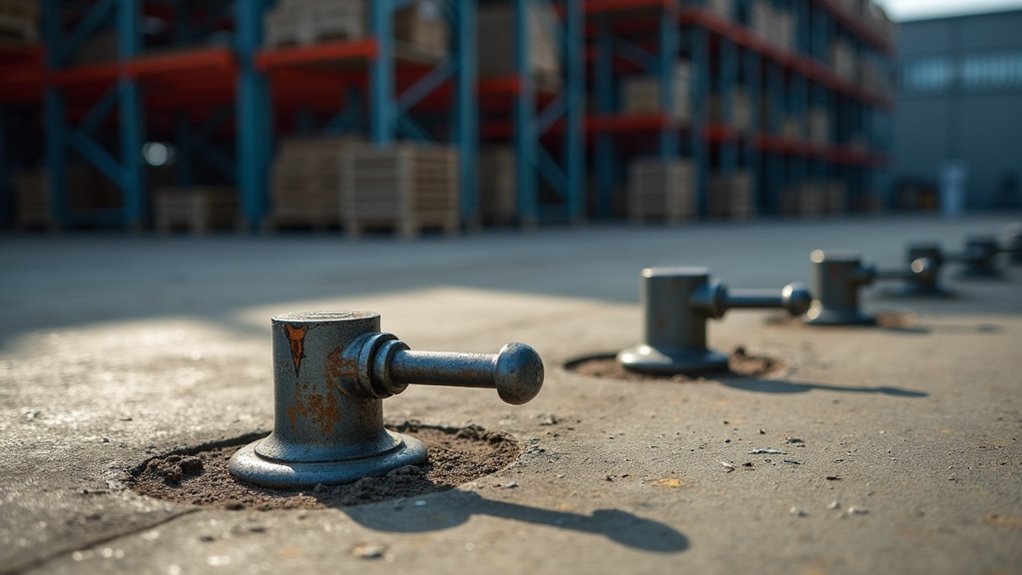
To securely fasten home gym racks to concrete, use wedge anchors. They provide a reliable hold for heavy equipment, ensuring peak stability and safety during your workouts. To install them, you’ll need a hammer drill with a masonry bit for pre-drilling holes. Each vertical post of your gym rack should receive one anchor for optimal support. Be sure to apply the proper torque to prevent damage while securing the anchors. For detailed installation steps and additional anchoring solutions tailored to your home gym setup, continue exploring the various options available to enhance your fitness environment.
Key Takeaways
- Wedge anchors are the preferred choice for securing heavy home gym equipment like squat racks and weight benches to concrete floors.
- Other options include screw anchors for temporary setups, such as adjustable benches, and sleeve anchors for lighter equipment like dumbbell racks.
- Proper installation involves pre-drilling holes and using a hammer drill with a masonry bit to ensure a secure fit.
- Each vertical post of your gym equipment should have one anchor to ensure maximum stability and safety during your workouts.
- Regular checks and correct torque application are essential for maintaining anchor reliability and ensuring your home gym remains safe and effective.
Understanding Concrete Anchors for Pallet Racks
When setting up your home gym and securing your equipment, particularly heavy items like pallet racks, understanding the right anchors for your flooring is crucial for ensuring stability and preventing accidents.
Wedge anchors are a popular choice for securing equipment to concrete floors, available in various sizes, such as 1/4”, 3/8”, 1/2”, and 5/8”. This variety allows you to select the right strength based on the weight of your gym equipment.
To install these anchors, you’ll need a hammer drill equipped with a masonry bit to pre-drill precise holes that ensure a proper fit. Typically, each vertical post of your equipment should have one anchor to ensure maximum stability.
It’s essential to apply the correct torque during installation to prevent any damage to the anchors and ensure a secure hold. Following these steps will help guarantee that your home gym is safely anchored and ready for your fitness routines.
Types of Anchors for Securing Racks
Choosing the right type of anchor for securing your home gym equipment is essential for ensuring safety and stability in your workout space.
For permanent installations, wedge anchors are ideal due to their durability and load-bearing capacity, making them perfect for heavy-duty items like squat racks or multi-gym systems.
Wedge anchors offer unmatched durability and load-bearing strength, making them essential for securing heavy-duty gym equipment like squat racks.
If you need a temporary solution, consider screw anchors, which are removable and reusable, allowing you to easily rearrange your gym setup as needed.
Sleeve anchors may work for light to medium-duty equipment, but they aren’t suitable for heavier items like power racks or heavy benches.
For high-strength needs, adhesive anchors provide a robust hold with epoxy-filled holes, ensuring your gear stays securely in place during intense workouts.
Finally, strike anchors expand upon impact, allowing for quick installation, though they require precise placement to guarantee effectiveness in securing your gym equipment.
When to Use Wedge Anchors
Using wedge anchors is essential for securing home gym equipment to concrete floors, especially after assembling your workout stations.
Before installation, ensure you have a detailed layout of your gym space to facilitate the proper placement of wedge anchors. This planning stage is crucial since once installed, wedge anchors can’t be removed without cutting, which could affect future rearrangements of your gym setup.
Proper anchoring with wedge anchors is typically one of the final steps to maximize stability and safety for your equipment.
To determine the right size and quantity for your specific gym configuration, it’s advisable to consult a professional. Their expertise will help ensure that your home gym equipment is effectively secured to the concrete flooring, allowing you to focus on your fitness goals without worry.
Step-by-Step Installation Process
To ensure a safe and secure setup of your home gym equipment, follow these five essential steps carefully.
First, level the gym equipment frames using shims to ensure they’re upright and stable.
Next, drill holes through the baseplate of each vertical post using a hammer drill and masonry bit, following the manufacturer’s guidelines for depth.
Make sure to clear the drilled holes of any debris using a vacuum or wire brush.
Insert your chosen anchors, such as wedge anchors, into the holes, and tighten the nuts with an impact driver or socket wrench, being careful not to over-torque.
Finally, double-check that all anchors are securely fastened and that the equipment is stable and ready for use.
Importance of Proper Anchoring
The stability of your home gym equipment is crucial for ensuring a safe and effective workout environment. Proper anchoring plays a vital role in maintaining safety during your exercise sessions.
By effectively securing your gym equipment, like weight racks and benches, to the floor, you can prevent accidents caused by shifting or tipping over, especially during intense workouts.
Effectively securing gym equipment prevents accidents from shifting or tipping, ensuring a safer workout experience.
It’s essential to follow guidelines similar to those outlined by safety organizations, as improperly anchored equipment can lead to serious injuries. Each piece of equipment should be securely anchored, particularly if you’re using heavy weights or if your gym is located in an area prone to movement, such as a basement or garage.
Regular checks on the integrity of these anchors are important for your safety and can help you maintain a secure and reliable home gym.
Prioritizing proper anchoring not only protects your equipment and space but also ensures your workouts can be as safe and productive as possible.
Safety Standards and Compliance
When setting up your home gym, ensuring safety is a top priority, and adhering to established safety standards and regulatory guidelines is essential. One key aspect is anchoring your equipment, such as racks, to the floor to maintain stability and prevent tipping hazards.
Remember, OSHA emphasizes the importance of a hazard-free environment, and unanchored racks can lead to serious safety risks.
To keep your home gym in compliance, follow ANSI and RMI standards by securely bolting down your racks—aim for at least one anchor per column, especially if you live in high-load or seismic-prone areas.
Additionally, staying compliant with local building codes is crucial to minimize liability in the event of accidents.
Regularly inspect your anchoring system to ensure continuous compliance with safety standards and to prevent any potential failures, allowing you to focus on achieving your fitness goals safely.
Case Study: Successful Rack Installations
Successful home gym setups rely on the careful selection and application of anchoring methods that ensure safety and stability during workouts.
Effective case studies illustrate essential practices:
- Use wedge anchors that expand in concrete for maximum stability, especially during high-intensity movements.
- Drill pilot holes with a hammer drill and select anchors at least 3/8 inches in diameter for compatibility with home gym racks.
- Consult professionals to determine if additional anchors are necessary in areas with heavy equipment, ensuring compliance with safety standards for home gyms.
Choosing the Right Anchoring Solution
Selecting the right anchoring solution is crucial for ensuring the safety and stability of your home gym equipment. Wedge anchors offer strong holding power for securing various gym components to concrete, making them ideal for permanent installations in your workout space.
Choose appropriate anchor sizes based on the weight of your equipment, such as 1/4” x 2 1/4” or 1/2” x 4-1/2”. Make sure to use pre-drilled holes and adhere to specifications for depth and diameter to ensure proper installation.
Always assess the condition of your concrete floor, as its integrity can significantly affect the effectiveness of your anchors.
Finally, consult with a professional to ensure compliance with local building codes and standards, guaranteeing a robust and safe setup for your home gym.