When adjusting your bench for incline pressing at home, aim for a 30-degree angle to optimize upper chest activation while minimizing shoulder strain. Engage your shoulder blades by squeezing them together and down, which stabilizes your shoulders and enhances your pressing power. Opt for a grip just outside shoulder-width for better control and to prevent overextending your arms. Additionally, keep your core tight and feet flat on the ground for a solid foundation. Mastering these adjustments will greatly enhance your home workout experience and contribute to your overall fitness goals.
Key Takeaways
- Set the incline bench angle to 30 degrees for optimal upper chest activation and reduced shoulder strain, making it ideal for home workouts.
- Maintain proper shoulder blade engagement by squeezing them together and down, which enhances posture and increases pressing power—key for effective home gym routines.
- Use a grip width just outside shoulder width to ensure stability while maximizing chest activation during the press, perfect for both men and women.
- Ensure core stability by keeping feet flat on the ground and engaging your core and glutes, which helps prevent loss of control during your home exercises.
- Avoid steep incline angles and overextending arms to maintain tension on the chest and reduce injury risk, essential for safe and effective home training.
Importance of Proper Bench Angle
The angle of your bench is vital for optimizing your incline pressing effectiveness, especially when working out at home. For targeting the upper chest effectively, an incline bench angle of 30 degrees is ideal. This angle enhances pectoralis major activation while minimizing shoulder strain, making it perfect for home gym enthusiasts.
When you increase the angle beyond 45 degrees, the focus shifts to your shoulders, which can impede upper chest development. If you encounter shoulder discomfort, lowering the bench to 15 degrees can provide a more comfortable pressing motion while still engaging the chest muscles.
Utilizing an adjustable bench in your home gym allows you to find your perfect angle, helping to prevent muscle imbalances between your upper chest and front deltoids, and promoting balanced upper body development for both men and women exercising at home.
Shoulder Blade Engagement Techniques
While engaging your shoulder blades might seem like a small detail, it can significantly enhance your incline pressing performance, especially when using home gym equipment.
Proper shoulder blade positioning—squeezing them together and down—ensures ideal posture and boosts upper chest engagement during your workouts. This technique stabilizes the shoulder joint, maximizing pressing power while minimizing unnecessary activation of the front deltoids.
Neglecting to engage your shoulder blades can lead to rounded shoulders, increasing the risk of injuries and diminishing workout effectiveness. Resetting them before each rep promotes muscle activation and helps maintain focus on your chest.
Consistent engagement throughout your set not only improves performance but also plays a vital role in preventing muscle imbalances between your upper chest and front deltoids.
Grip Width Adjustments for Stability
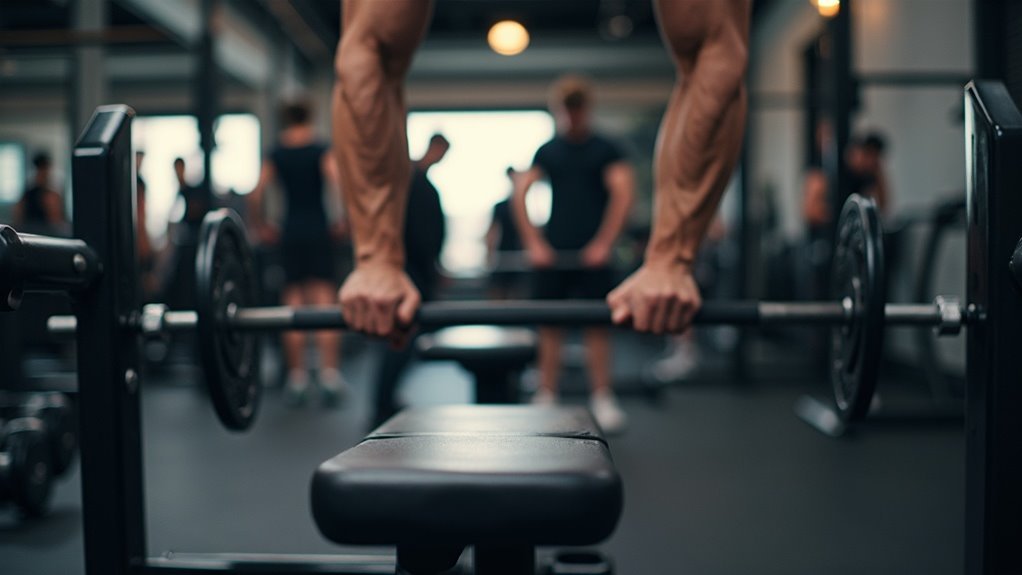
Engaging your shoulder blades is crucial for optimizing your incline pressing technique, and one of the most important factors to consider is your grip width. A grip just outside shoulder width is ideal, as it supports optimal performance and maximizes chest activation. Adjusting your grip can significantly impact your stability and control during exercises, so it’s essential to find a position that feels comfortable for you.
| Grip Width | Benefits | Considerations |
|---|---|---|
| Wider Grip | Allows for handling heavier weights | Can reduce range of motion |
| Shoulder Width | Provides the best chest activation | Helps maintain control |
| Closer Grip | Enhances muscle activation | Engages the upper chest more directly |
Selecting the right grip width is vital to prevent imbalances and improve the effectiveness of your home workouts. Remember, a stable and controlled pressing technique not only contributes to your strength but also promotes a healthier exercise routine at home.
Core and Lower Body Stability
Achieving a solid foundation during the incline bench press at home hinges on your core and lower body stability. Maintaining core stability is essential for ideal power transfer from your legs to your upper body, especially when using home gym equipment.
Keep your feet flat on the ground to enhance lower body stability, and push your knees out to maintain a solid base. An arched back, combined with an engaged core and glutes, helps prevent loss of control during the pressing movement.
If you notice any looseness in your core or legs, take a moment to reset your position. This focus not only improves your lifting efficiency but also considerably reduces the risk of injury during heavy lifts in your home gym.
Common Mistakes to Avoid
When it comes to incline pressing at home, overlooking common mistakes can significantly hinder your progress and increase the risk of injury.
Ensure that your incline bench press form is correct; using an angle that’s too steep shifts focus from your upper chest to your shoulder muscles, which can limit your results.
Maintain a grip that’s slightly wider than shoulder-width for stability and proper muscle activation.
Avoid overextending your arms, as this decreases tension on your chest and can lead to injury.
Finally, control the lowering phase of the press to prevent poor form and maximize muscle growth.