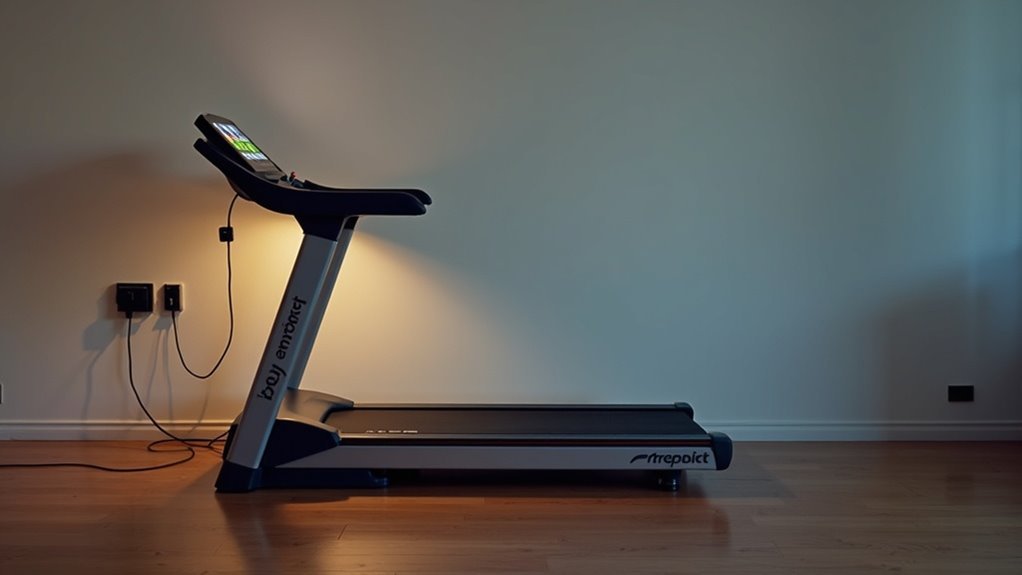
Treadmills designed for home use typically require a standard 120 Volt AC outlet and a dedicated 15 Amp circuit to ensure safe and efficient operation. For those considering commercial-grade models for their home gym, you may need to accommodate a 20 Amp service or even a 220 VAC outlet. It’s crucial to plug your treadmill directly into a grounded outlet, avoiding GFCI outlets and surge protectors, as these can disrupt your workout. Regularly check your electrical connections to maintain optimal performance and prevent any issues. For more tips on maintaining your treadmill and understanding its electrical needs, explore our resources to help you stay fit and healthy at home.
Key Takeaways
When setting up your home gym with a treadmill, it’s essential to understand its electrical requirements for safe and optimal performance. Here’s what you need to know:
- For residential treadmills, a dedicated 15 Amp circuit powered by a standard 120 Volt AC outlet is typically necessary. This ensures your treadmill operates smoothly during your workouts.
- If you’re opting for a commercial-grade treadmill for a more intense exercise experience, it may require a dedicated 20 Amp service or 220 VAC to accommodate higher power demands.
- It’s important to avoid using GFCI outlets or surge protectors, as these can interfere with the treadmill’s functionality and disrupt your workout sessions.
- Always connect your treadmill directly to a grounded outlet for safety and to maintain peak performance during your fitness routines.
- For the best results and to address any specific electrical specifications, be sure to consult the treadmill’s owner’s manual. This will guide you in troubleshooting and ensuring your home gym equipment is set up correctly for a healthy lifestyle.
Understanding Treadmill Power Specifications
When setting up your home treadmill, understanding its power specifications is crucial for safe and efficient operation.
Residential treadmills typically operate on a standard 120 Volt AC outlet, requiring a dedicated 15 Amp circuit.
It’s important to plug directly into a grounded outlet, as GFCI outlets and surge protectors can disrupt functionality.
For optimal performance, always refer to the owner’s manual for specific electrical specifications to ensure compliance, maintain safety, and preserve your warranty.
This way, you can effectively enjoy your fitness routine in the comfort of your home gym.
Electrical Outlet Requirements for Treadmills
Electrical outlet requirements for treadmills are crucial for ensuring safe and efficient operation in your home gym. Most residential treadmills require a standard 120 Volt AC outlet, ideally on a dedicated 15 Amp circuit to prevent any risk of overload.
If you’re considering a commercial-grade treadmill, you may need a 20 Amp service or even higher voltage options, such as 220 VAC.
It’s essential to avoid using GFCI outlets; instead, plug your treadmill directly into grounded outlets to ensure optimal performance. Additionally, never connect your treadmill to surge protectors, as they can interfere with power supply and pose safety hazards.
Circuit Needs and Dedicated Lines
When setting up your home gym with a treadmill, it’s crucial to use a dedicated circuit to avoid any power-sharing issues that could impact performance.
A dedicated line ensures that only your treadmill draws power, significantly reducing the chances of tripping circuit breakers during your workout sessions.
Following these electrical requirements is vital for your safety and in compliance with electrical standards, allowing you to focus on your fitness goals without interruptions.
Whether you’re pushing through a run or a brisk walk, having the right setup in place enhances your exercising experience at home.
Dedicated Circuit Importance
To ensure your treadmill performs at its best and lasts for years to come, it’s crucial to use a dedicated circuit that meets its power requirements. Treadmills need adequate power to function effectively, and having a dedicated circuit minimizes interference from other appliances, which helps to prevent tripped breakers.
For home use, a dedicated 15 Amp circuit is typically sufficient, while commercial-grade treadmills may require a 20 Amp service. Always plug your treadmill directly into a grounded outlet to achieve optimal performance, as GFCI outlets and surge protectors can interrupt the power supply.
Before setting up your treadmill, consult with a licensed electrician to confirm that your electrical system aligns with the treadmill’s specific power needs and complies with local regulations.
Prioritizing this setup not only enhances your workout experience but also supports your overall health and fitness journey from the comfort of your home.
Power Sharing Risks
Sharing a circuit with other devices can significantly jeopardize your treadmill’s performance and safety, which is crucial for your home workout routine.
When multiple devices draw power from the same circuit, your treadmill may face power starvation, resulting in malfunctions or tripped circuit breakers that could interrupt your workout sessions.
To ensure optimal operation and a seamless experience, it’s essential to use a dedicated outlet specifically for your treadmill.
Steer clear of extension cords and power strips, as they can pose fire hazards and compromise the power supply.
By adhering to the manufacturer’s specifications for circuit requirements, you not only enhance your treadmill’s longevity but also safeguard your investment, maintaining your warranty and preventing potential equipment damage.
Prioritize your home gym setup for a safer and more effective exercise experience!
Circuit Breaker Requirements
Ensuring your treadmill operates effectively is essential for maintaining a healthy home workout routine. Understanding its circuit breaker needs is a key step in setting up your home gym.
Most residential treadmills require a dedicated 15 Amp circuit, while those designed for commercial use typically need a 20 Amp service due to their higher electrical demands. This dedicated circuit ensures that your treadmill has the power it needs without interference from other devices, preventing issues related to insufficient voltage.
It’s important to note that GFCI outlets aren’t suitable for treadmill installations, as they can disrupt the power flow necessary for optimal performance.
To guarantee safety and compliance with local electrical codes, it’s highly recommended to consult a licensed electrician. They can assess your home gym setup and establish the correct circuit requirements tailored specifically to your treadmill, ensuring a safe and effective workout environment for both men and women.
Safety Precautions to Follow
How can you maximize safety while using a treadmill at home? First, ensure you plug the treadmill directly into a grounded outlet.
It’s best to avoid using GFCI outlets or surge protectors, as these can compromise your safety. Don’t modify the plug or remove the ground prong from the power cord, as this can create serious hazards.
Avoid GFCI outlets or surge protectors, and never modify the plug to ensure your safety while using the treadmill.
Make sure the treadmill is connected to a dedicated, non-switched, non-GFI circuit—ideally a 15 Amp circuit—to prevent any risk of overloading.
Regularly inspect electrical connections for any signs of wear, and keep the treadmill away from water sources to minimize the risk of electrical shock.
Lastly, consulting a certified electrician for proper circuit handling and compliance will help maintain both the warranty and longevity of your equipment.
Importance of the Owner’s Manual
While the excitement to start your home workout on your new treadmill is understandable, it’s crucial to recognize the significance of the owner’s manual for safe and effective use. The manual outlines important power specifications, such as voltage, amperage, and circuit requirements, which are vital in preventing hazards like circuit overloads. It also offers troubleshooting tips to swiftly address any electrical issues that may arise. Following the guidelines in the owner’s manual is essential not only for maintaining your treadmill’s warranty but also for ensuring it operates at peak performance.
| Component | Specification | Importance |
|---|---|---|
| Voltage | Specific to model | Safety and efficiency |
| Amperage | Model-dependent | Prevents circuit overloads |
| Circuit Requirements | Follow manual | Compliance with safety standards |
| Troubleshooting | Included in manual | Quick resolution of issues |
| Warranty Terms | Refer to manual | Protects your investment |
Repair and Maintenance Considerations
To keep your treadmill in peak condition and ensure your home workouts remain effective, establish a regular maintenance schedule that includes lubricating the belt and inspecting electrical connections.
Be aware of common repair issues, such as worn drive belts or malfunctioning motors, which can hinder your fitness progress. Knowing when and how to replace parts will help you maintain durability, avoid costly repairs, and keep your home gym running smoothly for both men and women dedicated to staying healthy through exercising at home.
Regular Maintenance Schedule
Regular maintenance is crucial for ensuring the longevity and safety of your treadmill, which plays a vital role in your home gym experience. By keeping your equipment in top shape, you can enhance performance and reduce the risk of mechanical failures.
Establish a routine that includes checking and tightening bolts to maintain structural integrity. Be sure to lubricate the treadmill belt every 3-6 months to minimize friction and extend the lifespan of both the deck and motor, ensuring your workouts remain smooth and effective.
Regularly inspect electrical connections and the power cord for any signs of wear or damage that could pose safety risks. Additionally, clean your treadmill—especially around the belt and motor—to prevent dust buildup and maintain optimal performance.
If applicable, flip the deck to maximize its usable surface and enhance durability, allowing you to enjoy your home workouts for years to come.
Common Repair Issues
Understanding common repair issues is essential for maintaining the performance and safety of your treadmill, which is a vital part of your home gym. Motor malfunctions often arise from inadequate power or improper electrical setup, potentially leading to overheating. Furthermore, debris accumulation can damage various components of your treadmill. Regular maintenance, such as lubricating the belt and inspecting wiring, is crucial to prevent these issues. Here’s a summary of common problems to keep your workouts uninterrupted:
| Repair Issue | Cause | Solution |
|---|---|---|
| Motor Malfunction | Improper electrical setup | Check power supply |
| Tripped Circuit | Electrical issues | Consult a certified electrician |
| Belt Wear | Lack of lubrication | Regularly lubricate the belt |
| Overheating | Inadequate power supply | Ensure correct voltage supply |
| Debris Accumulation | Unclean area | Use protective mats to keep area tidy |
Parts Replacement Tips
When maintaining your home gym equipment, particularly your treadmill, it’s crucial to focus on parts replacement to ensure optimal performance and longevity.
Regularly inspect and replace worn or damaged components, especially the belt and deck, to prevent further issues. Always opt for manufacturer-approved replacement parts to guarantee compatibility and protect your warranty.
Schedule annual preventive maintenance checks to catch potential problems early and keep your treadmill running smoothly. Additionally, lubricate the belt and deck following the manufacturer’s guidelines to reduce friction and enhance the lifespan of these components.
Lastly, maintain a detailed record of all repairs and replacements to effectively track your treadmill’s maintenance history and performance trends, ensuring your home workouts remain effective and enjoyable.
User Experience and Performance Factors
While achieving an ideal user experience on a treadmill is crucial for both men and women looking to stay healthy through home workouts, it largely depends on the machine’s electrical requirements.
Ensuring that your treadmill operates within the right power parameters is essential for maintaining optimal performance. To prevent tripping breakers and ensure stability, use a surge protector and connect your treadmill to a dedicated 15-20 Amp circuit.
Ensure your treadmill is connected to a dedicated 15-20 Amp circuit with a surge protector for optimal performance and stability.
Treadmills equipped with advanced features typically demand more power, so it’s important to refer to the owner’s manual for specific consumption details.
Avoid using GFCI outlets, as they may lead to malfunctions that can interrupt your workout. Regular maintenance and ensuring proper electrical connections not only enhance reliability but also contribute to a safer and more enjoyable exercise experience.
Understanding these factors is key to achieving peak performance from your home gym equipment.