To prevent tile creep in your home gym, it’s essential to choose flooring adhesives that ensure a strong bond and stability, especially with the varying temperatures and humidity levels that can occur. Look for plasticizer-resistant adhesives, as they provide a durable hold. If you’re installing flooring in a space that needs flexibility, pressure-sensitive adhesives are a great option. For high-traffic areas, consider two-part epoxy adhesives for their exceptional strength. In humid environments, moisture-cured adhesives are crucial to maintaining your flooring’s integrity. Always ensure compatibility with your flooring materials to avoid any potential failures. By understanding these adhesive options, you can make informed choices for your home gym that promote a safe and lasting workout environment.
Key Takeaways
- Plasticizer-resistant adhesives are crucial for vinyl-backed flooring in home gyms, preventing degradation and ensuring a strong bond that can withstand intense workouts.
- Pressure-sensitive adhesives offer initial tack and flexibility, making them perfect for high-traffic areas like home gyms, where equipment is frequently moved.
- Two-part epoxy adhesives provide superior bonding strength and stability, making them ideal for high-stress environments where heavy gym equipment is used.
- Moisture-cured adhesives help maintain dimensional stability, making them effective in humid home gym conditions and over new concrete slabs.
- High-performance acrylic adhesives transition from pressure-sensitive to hard-set, ensuring long-lasting adhesion and durability for your home gym flooring.
Understanding Tile Creep and Its Causes
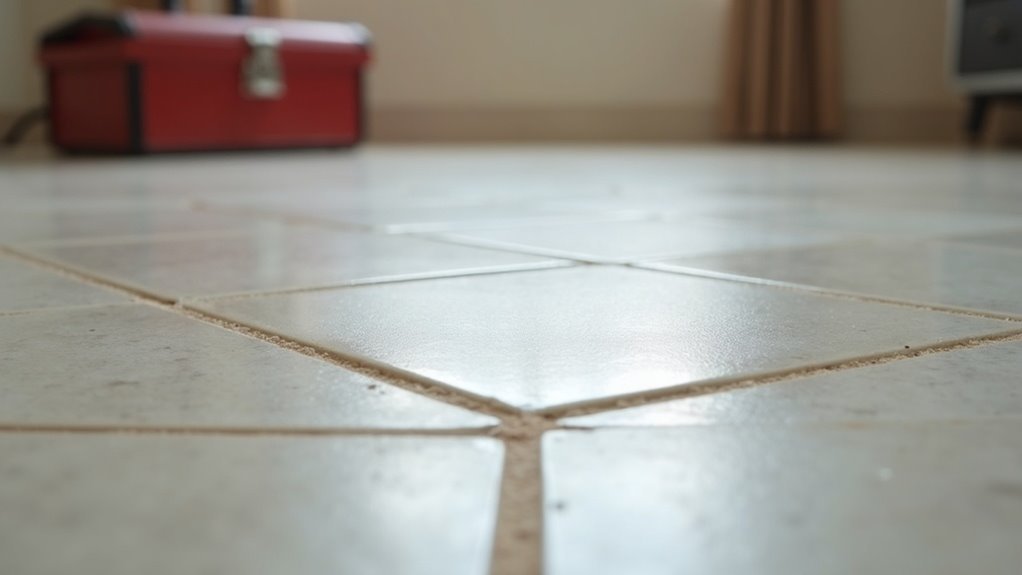
Tile creep can be a frustrating issue, especially in home gym spaces where maintaining a safe and stable environment is crucial for workouts. This shifting of tiles often results from inadequate adhesive bonds or environmental factors like temperature and humidity fluctuations.
Tile creep in home gyms can compromise safety, often caused by weak adhesive bonds or environmental changes.
In a home gym, using adhesives that aren’t designed for specific flooring materials can make tile creep more likely, particularly in areas with high moisture from sweat or cleaning.
Poor installation practices, such as insufficient adhesive coverage or improper curing, can further compromise the bond, leading to uneven surfaces that may pose a trip hazard during exercise.
Moreover, some flooring materials used in gyms may contain plasticizers that can cause adhesive failures if the adhesive isn’t resistant to them.
Understanding moisture resistance and the compatibility of your flooring and adhesive is essential to prevent tile creep and ensure a safe and effective home workout environment.
Importance of Selecting the Right Adhesive
When selecting the right adhesive for your home gym flooring, it’s crucial to consider how it will perform under various conditions. A quality adhesive can prevent tile creep and ensure long-lasting durability, which is essential for maintaining a safe workout environment.
Here are some key factors to keep in mind:
- Opt for an adhesive designed for high moisture resistance to handle sweat and spills effectively.
- Use a pressure-sensitive adhesive for initial tack and flexibility, allowing for easy adjustments during installation.
- Choose a two-part epoxy for superior bonding strength in high-traffic areas where heavy equipment may be used.
- Confirm compatibility with flooring plasticizers to prevent degradation over time.
- Assess how climate fluctuations, such as changes in humidity and temperature, could impact the adhesive’s performance.
Types of Flooring Adhesives for Resilient Installations
Choosing the right type of flooring adhesive is crucial for creating a resilient home gym environment that can withstand heavy use and maintain its integrity over time.
For vinyl-backed flooring materials, it’s important to use plasticizer-resistant adhesives to ensure durability. Pressure sensitive adhesives are flexible and ideal for gym installations, especially where heavy equipment will be rolled in and out frequently.
Latex/SBR rubber adhesives work well with heterogeneous felt or mineral-backed products, effectively preventing any shifting or movement of the tiles.
If your home gym experiences high-stress activities, consider using two-part epoxy adhesives; just be sure to mix them carefully for optimal results.
In areas with high moisture, moisture-cured adhesives, whether polyurethane-based or modified silane, will help maintain a stable and secure flooring system, ensuring your home gym remains a safe and effective space for your fitness journey.
Key Features of Adhesives to Prevent Tile Movement
To effectively create a stable and safe flooring environment for your home gym, it’s essential to select adhesives with specific features that cater to the demands of your space.
Look for these key characteristics:
- Pressure-sensitive adhesives for strong initial tack, ensuring mats and tiles stay securely in place during workouts.
- Moisture-cured adhesives to maintain dimensional stability, especially important in environments where sweat and humidity are present.
- High-performance acrylic adhesives that transition from pressure-sensitive to hard-set, providing durability for heavy gym equipment.
- Plasticizer-resistant formulations to prevent migration that could compromise the integrity of your flooring over time.
- High moisture tolerance for installations over new concrete slabs, ensuring your workout area remains safe and effective.
Installation Best Practices for Long-Lasting Results
Selecting the right home gym equipment is just the beginning; installation and setup practices play a crucial role in ensuring your workout space remains functional and motivating over time.
Begin with proper placement of equipment to optimize space and reduce the risks associated with clutter. Ensure the floor is clean, dry, and free of debris to achieve a safe workout environment.
Opt for high-quality mats or flooring options to provide cushioning and prevent equipment slippage effectively. Additionally, consider using wall-mounted storage solutions for enhanced organization and to maximize space efficiency.
Educate users on maintaining a consistent workout routine and controlling the environment, such as temperature and humidity, to further support long-lasting results in your home gym setup.
Environmental Considerations in Adhesive Selection
When selecting flooring adhesives for your home gym, it’s essential to understand how environmental factors like temperature and humidity can influence their performance.
Choosing the right adhesive ensures a durable installation, preventing issues like tile creep due to moisture fluctuations. Here are key considerations for your home gym setup:
- Check local building codes relevant to flooring installations.
- Conduct moisture testing using ASTM F2170 or ASTM F1869 to ensure a dry surface.
- Select adhesives that are suitable for the climate in your area to maintain performance.
- Consider using an underlayment with wood substrates to provide moisture protection.
- Ensure the adhesive can accommodate movement caused by temperature changes.
These factors work together to create a stable flooring system that can endure the physical demands of a home gym while effectively handling environmental challenges.