To keep your treadmill running smoothly and ensure a great workout experience at home, perform regular inspections every 125 miles or every three months, and make it a habit to clean the belt after each use. Lubricate the running deck with 100% silicone oil every three months to maintain optimal performance, and check the belt tension weekly for a safe and effective workout. Don’t forget to test safety features frequently, such as the emergency stop button, to ensure everything is functioning correctly. If you notice any issues like burning smells or malfunctioning displays, address them immediately. Consistent maintenance not only enhances performance but also keeps your workouts safe and enjoyable. Dive deeper into maintenance tips to maximize your treadmill’s efficiency and support your home fitness journey.
Key Takeaways
- Conduct regular inspections every 125 miles or every three months to identify and address worn components, ensuring your home treadmill remains in top condition for your fitness journey.
- Clean the treadmill surface and belt after each workout to prevent buildup and maintain efficiency, promoting a healthier workout environment.
- Lubricate the running deck with 100% silicone oil every three months for optimal performance, helping you achieve your fitness goals smoothly.
- Adjust belt tension weekly to prevent slipping and ensure a smooth workout experience, allowing you to focus on your exercise routine without interruptions.
- Document maintenance history to track issues and ensure consistent upkeep, extending the lifespan of your treadmill and supporting your commitment to staying healthy at home.
Importance of Treadmill Maintenance
Maintaining your treadmill is crucial for keeping your home gym equipment in top-notch condition. Regular cleaning and attentive care can help prevent wear and tear, stopping minor issues from turning into significant problems.
By sticking to a maintenance schedule—such as lubricating your treadmill every three months—you can optimize its performance and protect your investment. This proactive approach not only extends the lifespan of high-quality treadmills, which can last up to 10 years, but also minimizes the risk of injury by addressing potential malfunctions early on.
In the end, consistent treadmill maintenance enhances your workout experience and promotes safer, more effective exercising at home for both men and women.
Types of Maintenance Required
To ensure your treadmill operates smoothly and serves you well in your home gym, several types of maintenance are essential. Conduct regular inspections every 125 miles or every three months to identify any damaged components, such as bolts or electrical parts.
Always clean your treadmill after each use, and aim for a thorough cleaning weekly or bi-weekly to keep it in top shape. If you’re using your treadmill daily, lubricating the belt every three months is crucial to reduce friction and extend its lifespan.
Additionally, make it a habit to adjust the belt tension weekly to prevent any slipping during your workouts. Lastly, prioritize immediate repairs for any broken parts to maintain functionality and avoid further damage.
These maintenance tasks are vital for optimal performance and your safety as you work towards your fitness goals at home.
Maintenance Frequency
To keep your home treadmill running efficiently and to support your fitness journey, it’s important to adhere to a structured maintenance schedule.
Perform a comprehensive inspection and maintenance every 125 miles or every three months. Additionally, make sure to clean your treadmill after each use, and conduct a more thorough cleaning weekly or bi-weekly.
Staying on top of these maintenance tasks won’t only enhance the performance of your equipment but also extend its lifespan, ensuring you have a reliable workout partner for years to come.
Inspection Schedule
Regular inspections are essential for maintaining peak performance and safety of your treadmill in your home gym. Conduct a full inspection and maintenance check every 125 miles or every 3 months to ensure your workout equipment remains in top shape.
On a regular basis, check for damaged parts, such as loose bolts or misaligned belts, which can compromise your workout. Additionally, adjust the belt tension to guarantee ideal operation, lifting 2-3 inches at the edge for optimal performance.
For those who use their treadmill daily, lubricate the treadmill belt every 3 months; for occasional users, every 6 months is sufficient.
Don’t forget to clean your treadmill after each use to prevent dirt and sweat buildup, and perform a thorough cleaning weekly or bi-weekly. Keeping your treadmill in excellent condition will help you stay consistent with your fitness goals and enjoy a safe, effective workout experience at home.
Cleaning Frequency
While you might think that occasional cleaning is sufficient, maintaining a consistent cleaning routine for your treadmill is essential for its longevity and optimal performance.
To keep your home gym equipment in top shape, perform a general cleaning after every use to prevent sweat and dirt from building up. A thorough cleaning is recommended weekly or bi-weekly to ensure your treadmill operates at peak function.
Regular maintenance tasks should also include checking the treadmill belt tension and inspecting for any signs of damage. Additionally, lubricating the belt every three months for daily users—or every six months for those who use it less frequently—can significantly enhance performance.
Steps to Maintain Your Treadmill
To keep your treadmill in peak condition and ensure your home gym remains a space for effective workouts, regular inspections, cleaning, and lubrication are essential.
Aim to check for damaged components and secure bolts every 125 miles or every 3 months.
After each workout, cleaning the belt is crucial to prevent dust and debris buildup, which can affect performance.
Furthermore, lubricating the running deck and adjusting the belt tension won’t only enhance your treadmill’s performance but also extend its lifespan, allowing you to stay committed to your fitness journey at home.
Regular Inspections Required
Regular Inspections Required
Inspections play a crucial role in ensuring your home gym treadmill performs optimally and lasts longer. By conducting regular inspections, you can identify and address issues before they become significant problems.
Aim for comprehensive inspections every 125 miles or every three months, and make it a habit to perform weekly checks. Focus on:
- Evaluating belt alignment and tension to prevent slipping, which enhances your workout experience.
- Inspecting electrical components for wear and tear, ensuring safe operation for your home exercise routine.
- Documenting your findings to maintain a record of maintenance history and spot recurring issues.
Following these steps is essential for effective treadmill maintenance, allowing you to proactively tackle potential problems and ensure a safe and efficient workout experience in the comfort of your own home.
Cleaning and Lubrication
After ensuring your treadmill is in good working order through regular inspections, it’s time to focus on cleaning and lubrication—essential tasks for maintaining optimal performance and longevity for your home gym.
Clean the treadmill surface and belt after each workout with a microfiber cloth to prevent sweat and debris buildup, keeping your equipment in top shape.
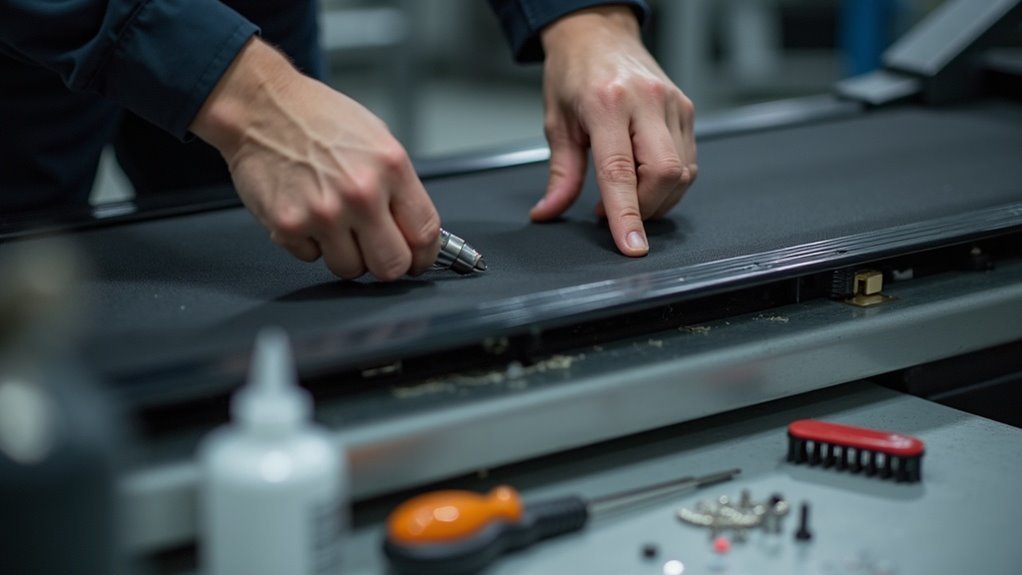
Every three months, or more frequently for heavy users, apply 100% silicone oil to the center of the treadmill belt. To ensure even distribution, run the treadmill at a slow speed for a few minutes after lubrication.
Regular maintenance helps prevent wear and tear, ensuring your treadmill operates efficiently and supports your fitness journey at home.
Adjusting Belt Tension
Maintaining the proper tension of your treadmill belt is crucial for safe and efficient home workouts. A well-adjusted belt not only enhances performance but also extends the lifespan of your equipment, ensuring you get the most out of your home gym.
Follow these steps for effective belt tension adjustment:
- Locate the tension adjustment bolts at the rear and make adjustments gradually to ensure optimal fit.
- Conduct regular checks every six months or whenever you notice slipping or hear unusual noises during your workout.
- Always unplug the treadmill before making any adjustments to guarantee your safety.
After making the adjustments, run the treadmill at a low speed for a few minutes to verify that the belt is aligned properly.
Adopting these practices will keep your treadmill running smoothly, allowing you to focus on your fitness goals without interruptions.
Keeping It Clean
To ensure your treadmill stays in top-notch condition, it’s essential to integrate regular cleaning into your maintenance routine.
After each workout, use a microfiber cloth and mild soap to wipe down the treadmill, removing sweat and preventing corrosion.
Schedule a thorough cleaning every week or two to clear away dirt and debris that can build up on the belt and deck.
Don’t forget to clean the console and handrails with a dry or slightly damp cloth to keep them functional and hygienic.
Placing a treadmill mat underneath not only captures dust and debris but also protects both your treadmill and your flooring from potential damage.
Always adhere to the manufacturer’s recommendations regarding cleaning products for optimal care.
Lubrication Guidelines
Regular lubrication of your treadmill belt is crucial for maintaining optimal performance and extending the life of both the motor and the belt.
By adhering to these lubrication guidelines, you can significantly reduce friction and avoid expensive repairs, allowing you to focus on your home workouts and fitness goals:
- Lubricate every 3 months or after every 130-150 miles of use; if you’re a heavy user, consider doing this monthly to keep your treadmill in top shape.
- Always opt for 100% silicone oil specifically designed for treadmills; steer clear of petroleum-based oils, as they can damage the belt and hinder your exercise routine.
- When applying the lubricant, do so at the center of the belt and run the treadmill at a slow speed to ensure even distribution for the best results.
Safety First
Proper maintenance of your home treadmill goes beyond just lubrication; prioritizing safety is essential for an effective workout.
Always ensure that the safety key is functional and easily accessible, as it powers off the treadmill in emergencies to prevent accidents. Regularly inspect the emergency stop button to confirm it operates correctly and is within reach during use.
Ensure the safety key is functional and accessible, and regularly check the emergency stop button for optimal safety during workouts.
If you notice any defective safety keys, replace them promptly to maintain safety standards and reduce the risk of injuries. Periodically test the emergency stop button to ensure it engages properly, enhancing your peace of mind while exercising.
Additionally, keep all safety features, including handrails and controls, in optimal working order to minimize risks and ensure a safe and effective workout experience at home.
Common Treadmill Issues and Expert Insight
Many home gym enthusiasts encounter common treadmill issues that can impact both performance and safety. To ensure your treadmill remains in optimal condition, keep these maintenance tips in mind:
- Regularly inspect components for any signs of wear and tear.
- Adjust bolts as needed to maintain stability during workouts.
- Immediately address any burning smells or malfunctioning displays to prevent further problems.
Expert insight from William Parrett highlights that tackling these common issues early on can significantly extend your treadmill’s lifespan.
It’s crucial not to overlook warped or damaged belts, as they can pose serious safety risks.
By prioritizing your treadmill’s upkeep and conducting routine checks, you can enhance functionality and safety for yourself and anyone else using your home gym equipment.
Stay committed to your fitness journey and keep your equipment in top shape for effective home workouts!