For your DIY deadlift platform, consider using structural plywood, such as 2400 x 1200 x 12mm F8, to ensure solid support and durability. A thickness of 3/4 inches will help resist warping under heavy weights, making it a reliable choice for your home gym. Pair this plywood with rubber gym tiles for excellent shock absorption and a slip-resistant surface, which is essential for safety during lifts. Adding layers of smooth MDF can enhance the overall finish of your platform, giving it a polished look that complements your workout space. By incorporating these materials, you’re not only investing in longevity but also in optimal performance for your home exercises. Explore construction techniques and maintenance tips to maximize the effectiveness of your platform and elevate your workout experience.
Key Takeaways
- For a durable and stable base, opt for structural plywood like 2400 x 1200 x 12mm F8, ensuring your home gym can withstand heavy lifting.
- Enhance your lifting experience by incorporating a smooth MDF top layer, providing an optimal surface for your workouts.
- To maximize shock absorption and slip resistance, add 10mm thick rubber gym tiles, making your deadlift platform safer and more comfortable.
- Construct the platform in three pieces for easier movement and added stability, allowing you to customize your home gym layout.
- To ensure longevity, regularly maintain your platform by cleaning it and checking for wear, keeping your home gym equipment in top shape for all your fitness goals.
Understanding Plywood Options for Weightlifting Platforms
When constructing a DIY deadlift platform for your home gym, it’s essential to choose the right plywood to ensure optimal performance and durability.
Go for structural plywood, such as 2400 x 1200 x 12mm F8, as it can handle heavy weights and resist warping over time. A thickness of 3/4 inches is recommended for solid support without sacrificing stability.
Choose structural plywood like 2400 x 1200 x 12mm F8 for durability and stability, ensuring it can handle heavy weights without warping.
To enhance your platform, consider adding a smooth MDF top layer, but be mindful of its impact resistance.
Plywood is also known for its moisture resistance, making it a reliable choice for your workout space.
To maintain a smooth surface and reinforce your platform, use countersunk screws and adhesives—perfect for creating a sturdy setup in your garage or home gym.
Benefits of Using Rubber Gym Tiles
Rubber gym tiles are an outstanding choice for creating your DIY deadlift platform, offering a wealth of benefits for both men and women who prioritize home workouts.
These 10mm thick tiles excel in shock absorption, ensuring protection for your joints and the platform itself during heavy lifts. Their robust durability guarantees they can withstand repeated weight drops without showing signs of wear, making them a reliable investment for your home gym.
You’ll also appreciate the slip-resistant surface that enhances stability while lifting, significantly reducing the risk of accidents.
Furthermore, installing rubber tiles around your lifting area effectively minimizes noise, contributing to a more enjoyable workout atmosphere.
With their customizable sizing options, you can achieve a perfect fit that seamlessly integrates with other platform materials, ensuring a professional look for your home gym setup.
Construction Techniques for a Durable Platform
To build a durable deadlift platform for your home gym, focus on construction techniques that enhance stability and longevity.
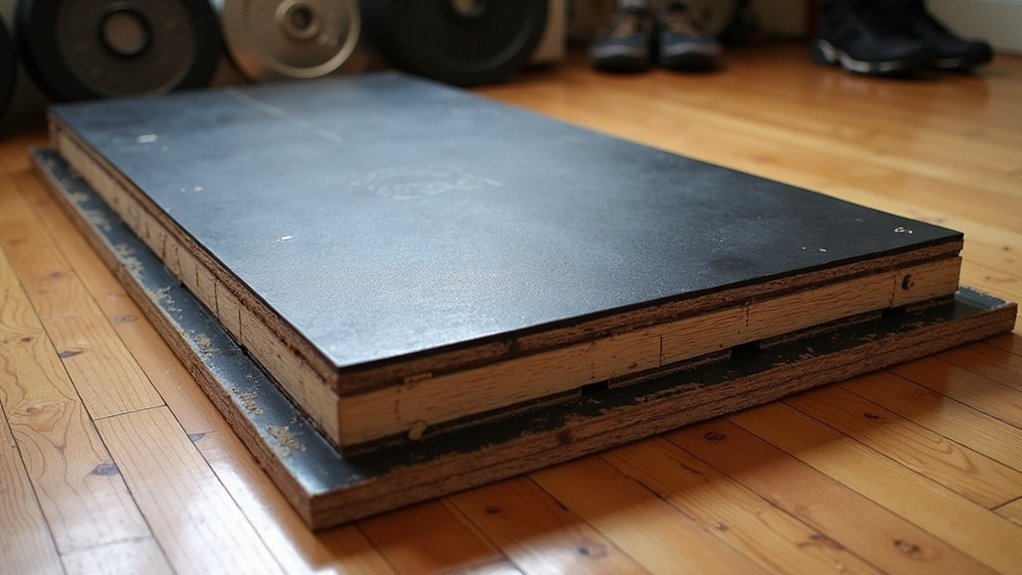
Construct the platform in three separate pieces for easier movement and repair, ensuring that seams are strategically placed between layers for optimal durability.
Utilize a combination of screws and construction adhesive, such as Selleys Liquid Nails, to create a strong bond between plywood layers and prevent any shifting during lifts.
Opt for countersunk rib head chipboard screws to avoid surface protrusions that can interfere with your workouts.
For the top layer, consider using smooth MDF to create a flat surface, ensuring it aligns seamlessly with rubber gym mats for a flush finish.
This setup will enhance grip and stability, making your home gym a safe and effective space for all your fitness goals.
Essential Tools for Building Your Platform
Building a deadlift platform at home is a great way to enhance your home gym and support your fitness journey. To ensure a successful and efficient construction process, you’ll need a few essential tools. Here’s what you should gather:
Enhance your home gym by building a deadlift platform—essential for your fitness journey and lifting success.
- Power Drill: This is crucial for assembling the platform and securing lag screws into the plywood and horse stall mats, ensuring your platform is stable and safe for lifting.
- Box Cutter: A reliable box cutter is perfect for cutting horse stall mats with precision. Make sure to keep extra blades handy for clean, straight edges.
- Chalk Line: A chalk line is invaluable for marking accurate measurements on your materials, enabling you to make straight cuts and achieve a professional finish.
- Straight Edge: This tool is fundamental for guiding cuts on larger plywood sheets, helping you maintain accuracy and prevent splintering, which is essential for a safe lifting surface.
With these tools in hand, you’ll be well-equipped to create a sturdy and effective lifting platform right in your home gym, supporting your health and fitness goals.
Maintenance Tips for Longevity
While you’ve put significant effort into creating your deadlift platform, proper maintenance is crucial for ensuring its longevity and safety for your home workouts.
Regularly check the platform for any signs of wear and tear, particularly on the lifting surface and edges. After each use, clean the surface with a mild soap and water solution to eliminate debris and moisture, keeping your gym equipment in top shape.
To protect against damage from dropped weights, reapply protective coatings like polyurethane every few months. Make sure to store weights correctly and avoid dropping them from heights, which can lead to unnecessary wear.
Additionally, consider rotating the squat rack’s position occasionally to promote even wear across the plywood lifting surface, ultimately enhancing its durability and ensuring a reliable workout environment for your fitness journey at home.