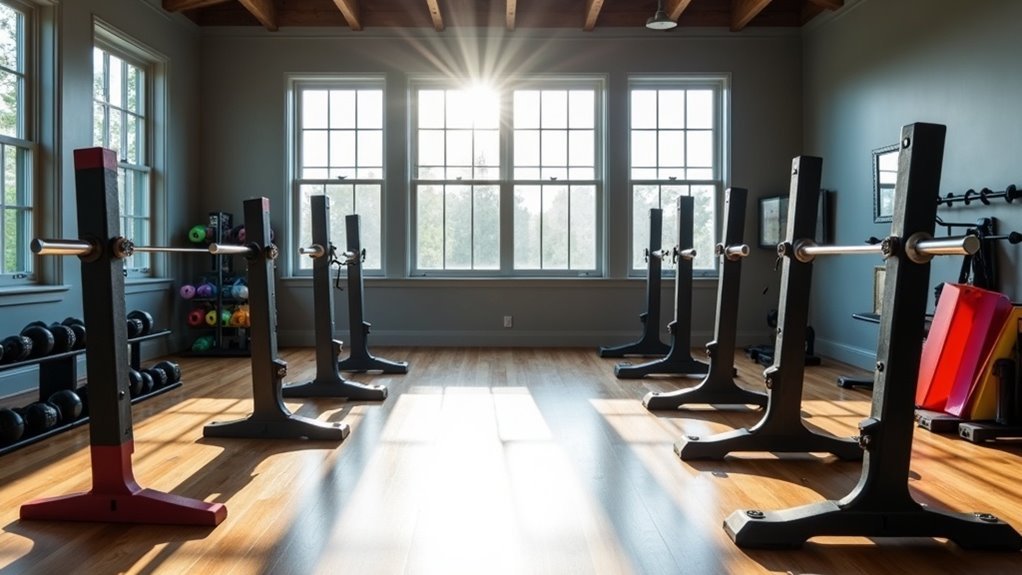
To reduce injury risk when lifting alone at home, it’s important to assess the weight of your equipment beforehand and use proper lifting techniques. Always bend your knees and keep the load close to your body for better control. Maintain a stable stance with your feet shoulder-width apart and take regular breaks to combat fatigue during your workout. Consider using tools like benches or adjustable dumbbells to minimize strain on your body. Additionally, always inform someone of your training schedule for added safety. By following these practices, you can create a safer workout environment at home and discover even more effective strategies for your fitness journey.
Key Takeaways
- Use proper lifting techniques by maintaining a neutral spine and engaging your core muscles to reduce back strain while lifting alone in your home gym.
- Keep weights close to your body, within 12 inches, to enhance control and minimize joint strain during your workouts.
- Take breaks every 30 to 60 minutes to reduce fatigue and maintain proper lifting technique, ensuring a safer and more effective exercise session.
- Inform someone about your training schedule and keep a mobile phone nearby for quick assistance in case of injury while exercising at home.
- Regularly assess your home gym environment for hazards and utilize supportive tools like weightlifting benches or adjustable dumbbells to ensure safety and enhance your workout experience.
Assess the Weight Before Lifting
Before you lift any home gym equipment, it’s essential to assess its weight. Knowing if you can handle it helps with injury prevention and reduces your risk of strains or back injuries.
Assess the weight of your home gym equipment before lifting to prevent injuries and ensure safe workouts.
Test the weight by lifting one end or using a scale if available. Consider the weight distribution and balance; awkward loads can lead to improper form, increasing the chances of injury.
If the equipment exceeds your comfortable limit, don’t hesitate to ask for help or use mechanical aids. Regularly evaluating your lifting capacity and staying aware of fatigue will maintain your safety, as muscle fatigue can compromise stability during lifting.
Stay safe and lift smart to make the most of your home workout!
Use Proper Lifting Techniques
Using proper lifting techniques is crucial for preventing injuries and ensuring a safe home workout experience.
Always maintain a neutral spine and engage your core to minimize the risk of back strain while using your home gym equipment. Bend at your knees and keep the load close to your body, relying on your legs for lifting rather than your back.
Avoid twisting your torso; instead, pivot your feet to change direction while maintaining proper alignment. Before lifting, test the weight to confirm you can handle it safely.
Lastly, plan your lift by ensuring a clear path and stable footing, which will help further reduce the risk of falls and accidents during your workout at home.
Stay safe and healthy while exercising!
Maintain a Stable Stance
To maintain a stable stance while lifting at home, position your feet shoulder-width apart and keep your weight close to your body.
Engaging your core muscles provides essential support and balance during your lifts.
Remember, having a solid base is crucial for preventing injury and ensuring safe lifting practices, whether you’re using free weights or resistance bands in your home gym.
Prioritizing safety will help you achieve your fitness goals effectively.
Feet Shoulder-Width Apart
Feet shoulder-width apart creates a stable base for lifting, which is essential for maintaining balance and preventing falls while exercising at home.
This stance allows you to:
- Distribute body weight more evenly, enhancing overall stability during workouts
- Minimize strain on your back and lower limbs, promoting a safe and effective exercise routine
- Engage your legs and core effectively, ensuring you get the most out of your home gym sessions
- Prevent awkward twisting motions, reducing the risk of injury as you work towards your fitness goals
Incorporating this stance into your home workouts can help you stay healthy and perform exercises safely, regardless of your fitness level.
Keep Weight Close
Maintaining a stable stance while exercising at home is essential for safety and efficiency. Always keep your back straight and position any weights or equipment close to your body to reduce strain on your back and shoulders.
Stand with your feet shoulder-width apart for better balance and control during your workouts. When lifting weights or using gym equipment, utilize a squat technique by bending your knees and lowering your hips—this keeps the weight near your center of gravity, minimizing the risk of strains and sprains.
Avoid twisting your body; instead, pivot your feet to maintain a stable stance and ensure safe lifting techniques throughout your home workout routine.
Engage Core Muscles
Engaging your core muscles is crucial for maintaining a stable stance while using home gym equipment. This practice not only helps you uphold proper posture during your workouts but also significantly reduces the risk of injury.
By stabilizing your spine and pelvis, you enhance your balance and control. Consider these core engagement techniques for your home exercise routine:
- Brace your abdominal muscles before lifting weights or performing exercises.
- Keep your chest up and shoulders back to promote good posture.
- Maintain a neutral spine throughout your movements.
- Incorporate core-strengthening exercises, such as planks and bridges, into your workout regimen.
These methods not only support safe exercise practices but also contribute to long-term injury prevention, ensuring you can achieve your fitness goals effectively and safely from the comfort of your home.
Keep the Load Close to Your Body
Keeping the load close to your body is crucial for minimizing strain on your joints and enhancing lifting stability, especially when using home gym equipment.
By holding weights within 12 inches of your core, you can distribute the load evenly and maintain better control during your workouts.
This technique not only reduces the risk of injury but also boosts your overall lifting efficiency, helping you stay healthy and fit while exercising at home.
Minimize Strain on Joints
When lifting weights or equipment at home, it’s essential to keep the load close to your body to minimize strain on your joints. This technique reduces leverage on vulnerable areas, helping you maintain balance and stability during your workouts.
To protect yourself and prevent injuries from improper lifting, keep these tips in mind:
- Maintain a straight back
- Use your legs to lift, not your back
- Hold the weights within 12 inches of your body
- Avoid reaching out with your arms
These practices won’t only enhance your performance but also contribute to your overall health and safety while exercising at home.
Improve Lifting Stability
To enhance lifting stability during your home workouts, it’s crucial to keep the weight close to your body. By maintaining close handling, you minimize strain on your back and shoulders, which aids in preserving a neutral spine posture—essential for preventing injuries like disc herniations.
When lifting heavier home gym equipment, aim to keep the load within 12 inches of your body to ensure optimal weight distribution and balance. This method not only boosts stability but also allows for better control, decreasing the likelihood of awkward twists that can result in sprains.
Studies indicate that keeping loads near your body can reduce strain on your lower back by up to 50%, significantly lowering your risk of injury and helping you stay healthy while exercising at home.
Break Down Larger Loads
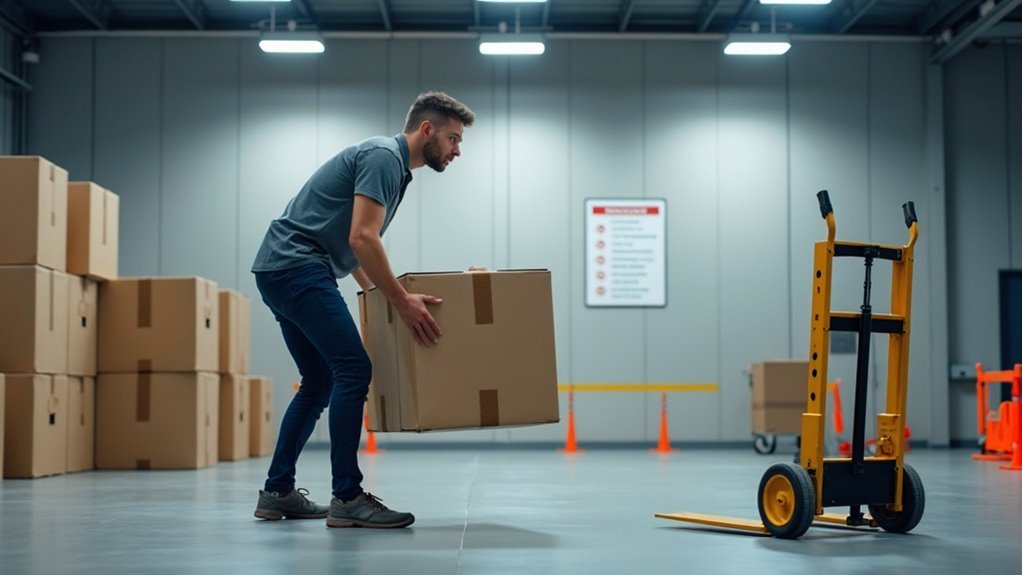
Breaking down larger loads into smaller, manageable pieces is crucial for preventing injuries, especially when setting up or rearranging your home gym equipment. When handling heavy weights or bulky items like benches and racks, it’s important to divide them into components that you can lift comfortably. This not only promotes safe lifting practices but also minimizes strain while you work on your fitness goals.
Breaking down heavy gym equipment into smaller parts helps prevent injuries and supports safe lifting practices for your fitness journey.
Consider these tips:
- Maintain proper lifting techniques by keeping gym equipment close to your body to avoid unnecessary strain.
- Avoid awkward postures that could lead to injuries while positioning your equipment.
- Utilize tools like hand trucks or dollies to assist with moving heavier items, ensuring a safer setup.
Keep in mind that overexertion injuries account for 25% of non-fatal occupational injuries; thus, breaking down larger loads is vital for safe lifting and protecting your health while creating your ideal workout space at home.
Take Regular Breaks
Taking regular breaks during your home workout sessions is essential for maintaining safety and effectiveness. Aim to rest every 30 to 60 minutes to combat fatigue, which can impair your lifting technique and increase the risk of injury.
Short breaks facilitate muscle recovery, significantly lowering the chances of overexertion injuries that can occur even in home settings. Additionally, these breaks enhance your physical performance and mental focus, reducing the likelihood of critical errors during your lifts.
Employ Tools to Minimize Strain
Employing tools to minimize strain is crucial for anyone working out at home, particularly when lifting weights or handling larger exercise equipment.
Utilizing the right gear not only safeguards your health but also improves your workout efficiency. Consider integrating these tools into your home gym routine:
- Weightlifting benches to support proper lifting positions
- Resistance bands for effective strength training without heavy weights
- Adjustable dumbbells for versatile workouts without excessive strain
- Foam rollers to aid in recovery and maintain proper muscle function
These tools can significantly reduce the risk of injuries and overexertion during your home workouts.
Regularly reviewing proper usage techniques promotes safe practices, ensuring a healthier and more enjoyable fitness experience every time.
Inform Someone About Your Training Session
Even with the right home gym equipment to minimize strain during your workouts, it’s essential to prioritize safety by informing someone about your training session.
Always let a friend or family member know your training schedule, especially if you’re lifting heavy weights alone at home. Designate a specific time and location within your home gym, so they can check in if they don’t hear from you.
Keep your mobile phone nearby to quickly call for help in case of an injury. Establish a check-in system, like texting updates when you start and finish your workout, to enhance accountability and ensure you get help if needed.
Stay safe while working towards your fitness goals!