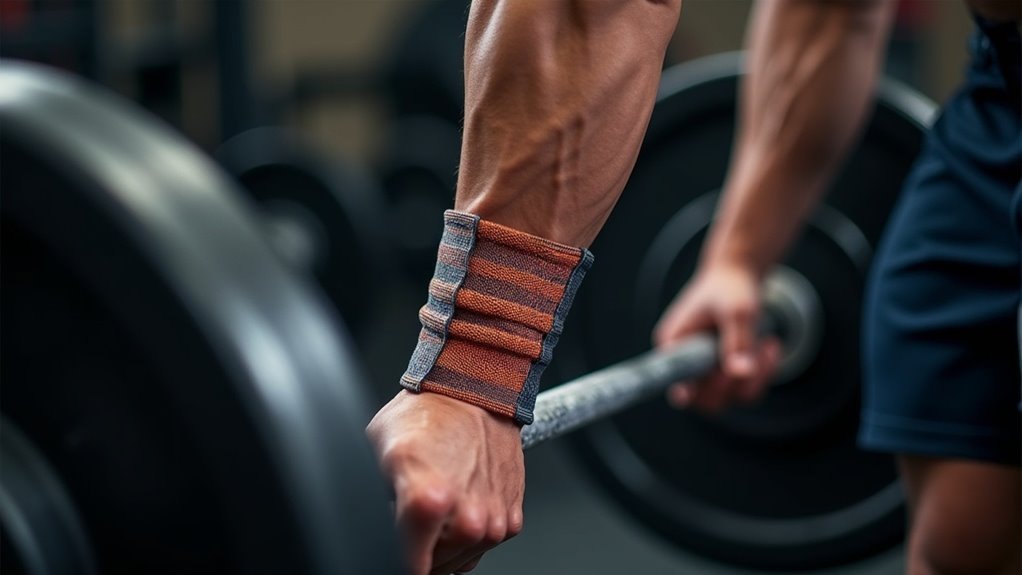
For optimal pressing stability in your home workouts, consider using stiffer wrist wraps. These wraps effectively lock your wrist in a neutral position, significantly lowering the risk of injuries such as hyperextension. Stiffer wrist wraps enhance force transfer from your arms to the barbell, providing better control during heavy lifts. They minimize wrist movement and strain, allowing you to concentrate fully on your form. If you’re interested in learning more about selecting the right wrist wraps and their advantages for your home gym setup, keep exploring!
Key Takeaways
- Stiffer wrist wraps help lock the wrist joint in a neutral position, preventing hyperextension during pressing exercises, which is essential for home gym enthusiasts.
- The enhanced stability provided by stiff wraps minimizes excessive wrist movement, significantly reducing the risk of injury while pressing heavy weights at home.
- Stiff wrist wraps improve force transfer from arms to the barbell, which is crucial for maintaining control during pressing exercises, especially when lifting in a home gym setup.
- By keeping a neutral wrist position with stiffer wraps, lifters can focus on their technique and form without discomfort, promoting a safer and more effective home workout.
- For optimal pressing stability in your home gym, choose wrist wraps that offer maximum support, tailored to your lifting style and the weights you use.
Understanding Wrist Wrap Stiffness
Wrist wrap stiffness is crucial for enhancing your lifting performance, especially during heavy pressing exercises at home. Stiff wraps provide essential support to the wrist joint, minimizing the risk of injuries like hyperextension.
Crafted from durable materials such as leather or high-quality nylon, they offer superior stability compared to more flexible options. This stiffness significantly improves force transfer from your arms to the barbell, which is vital for maintaining control during key exercises like the bench press and overhead press.
For those pushing their limits with maximal lifts, stiffer wraps are indispensable for keeping the wrist in the proper position and preventing unwanted wrist movement. This ensures a consistent bar path, contributing to a safer and more effective workout experience in your home gym.
The Role of Stiffness in Lifting Performance
Stiff wrist wraps play a pivotal role in enhancing home gym performance by ensuring that your wrists remain stable during pressing movements.
The stiffness of these wraps provides maximum joint support, maintaining a neutral wrist position and reducing the risk of injury. Improved stiffness prevents excessive flexion, allowing you to handle heavier weights confidently during your at-home workouts.
This rigidity enhances force transfer from your arms to the bar, optimizing lifts in exercises like the bench press and overhead press. Additionally, it minimizes wrist discomfort, letting you focus on your form and technique.
For fitness enthusiasts looking to maximize their home gym experience, this added stability under maximum loads is essential for achieving peak lifting performance.
Comparing Stiff and Flexible Wrist Wraps
When selecting wrist wraps for your home gym workouts, it’s important to consider how each type complements your fitness goals and workout style.
- Stiff Wrist Wraps: These wraps offer maximum support and stability for your wrists during heavy lifting, which is crucial for improving force transfer and preventing injury.
- Flexible Wrist Wraps: Designed for comfort and mobility, these wraps are great for dynamic exercises and lighter training sessions, though they may provide less joint stability.
- Workout Styles: Those engaging in strength training may lean towards stiffer wraps for better support during heavy lifts, while others who focus on functional movements or lighter weights might prefer the flexibility offered by softer options.
Ultimately, choose the wrist wraps that suit your individual workout regimen and help you achieve your fitness objectives effectively at home.
Benefits of Stiffer Wrist Wraps for Heavy Lifts
While engaging in heavy lifting at home, the use of stiffer wrist wraps can significantly enhance your performance and safety.
Stiffer wraps effectively lock your wrist joint in a neutral position, which is crucial for preventing hyperextension and maintaining proper form during your workouts. They reduce strain on the wrist, enabling better force transfer from your arms to the barbell or dumbbells during pressing movements.
By minimizing excessive wrist movement, these wraps help prevent injuries and discomfort during high-stress exercises, allowing you to stay focused on your fitness goals.
With enhanced stability, you can concentrate on perfecting your technique instead of managing wrist pain, ensuring you safely handle the challenges of lifting weights in your home gym, even when they exceed your body weight.
Choosing the Right Stiffness for Your Lifting Needs
How do you determine the right stiffness for your wrist wraps to match your home lifting needs? Achieving ideal pressing stability while exercising at home requires balancing support and flexibility.
Here are three key considerations:
- Lifting Style: For heavier lifts like bench presses, stiffer wraps provide the necessary support for proper wrist alignment, ensuring safety during your home workouts.
- Movement Dynamics: If you engage in dynamic movements, opt for wraps that allow some flexibility to enhance your performance, especially when performing various exercises at home.
- Adjustable Stiffness: Look for wraps with varying stiffness levels so you can adapt to different exercises and find personal comfort, making your home gym experience more effective.
Top Wrist Wraps for Maximum Stability
Finding the right wrist wraps is essential for ensuring maximum stability during your home lifting sessions.
Stiffer wrist wraps, such as those from Iron Bull Strength, deliver unparalleled support for heavy lifting, ensuring your wrists stay aligned during pressing movements. Their 18-inch strap strikes the perfect balance between support and flexibility, which is crucial for your comfort.
For those who prefer a lighter feel, Gymreapers Wrist Wraps provide stability while allowing full motion for dynamic training.
If you need varied support, Rogue Fitness wraps are available in multiple lengths to suit different requirements.
Additionally, HiRui wraps feature a thumb loop for a snug fit, preventing slips and promoting proper wrist alignment, which enhances your overall support and stability during your lifts at home.
Tips for Proper Use of Wrist Wraps in Training
When using wrist wraps at home, it’s crucial to adjust the tension based on the weights you’re lifting.
Tighter wraps provide enhanced stability for heavier lifts, while looser wraps allow for greater mobility during dynamic movements.
Proper application technique is also important—ensure that the wraps cover your wrist joint and the base of your palm to maintain proper alignment and support.
Adjusting Wrap Tension
To enhance your use of wrist wraps during home workouts, adjust the tension based on the specific demands of your exercises. Here are three key considerations to keep in mind:
- Tightness Levels: When lifting heavier weights, opt for tighter wraps to provide maximum support and stability for your wrists, allowing you to focus on your form.
- Snug Fit: Aim for a snug fit that doesn’t restrict blood flow; if you experience any numbness, loosen the wraps slightly to ensure comfort during your workouts.
- Elastic Material: Experiment with various materials to find the right balance between support and flexibility, ensuring you have the ideal support without compromising your lifting technique.
Proper Application Technique
Properly applying wrist wraps is essential for maximizing their benefits during home workouts, as they provide crucial support and stability for your wrists.
To ensure wrist stability, wrap the straps snugly around the wrist joint and the base of the palm. Use the thumb loop for a better grip, but make sure to adjust the tightness to prevent numbness.
For pressing movements, maintain a neutral wrist alignment to avoid hyperextension. Opt for tighter wraps when lifting heavier weights and looser wraps for lighter sessions.
It’s best to limit your use of wrist wraps to heavy sets or when experiencing discomfort, as this helps maintain wrist mobility and strength over time, allowing for optimal support in your home fitness routine.