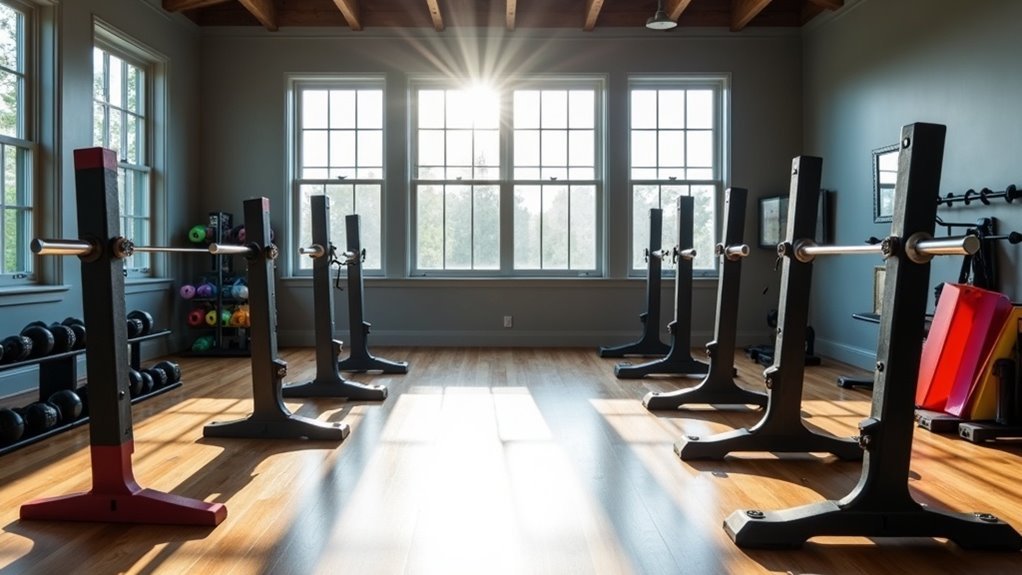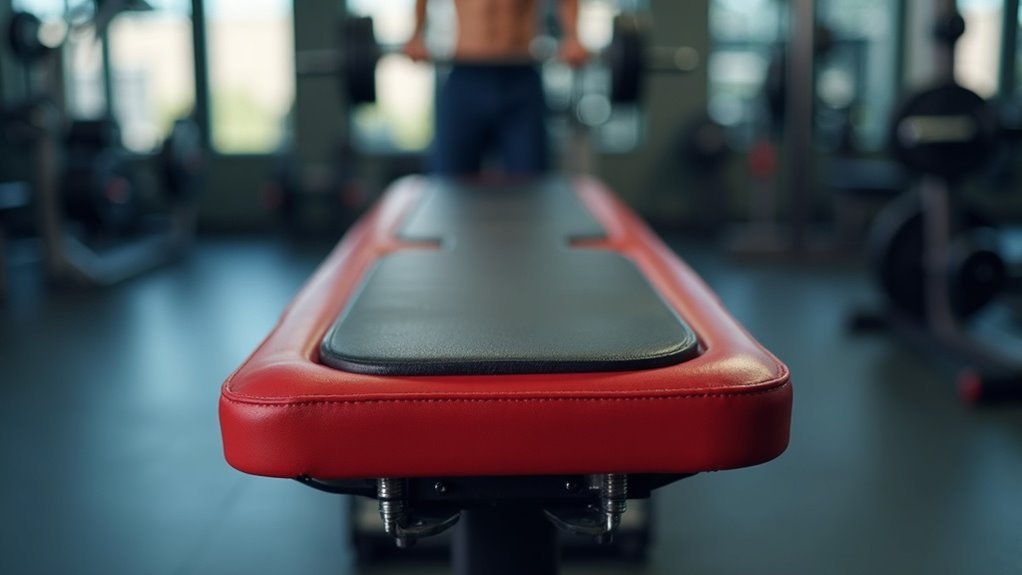
Adjust your bench pad height when you experience shoulder discomfort during pressing exercises or if you notice your elbows misaligned with your shoulders. If you find it hard to maintain a stable grip or observe excessive arching in your upper back, it’s time for an adjustment. Aim for a height that allows the bar to rest just above your chest for optimal muscle engagement. Making these adjustments can significantly enhance your home workout experience, ensuring you stay healthy and comfortable while exercising. Don’t forget, there are additional tips available to help you achieve shoulder comfort in your home gym setup.
Key Takeaways
- Adjust the bench pad height if you experience shoulder discomfort during pressing exercises to ensure a comfortable workout at home.
- If you notice that your elbows are misaligned, either above or below your shoulders, it’s a clear sign that you should adjust the height of the bench pad for better alignment.
- Struggling to maintain a stable grip on the bar may indicate that the bench pad is not set at the correct height, so make sure to check this for a safer lifting experience.
- If you find yourself excessively arching or rounding your upper back, it may be time to make height adjustments to promote proper form and prevent injury.
- Regularly assess your bench pad height to enhance shoulder mobility and boost your overall performance as you work out in your home gym.
Understanding the Importance of Bench Pad Height
When you’re lifting weights at home, the height of your bench pad plays a crucial role in your shoulder comfort and overall performance.
A properly adjusted bench pad aligns with your shoulder joint, optimizing your bar path during the bench press. If the pad is too high, it can create instability and strain; too low, and you risk shoulder impingement.
For those with longer arms, a lower pad allows for a more natural range of motion.
Regularly reassessing the height as your strength and flexibility improve not only enhances your lifting performance but also promotes shoulder health, helping you stay strong and fit in your home gym routine.
Signs That Your Bench Pad Height Needs Adjustment
Adjusting your bench pad height is essential for achieving a comfortable and effective lifting experience at home.
If you experience shoulder discomfort during pressing exercises, this may indicate that your bench pad is positioned too low or too high. Pay attention to the alignment of your elbows; if they’re significantly above or below your shoulders, it’s time for an adjustment.
Struggling to maintain a stable grip on the bar due to shoulder strain is another clear sign that your setup needs tweaking.
Moreover, if you notice an excessive arch or rounding in your upper back, your bench height may not be optimal.
Make it a habit to regularly reassess your adjustable bench to improve your shoulder mobility and enhance your overall performance while working out at home.
Ideal Bench Pad Height for Shoulder Alignment
Finding the ideal bench pad height is crucial for maintaining proper shoulder alignment during your home workouts.
When the bar rests just above your chest, you’ll effectively engage your muscles, which helps reduce the risk of strain.
It’s important to listen to your body; if you notice any discomfort in your shoulders, this could indicate that an adjustment is necessary.
Ensuring your bench pad is set to the right height can enhance your lifting experience and contribute to a safer, more effective home gym routine for both men and women.
Shoulder Alignment Importance
Ensuring proper shoulder alignment during pressing movements is crucial for both safety and performance, especially when exercising at home. By maintaining correct posture, you can minimize the risk of strain or injury.
Here are some key points to achieve ideal shoulder alignment during bench presses:
- Adjust the bench pad height so that your shoulders are slightly above your elbows, which helps in maintaining a natural range of motion.
- Aim for a 75-90 degree angle for your elbows at the bottom of the lift to promote effective muscle engagement.
- Keep your shoulder blades retracted and pressed into the bench pad to provide stability and support.
- Regularly evaluate your bench height based on your body proportions to ensure that your setup is always optimal for your home workouts.
Bench Pad Height Tips
When it comes to achieving ideal shoulder alignment during bench presses at home, the right bench pad height is crucial for both men and women. Aim for a height that allows the bar to rest just above your chest when lying flat.
Bench pad height tips suggest standard heights of 16 to 20 inches, which accommodate most users. Keep in mind that if the pad is too low, you risk shoulder strain; if it’s too high, your elbows may flare out, leading to improper form.
Always evaluate your shoulder mobility and comfort, making slight adjustments as needed. This ensures a natural arch in your lower back, promoting better alignment and reducing the risk of injury while you work towards your fitness goals in the comfort of your home gym.
Signs of Misalignment
Misalignment during bench presses can lead to discomfort and hinder your fitness journey, so recognizing the signs early is essential for anyone using home gym equipment.
Pay attention to these indicators that your bench pad height might be off:
- Shoulder Strain: If you feel discomfort or strain in your shoulders while pressing.
- Elbow Flare: Watch for excessive flaring of your elbows during your lifts.
- Unnatural Position: A bench pad that’s too high can force your shoulders into awkward angles, impacting your form.
- Arm Angle: Your arms should ideally form a 45-degree angle at the bottom of the lift for optimal shoulder mechanics.
Regularly reassess your bench pad height to ensure proper alignment and minimize strain, keeping you on track with your home workout goals.
How to Adjust Your Bench Pad Height
To achieve optimal shoulder comfort during your home workouts, begin by adjusting the bench pad height so that your shoulders align with the barbell at the starting position, typically 1-2 inches below the bar.
For incline exercises, consider setting the back pad at a slight upward angle to enhance shoulder alignment.
It’s important to ensure that the bench pad height allows your feet to remain flat on the ground for stability, which is essential for maintaining proper form.
Test the height with a few light repetitions; pay attention to how your body feels and make incremental adjustments until you find a comfortable position.
Exercises Affected by Bench Pad Height
Understanding bench pad height is essential for maximizing your home workouts and ensuring a safe and effective exercise routine.
Here are four key exercises that are influenced by the height of your bench pad, tailored for both men and women looking to enhance their home gym experience:
- Bench Press: An inappropriate bench pad height can lead to shoulder strain, making it crucial to adjust the height for optimal performance.
- Incline Presses: A higher bench pad can promote better shoulder alignment, allowing you to target your upper chest effectively.
- Dumbbell Flyes: By adjusting the bench height, you can enhance shoulder stability and reduce joint stress, making your workout safer and more efficient.
- Seated Shoulder Presses: Ensuring the proper height helps maintain a neutral spine and shoulder position, which is vital for preventing injuries during this exercise.
Tips for Maintaining Shoulder Comfort During Lifts
While lifting at home, ensuring shoulder comfort is crucial for optimizing your performance and preventing injuries. Start by adjusting the height of your bench pad so that your shoulders align perfectly with the barbell at the beginning of your lift. It’s important to keep your shoulders flat against the pad while allowing for a natural arch in your lower back. To provide stability during your lifts, aim for a 45-degree angle with your elbows. Remember to regularly check your shoulder positioning when transitioning between exercises, as even slight height adjustments can significantly impact your comfort and effectiveness. Additionally, incorporating mobility exercises into your warm-up routine can enhance your shoulder’s range of motion, promoting better overall performance.
| Tip | Description |
|---|---|
| Adjust Bench Pad Height | Align shoulders with the barbell for optimal comfort. |
| Maintain Elbow Position | Keep elbows at a 45-degree angle to ensure stability. |
| Incorporate Mobility Work | Include shoulder stretches for improved flexibility. |