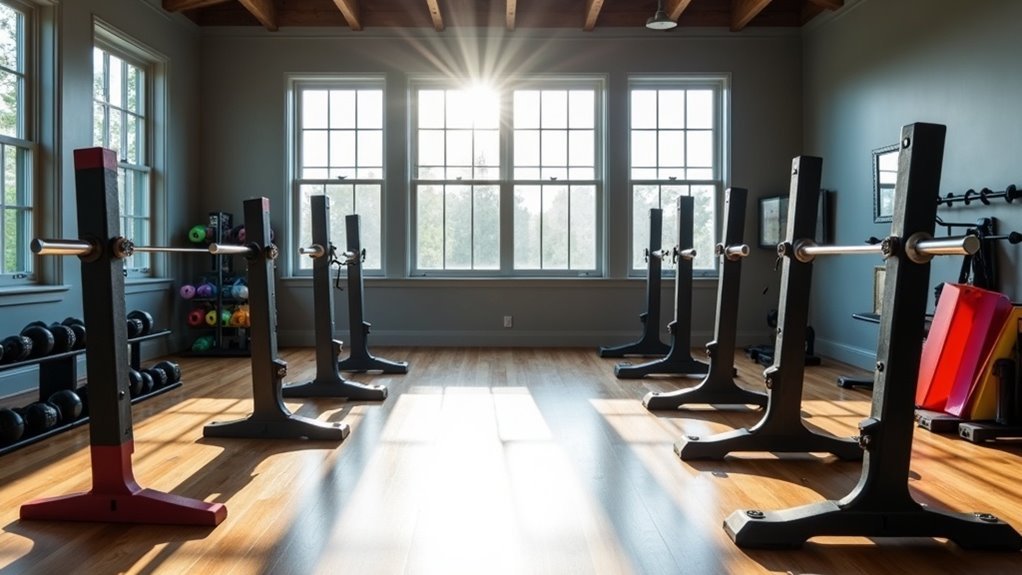
You should elevate your flooring in your home gym when you notice signs of moisture, such as water pooling, high humidity, or cracked surfaces. Moisture from groundwater, leaks, or inadequate ventilation can damage both your flooring and your gym equipment. To protect your workout space, ensure proper concrete preparation and install moisture barriers. Regular moisture testing is essential to maintain the integrity of your gym environment. For best results, follow specific installation practices and stay on top of maintenance. Keep your home gym in top shape for optimal performance and health. More details await you ahead.
Key Takeaways
- Elevate flooring in your home gym when you notice visible water pooling or dampness to prevent moisture infiltration and protect your fitness equipment.
- Consider installing elevated flooring if humidity levels exceed 90%, as this can significantly increase the risk of mold growth, which is detrimental to your health and workout environment.
- If you observe cracks or warping in your existing flooring, it may indicate underlying moisture issues; elevating the flooring can help address these concerns.
- Pay attention to any signs of groundwater presence, as this can lead to serious moisture problems in your home gym that could affect your training routine.
- Implement elevated flooring solutions during or after concrete curing to effectively manage moisture retention in newly poured slabs, ensuring a safe and dry workout space.
Understanding Moisture Sources in Flooring
Understanding the sources of moisture in flooring is essential for maintaining the integrity and longevity of your home gym setup. The porous nature of concrete can lead to moisture migration, which might cause issues for your exercise equipment and flooring.
Common sources of moisture include capillary action from the ground, plumbing leaks, and high humidity levels, particularly in spaces that lack proper ventilation. If you’ve recently poured concrete for your gym area, it’s important to recognize that it retains moisture.
Common moisture sources in gym spaces include ground capillary action, plumbing leaks, and high humidity, especially without proper ventilation.
Proper curing before installing flooring can help mitigate future problems that could interfere with your workouts. The water-to-cement ratio during the curing process plays a significant role in drying time and porosity, increasing the risk of moisture-related issues.
To ensure the best environment for your home gym and protect your investment, regular moisture testing and early intervention with any sources of moisture are crucial. This proactive approach will help you maintain a safe and effective space for your fitness journey.
Signs Indicating the Need for Elevated Flooring
When you notice signs of excess moisture in your flooring, it’s crucial to consider elevated flooring solutions to protect your home gym equipment and maintain a healthy exercise environment.
Look for visible signs of water pooling or dampness in areas where you work out, as these indicate moisture infiltration that could damage your gear. High humidity levels exceeding 90% can lead to significant moisture issues, risking mold growth and negatively impacting your indoor air quality.
Additionally, if your flooring appears cracked or warped, this could signal underlying moisture problems that can affect the stability of your workout space.
Addressing these indicators promptly with elevated flooring not only safeguards your investment in home gym equipment but also creates a more comfortable and healthier environment for your workouts.
The Impact of Groundwater on Concrete Slabs
Groundwater can significantly impact your home gym setup, as it may cause moisture issues that affect the flooring where your equipment is placed.
When moisture seeps through porous materials, it can elevate humidity levels, which might lead to problems like mold growth or deterioration of your flooring.
Inadequate drainage around your home can exacerbate these issues, allowing moisture to infiltrate and damage your exercise space.
For those with gyms in basements or areas prone to moisture, implementing effective moisture control measures is essential.
Regular monitoring of moisture levels can help maintain a safe and healthy environment for your workouts, ensuring the longevity of your flooring and equipment.
Preparing Concrete for Elevated Flooring Installation
Before installing elevated flooring for your home gym, ensure your concrete slab is properly prepared to create a stable and moisture-resistant base for your workout space.
It’s essential to apply effective moisture barriers to protect your flooring and equipment from dampness.
Utilize appropriate concrete slab preparation techniques and conduct thorough moisture level tests to guarantee an ideal environment for your exercise routine.
Taking these steps is crucial to prevent future moisture-related issues that could disrupt your fitness journey and the longevity of your flooring system.
Importance of Moisture Barriers
Moisture barriers are essential when setting up home gym flooring, particularly if you’re installing elevated surfaces. They serve to effectively prevent moisture vapor from seeping through the concrete slab, safeguarding your flooring materials from potential damage and adhesive failures. As recommended by ASTM F710, employing a vapor retarder is crucial, especially in new constructions, to manage moisture movement beneath your gym equipment. Conducting a humidity (RH) test is also important to ensure that the slab is adequately cured; otherwise, trapped moisture can lead to issues like delamination. To further enhance the longevity of your gym flooring, using moisture-resistant adhesives in conjunction with a properly installed moisture barrier is advised.
| Aspect | Importance | Action Required |
|---|---|---|
| Moisture Barrier | Prevents moisture damage to flooring | Install before gym flooring |
| Humidity (RH) Test | Assesses moisture levels for durability | Conduct prior to installation |
| Moisture-Resistant Adhesives | Enhances flooring longevity | Use with moisture barriers |
Concrete Slab Preparation Techniques
Preparing the concrete slab properly is crucial for ensuring the success of your home gym flooring installation. Start by making sure the slab is clean, dry, and structurally sound to prevent moisture issues that could affect your exercise equipment.
Follow ASTM standards by evaluating the slab for surface imperfections and conducting moisture tests to check humidity levels. Installing a moisture barrier beneath your gym flooring is vital to inhibit moisture vapor transmission from the concrete slab, helping to protect your workout space.
For new constructions, implement a permanent moisture vapor retarder before placing the concrete. Regular inspections and accurate testing will help maintain acceptable moisture levels, safeguarding your fitness investment for years to come.
With the right preparation, you can create a safe and effective environment for your home workouts.
Testing for Moisture Levels
When setting up your home gym with elevated flooring, it’s crucial to ensure the moisture levels in your concrete are adequately tested for optimal performance and longevity.
Start by conducting moisture level tests using the Calcium Chloride Test, which measures moisture vapor emissions and helps you determine if the conditions are suitable for your flooring per manufacturers’ specifications.
Additionally, complement this with the Relative Humidity Test to assess the internal moisture levels of your concrete, ensuring compliance with ASTM F2170 standards.
Installing a vapor barrier beneath your elevated flooring can significantly reduce moisture issues by preventing water vapor transmission from the concrete.
Proper preparation, including thorough cleaning and verifying structural integrity, is essential to maintain the durability of your home gym setup and prevent any future moisture-related issues that could hinder your fitness journey.
Effective Moisture Testing Methods
When assessing the moisture levels in your home gym flooring before installation, selecting the right testing method is essential for ensuring long-term durability and performance.
Selecting the right moisture testing method is crucial for the durability and performance of your home gym flooring.
Consider these effective moisture testing methods:
- Calcium Chloride Test: This method measures the moisture vapor emission rate, quantifying levels in pounds per 1,000 square feet over a 60-72 hour period. It’s a reliable way to gauge how much moisture is present beneath your flooring.
- Relative Humidity Test: Utilizing sensors placed in drilled holes, this test accurately measures the internal humidity levels of the concrete, following ASTM F2170 standards. It provides a deeper insight into moisture content that surface tests might miss.
- Moisture Meters: These devices offer quick surface moisture assessments, making them convenient for initial checks. However, be aware that they may not capture moisture that’s situated deeper within the flooring.
Adhering to ASTM standards ensures accurate assessments of moisture levels, which is critical for preventing issues such as mold growth or flooring damage that could impede your home gym experience.
Make informed choices to maintain a healthy and effective workout environment at home.
Choosing the Right Moisture Barrier
Choosing the right moisture barrier is essential for protecting your home gym flooring from moisture-related issues, as it effectively blocks vapor transmission from the ground.
For your workout space, opt for vapor barriers made from low permeability materials like polyethylene sheeting to prevent moisture from rising through poured concrete. Ensure your installation covers the ground completely, overlapping by at least 6 inches for consistent moisture control.
In high moisture environments, consider impermeable or moisture-evaporating barriers to safeguard sensitive flooring materials, such as rubber or foam mats often used in home gyms.
Additionally, ensure compatibility between the moisture barrier, adhesive, and flooring materials to prevent adhesive failure, which helps maintain indoor air quality and extends the life of your gym flooring. This allows you to focus on your fitness goals without worry.
Best Practices for Installing Elevated Flooring
Installing elevated flooring in your home gym is crucial for maintaining a clean and dry environment, especially in areas that may be prone to moisture. This helps to ensure that your workout space remains comfortable and safe.
To achieve optimal results, consider these best practices:
- Maintain a minimum ground clearance of 18 inches to promote airflow and prevent moisture buildup, which can affect your equipment and flooring.
- Choose moisture-resistant materials for both the subfloor and flooring to enhance durability and reduce the risk of damage, ensuring your gym equipment remains in top condition.
- Incorporate a vapor barrier beneath the elevated flooring to effectively block moisture ingress, protecting your workout area from potential issues.
Additionally, regularly inspect your elevated flooring system for any signs of moisture intrusion to ensure long-term performance and safeguard your investment in a healthy home gym.
Long-Term Maintenance for Elevated Flooring Systems
To ensure the longevity and effectiveness of your elevated flooring system in your home gym, prioritizing long-term maintenance is essential. Regular inspections are crucial to identify any gaps or damage in the vapor barrier, ensuring it effectively blocks moisture intrusion that could affect your workout space.
Use moisture-resistant materials for both the flooring and underlying structure to enhance durability against moisture-related issues. Confirm that there’s proper drainage and ventilation to prevent water accumulation, which could compromise the integrity of your flooring and, in turn, your fitness routine.
Additionally, implement routine checks for leaks or plumbing problems, addressing any issues promptly to maintain a safe and functional workout environment.