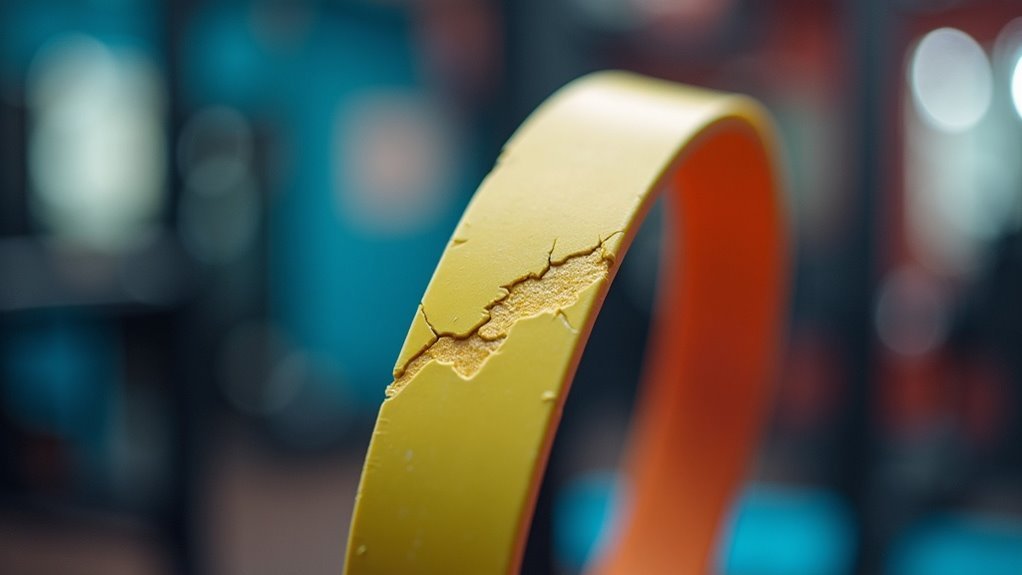
If you notice surface cracks on your resistance bands, it’s crucial to replace them immediately. Cracks are a sign of material degradation that can compromise strength and lead to snapping during your workouts. Continuing to use damaged bands not only increases your risk of injury but also diminishes the effectiveness of your exercise routine. To ensure your home gym remains safe and efficient, regular inspections and timely replacements are essential. Want to learn how to maintain your new resistance bands for longer use and ensure peak performance? Keep reading for more valuable tips tailored for your home fitness journey.
Key Takeaways
- Replace your resistance bands immediately upon noticing any surface cracks to prevent snapping during your workouts.
- Discoloration or a sticky texture also indicates it’s time for a replacement, as these issues can pose safety risks.
- Regularly inspect your bands for wear indicators to ensure both safety and effectiveness in your home workouts.
- Continuing to use damaged bands can lead to injuries and uneven resistance, impacting your exercise routine.
- Proper maintenance of your bands can help extend their lifespan, but prioritize replacement if cracks appear to keep your home gym safe and effective.
Understanding Surface Cracks in Resistance Bands
When you notice surface cracks in your resistance bands, it’s essential to understand the implications for their performance and your safety, especially when exercising at home.
These cracks are clear indications of wear, signaling material degradation that can compromise the strength and elasticity of your bands. Even small cracks can worsen with use, increasing the risk of snapping during your workouts.
Surface cracks in resistance bands indicate wear and material degradation, compromising their strength and increasing the risk of snapping during workouts.
If you observe surface cracks, it’s vital to replace the bands immediately to avoid injury.
To ensure your resistance bands last longer, conduct regular inspections and address any signs of wear promptly.
Prioritizing safety won’t only enhance your home workout experience but also protect you from potential accidents, allowing you to focus on achieving your fitness goals effectively.
Importance of Regular Inspections
Regular inspections of your resistance bands are crucial for maintaining a safe and effective home workout routine.
Look for wear indicators such as surface cracks or discoloration before each use to ensure your bands are in good condition. This proactive approach not only enhances your workout safety but also minimizes the risk of injury from snapping bands.
Additionally, keeping a log of your inspections can help you monitor the lifespan of your bands and ensure timely replacements, allowing you to stay committed to your fitness goals at home.
Identifying Wear Indicators
How often do you inspect your resistance bands for signs of wear? Regular inspections are crucial for your safety and training effectiveness at home.
Look for surface cracks, thinning areas, or discoloration, as these indicate material degradation. Even minor cracks can lead to snapping during use, so replace any damaged bands immediately to maintain their integrity.
A proactive approach—inspecting your bands every few workouts—helps prevent injuries and ensures you get the most out of your home workouts. Keeping a log of inspection dates and observed wear can also enhance your awareness of each band’s lifespan, prompting timely replacements when necessary.
Stay vigilant to keep your home fitness routine safe and effective for both men and women.
Enhancing Workout Safety
To ensure your home workouts remain safe and effective, it’s crucial to regularly inspect your resistance bands.
These inspections allow you to spot visible signs of wear, such as surface cracks, which can compromise your safety during exercise. A snapped band not only disrupts your workout but also poses a risk of injury.
By consistently checking your bands, you can confirm they retain their elasticity and resistance levels, enhancing both safety and performance. Keep an eye out for thinning areas or sticky spots that may indicate degradation.
Incorporating regular inspections into your fitness routine significantly lowers the risk of accidents, allowing your resistance bands to last longer and function reliably as you work toward your health goals at home.
Risks of Continuing to Use Damaged Bands
Continuing to use damaged resistance bands can pose serious risks that jeopardize both your safety and the effectiveness of your home workouts.
Bands with surface cracks are more likely to snap under tension, which can lead to painful injuries. These cracks indicate a decline in the material’s quality, diminishing the band’s elasticity and overall performance in your resistance training routine.
Moreover, using damaged bands can create uneven resistance, which may lead to muscular imbalances and less effective workouts. There’s also the possibility of skin abrasions from snapping bands, making it a potential safety concern.
To ensure a safe and productive exercise experience at home, it’s crucial to regularly inspect your bands and replace any that show signs of damage. Prioritizing safety will help you maintain your fitness goals while enjoying your home gym setup.
Signs That Indicate It’s Time for Replacement
You should regularly inspect your resistance bands for visible surface cracks, loss of elasticity, or any signs of discoloration and stickiness.
These indicators reveal material degradation that can compromise both your safety and performance during home workouts.
Visible Surface Cracks
Visible surface cracks on resistance bands are important indicators of material wear and tear. These cracks can weaken the bands, increasing the likelihood of snapping during your workout. If you observe deep or multiple cracks, it’s crucial to replace the bands immediately to ensure your safety. Incorporating regular checks for visible surface cracks into your home gym maintenance routine can help you stay safe and effective in your exercise regimen.
| Crack Severity | Action Required |
|---|---|
| Minor Cracks | Monitor for changes |
| Moderate Cracks | Consider replacing soon |
| Numerous Cracks | Replace the bands |
| Deep Cracks | Replace the bands |
Loss of Elasticity
As resistance bands age, they can lose elasticity, which significantly reduces their effectiveness during home workouts.
If you notice that your bands feel less stretchy or don’t return to their original shape after being stretched, this is a clear sign of diminished elasticity.
Look out for visible surface cracks, as these can indicate serious performance issues.
Bands that show both cracks and reduced elasticity should be replaced immediately, as they carry the risk of snapping during use, which can lead to injury.
To ensure safe and effective training sessions at home, make it a habit to regularly inspect your resistance bands and replace them when you observe these warning signs.
Prioritizing your equipment’s condition is essential for maintaining a successful home fitness routine.
Discoloration or Stickiness
Loss of elasticity isn’t the only sign that your resistance bands need to be replaced. Regularly inspecting your bands for discoloration and a sticky texture is crucial for maintaining a safe and effective home workout routine.
Discoloration often indicates material degradation, which can lead to snapping during use and potentially cause injury. A sticky feel compromises your grip and safety, making immediate replacement vital.
If you notice either of these conditions, it’s essential to replace the bands to prevent accidents during your workouts. By monitoring for these signs, you can ensure safe training practices and keep your resistance bands performing at their best.
Prioritize your safety and workout effectiveness by addressing any discoloration or stickiness without delay.
How to Properly Dispose of Old Bands
When it’s time to dispose of your old resistance bands, it’s important to do so responsibly for both safety and environmental reasons.
To avoid any accidents, cut them into smaller pieces before disposal. Always check your local recycling guidelines, as some areas may have specific instructions for rubber or latex materials. If the bands are significantly damaged, it’s best to place them in the trash to prevent contamination.
- Think about repurposing bands for DIY home gym projects.
- Use them as garden ties to reduce waste and get creative.
- Always prioritize safety when disposing of old bands to keep your home workout space hazard-free.
Tips for Choosing New Resistance Bands
Choosing the right resistance bands is crucial for enhancing your home workout routine, as they cater to various fitness goals for both men and women. Here are some key factors to consider when selecting new resistance bands:
| Feature | Importance |
|---|---|
| High-Quality Materials | Ensures durability and consistent performance |
| Resistance Level | Aligns with your personal fitness objectives |
| Inspection | Helps identify any signs of wear or degradation |
| Additional Features | Improves longevity and usability |
| Versatility | Supports a range of training methods and exercises |
Make sure to inspect your potential bands for any signs of wear and select the appropriate resistance level to meet your specific workout needs. Opting for high-quality resistance bands will effectively support your strength training and rehabilitation efforts right at home.
Maintaining Your New Resistance Bands for Longevity
To ensure your resistance bands serve you well in your home gym for a long time, it’s crucial to implement a proactive maintenance routine. Regularly inspect your bands for any cracks or signs of wear that could lead to snapping during your workouts.
Clean your bands using warm-to-hot water, and gently pat them dry, avoiding any soaps that may dry out the latex material.
To further extend the lifespan of your resistance bands, keep these tips in mind:
- Store your bands in a cool, dry area away from direct sunlight to prevent deterioration.
- Occasionally apply a silicone-based lubricant to maintain elasticity and flexibility.
- Set and respect safe stretching limits during your exercises to avoid overstretching and potential damage.