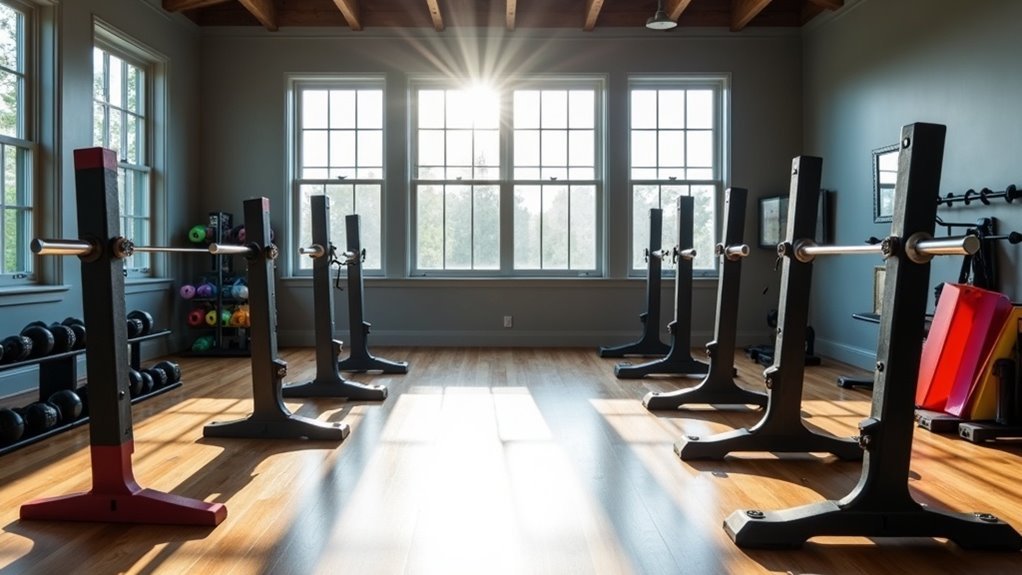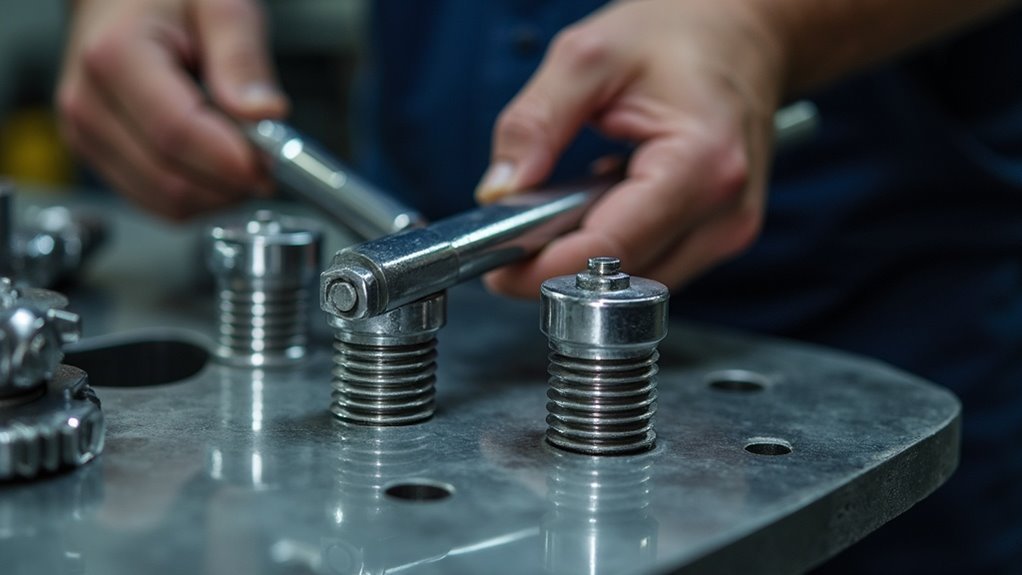
You should tighten rack bolts during your routine checks of home gym equipment if you notice any loose or wobbly components, gaps between bolts and fittings, or unusual vibrations after use. Regular inspections every six months are essential for maintaining the stability and safety of your workout setup. Use a torque wrench to ensure proper tension, following the manufacturer’s specifications for your specific equipment. Additionally, keep a maintenance log to track your checks and ensure compliance. Staying proactive with these inspections helps guarantee your home gym remains secure, allowing you to focus on reaching your fitness goals effectively and safely.
Key Takeaways
- Tighten rack bolts during routine checks every six months to ensure the safety and stability of your home gym equipment.
- Inspect for loose or wobbly components, as these can indicate that bolts need to be tightened for a secure workout environment.
- Look for visible wear and tear on bolts, which may signal potential instability that requires immediate adjustments to keep your home gym safe.
- Always inspect and tighten bolts after moving or rearranging your gym equipment to prevent any looseness that could affect your fitness routine.
- Use a torque wrench to tighten bolts to the manufacturer’s specifications, ensuring optimal performance and safety for your at-home workouts.
Importance of Regular Rack Bolt Maintenance
When it comes to maintaining the safety and efficiency of your home gym equipment, regularly checking and tightening the bolts on your racks and machines is essential.
Routine inspections, ideally conducted every six months, ensure the structural integrity of your equipment. Loose bolts can lead to instability and equipment failure, posing risks to your workouts and safety.
Always follow the proper torque specifications to avoid excessive movement or damage to your gear. Keeping a maintenance log of your inspections helps track wear patterns and ensures you stay compliant with safety standards.
Signs That Indicate It’s Time to Tighten Bolts
It’s important to stay vigilant for loose or wobbly components in your home gym equipment, as these are clear signs that the bolts may need tightening.
Check for visible wear and tear on both the bolts and the gym rack structure, as any deterioration can compromise stability during your workouts.
Additionally, if you frequently move your equipment around, this can indicate that adjustments are necessary to ensure everything remains securely in place for your fitness routine.
Keeping your setup safe and stable is crucial for an effective home workout.
Loose or Wobbly Components
Loose or wobbly components in your home gym equipment can compromise safety and stability, making it essential to identify signs that indicate the need for bolt tightening.
Regular checks are important; inspect for any gaps between bolts and fittings, as these clearly signal the need for adjustment.
After heavy workouts or equipment use, pay attention to unusual vibrations or movements—both indicate potential looseness.
Verify that all bolts and lock nuts are secured to the manufacturer’s specifications for proper torque.
By addressing these signs promptly, you maintain the structural integrity of your gym equipment and ensure a safe environment for your workouts.
Staying healthy at home should never come at the cost of safety!
Visible Wear and Tear
Visible wear and tear on rack bolts can significantly affect the safety and performance of your home gym equipment, so it’s essential to remain vigilant.
Regular inspections and maintenance are crucial; be on the lookout for gaps between the bolt head and the surface or any misalignment in connections. Signs of rust or corrosion around bolts may indicate moisture exposure, which means it’s time to tighten them up.
If you notice any wobbling during your routine checks, this suggests that the bolts need securing for a safe workout environment. Moreover, if nearby components show signs of damage or deformation, it often means that the bolts have loosened and require immediate attention.
Aim to conduct these checks at least twice a year to reduce potential risks and ensure that your home gym equipment remains safe and ready for your fitness journey.
Frequent Equipment Movement
Frequent movement of home gym equipment can significantly increase the risk of rack bolt loosening, particularly after intense workouts or when rearranging your setup.
As you strive to maintain an effective home gym, be vigilant for signs of loose rack bolts, such as visible gaps between the bolt head and surface or any audible rattling during use.
Regular inspections for wear, including rust or corrosion, are essential to keep your equipment safe and reliable.
Establish a routine schedule for tightening bolts, ideally every six months or more frequently if your gym sees a lot of activity.
Use a torque wrench to ensure proper tightness according to manufacturer specifications, which will help you avoid unnecessary corrective actions due to over-tightening or under-tightening.
Keeping your home gym equipment secure not only enhances safety but also optimizes your workout experience.
Recommended Frequency for Tightening Rack Bolts
To maintain the safety and stability of your home gym equipment, it’s crucial to check and tighten all bolts on your equipment at least semi-annually.
Adjust this frequency based on how often you use your equipment and the environment in which it’s located. After any significant events, such as moving equipment or experiencing heavy usage, perform an immediate inspection of bolt tightness.
Regularly monitor the torque specifications provided by the manufacturer to prevent safety hazards and ensure optimal performance. Always tighten all bolts and lock nuts to the recommended torque specs.
Using a torque wrench during inspections will help you achieve accurate adjustments, ensuring consistent tension on your gym equipment and supporting your fitness journey.
Tools and Techniques for Proper Bolt Tightening
To ensure optimal performance of your home gym equipment, it’s crucial to properly tighten all bolts.
Essential tools for this task include a torque wrench and a socket set. Be sure to follow the manufacturer’s specifications for torque settings and conduct regular inspections to check for any signs of wear or loosening.
Essential Tightening Tools
Achieving the ideal tightness on your home gym equipment bolts is crucial for ensuring safety and reliability during your workouts.
Essential tightening tools include a torque wrench, which ensures that bolts reach the manufacturer’s specified torque values, preventing over-tightening or under-tightening that could compromise your equipment.
Always use the correct socket size and type to avoid stripping bolt heads, making future adjustments smoother and hassle-free.
Lubricate bolts and nuts with an anti-seize compound to improve operational efficiency and prevent rust, keeping your equipment in top condition.
Additionally, conducting regular visual inspections will help you spot signs of wear or misalignment.
Proper Torque Techniques
While ensuring your gym equipment bolts are securely tightened is vital for safety, employing proper torque techniques can significantly enhance the effectiveness of the process. Use a calibrated torque wrench to achieve manufacturer-specified torque values, which typically range from 15 to 100 ft-lbs. Always follow a star pattern to evenly distribute pressure across your equipment. This table summarizes key techniques for maintaining your home gym:
| Technique | Description | Purpose |
|---|---|---|
| Torque Wrench | Use calibrated tools | Ensures accurate tightening |
| Star Pattern | Tighten in sequence | Prevents equipment distortion |
| Thread Locker | Apply to bolts | Prevents loosening during workouts |
Regular inspections of your gym equipment maintain stability and safety, ensuring a safe and effective workout experience at home.
Frequency of Inspections
Regular inspections of rack bolts are crucial for ensuring the safety and durability of your home gym equipment.
It’s advisable to check and tighten anchor bolts at least twice a year, adjusting the frequency based on how often you use your equipment and the conditions of your workout space.
During each inspection, look for signs of wear, rust, or deformation in the bolts, as these can indicate a need for immediate repair.
Use a torque wrench to ensure that bolts are tightened according to the manufacturer’s specifications.
Additionally, keep an eye on the stability of your rack system; if you notice any wobbling or instability, more frequent inspections may be necessary.
Utilize visual checks to identify any gaps between components, making sure your home gym equipment remains in excellent condition and safe for your workouts.
Safety Considerations During Bolt Maintenance
Ensuring safety during bolt maintenance on your home gym equipment is essential, as loose or improperly tightened bolts can jeopardize the stability of your gear and pose serious risks while you exercise.
Regularly inspect all bolts and lock nuts on your equipment, particularly in high-use areas where movement can loosen connections.
Regular inspections of bolts and lock nuts are crucial, especially in high-use areas prone to loosening.
Use a torque wrench to tighten bolts to the manufacturer’s specifications—this prevents over-tightening, which can cause damage and compromise safety.
Document each maintenance check and any adjustments made to bolts, creating a clear maintenance history that supports safety compliance.
Benefits of Proactive Rack Maintenance
Proactive maintenance of home gym equipment offers significant advantages that directly impact safety and efficiency in your workout routine.
By regularly checking and tightening bolts on your equipment, you can prevent potential issues that may lead to structural failures or malfunctions. This practice extends the lifespan of your fitness gear, minimizing wear and tear, and reducing the need for costly repairs.
Proper maintenance enhances stability during workouts, decreasing the risk of accidents from shifting or collapsing equipment. Furthermore, consistent upkeep improves your exercise efficiency, allowing for a smoother and more focused workout experience.
Finally, regular inspections ensure compliance with safety standards, safeguarding both your well-being and fitness journey from hazards associated with inadequate or improperly maintained equipment.