To install a pull-up bar securely in your home gym, it’s essential to anchor it into solid wall studs. Start by using a stud finder to accurately locate the center of the studs, as drywall alone won’t be able to bear the weight of your workouts. Choose heavy-duty wall anchors that are rated for at least 300 pounds to ensure maximum safety. When determining the perfect height for your pull-up bar, aim for a range between 7 to 8 feet, which is suitable for most users. By following these guidelines, you not only enhance your workout experience but also ensure your safety while exercising at home. More detailed tips can help you optimize your installation for peak performance.
Key Takeaways
- Use a stud finder to accurately locate the center of wall studs, ensuring a secure and safe mounting of your pull-up bar for effective home workouts.
- Always mount the pull-up bar into solid wood or metal studs, as drywall alone cannot support the weight, allowing you to perform your exercises confidently.
- The ideal installation height for the pull-up bar is typically between 7 to 8 feet, providing easy accessibility for both men and women during their fitness routines.
- Make sure to use appropriate lag bolts for wood studs or toggle bolts for metal studs to guarantee maximum stability while you work on your strength.
- Regularly inspect your installation for loose screws or cracks to maintain safety and performance, ensuring your home gym remains a reliable space for achieving your fitness goals.
Importance of Proper Stud Selection
When installing a pull-up bar in your home gym, choosing the right studs is crucial for both safety and performance.
Wood studs, typically 2×4, provide excellent load-bearing capacity, making them the top choice for heavy-duty installations. To ensure a secure setup, use a stud finder to accurately locate the center of the studs, ensuring proper alignment for effective anchoring.
If you need to work with metal studs, it’s advisable to use 1/4″ X 4″ toggle bolts to accommodate their unique weight distribution characteristics.
Don’t forget to regularly check your chosen studs and the surrounding drywall for any signs of wear and tear. This proactive approach will help ensure the stability and safety of your pull-up bar, allowing you to focus on your fitness goals without worrying about accidents during your workouts.
Tools and Materials for Installation
To successfully install a pull-up bar in your home gym, you’ll need a few essential tools and materials to ensure a secure and effective setup.
Begin with a stud finder to locate the studs behind your wall, which is crucial for safety and stability. A measuring tape will help you determine the ideal height for the bar, typically around 7 to 8 feet, to accommodate users of various heights.
Using a level is vital to ensure the pull-up bar is mounted straight, enhancing your workout experience. Gather a drill, along with appropriate drill bits for creating pilot holes, and sturdy screws.
Opt for heavy-duty wall anchors rated for at least 300 pounds to ensure maximum stability during your workouts. Finally, secure the brackets for the pull-up bar with screws and bolts, confirming they’re tightly fastened for safe and effective use.
Enjoy building your strength and fitness from the comfort of your home!
Step-by-Step Installation Process
After gathering your tools and materials, you can begin the installation process for your pull-up bar, an essential piece of equipment for enhancing your home gym and achieving your fitness goals.
First, use a Walabot stud finder to accurately locate the wall studs, ensuring a secure mount for your bar. Measure and mark the desired height—typically between 7 to 8 feet—aligning it carefully with a level to ensure stability.
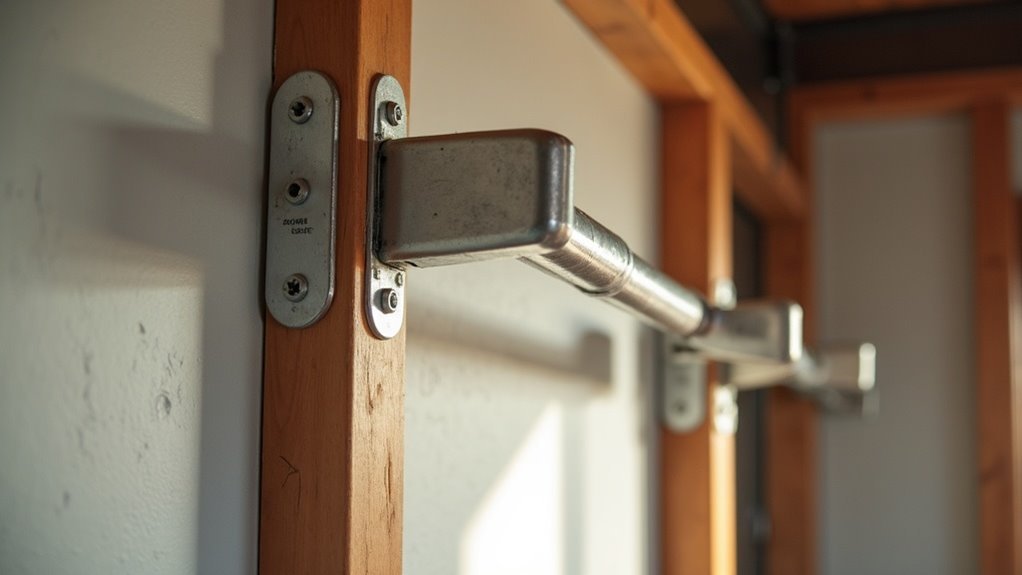
Drill deep pilot holes into the studs, then insert lag bolts for wood studs or 1/4″ X 4″ toggle bolts for metal studs to firmly secure the mounting brackets.
Once mounted, attach the pull-up bar and check for stability by applying gradual pressure.
Remember to regularly inspect the installation for any signs of wear to maintain safety and performance as you incorporate pull-ups into your exercise routine, helping you build strength and improve overall health.
Safety Considerations for Mounting
While mounting a pull-up bar may seem like an easy task, it’s essential to prioritize safety to prevent accidents and injuries in your home gym.
Always ensure that you mount the bar into solid wood or metal studs, as drywall alone can’t support the weight and torque generated during use. Utilize a stud finder for accurate installation, and if you’re working with metal studs, opt for 1/4″ X 4″ toggle bolts, ensuring they’re securely fastened.
Pay attention to the weight limit of the pull-up bar and wall anchors to prevent any structural failures. Regularly inspect the installation for any cracks or loose brackets to maintain stability and safety in your workout space.
Steer clear of weak wall areas such as door frames for mounting, ensuring a safe and effective exercise environment for both men and women.
Maintenance and Inspection Tips
Regular maintenance and inspection of your pull-up bar installation are crucial for ensuring both safety and longevity, especially for home gym enthusiasts.
Make it a habit to inspect your setup monthly for any loose screws or cracks in the drywall, as these issues can compromise stability during your workouts.
Every few months, pay close attention to the integrity of wall anchors and toggles, particularly if you’re engaging in heavy training sessions.
It’s also important to monitor weight distribution on the pull-up bar to avoid putting undue stress on specific areas.
Conduct visual inspections of the surrounding wall for any new cracks or shifts, as these may indicate weakening that needs to be addressed.
Keeping a record of maintenance performed will help you track your installation’s condition and effectively plan for future needs, ensuring your home gym remains a safe and reliable space for your fitness journey.