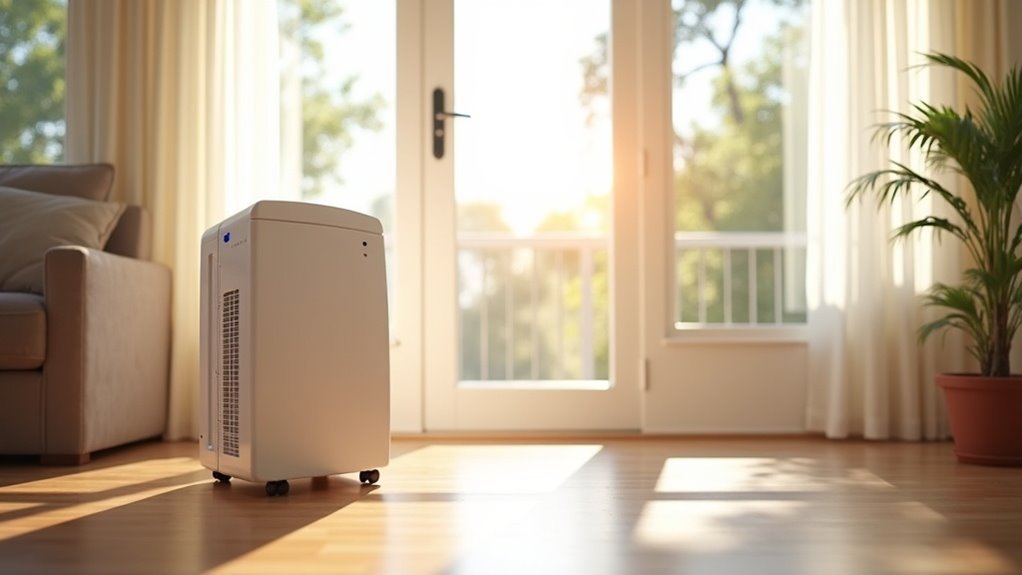
To maximize the effectiveness of your dehumidifier in your home gym, position it near areas that may have excess moisture, such as bathrooms or laundry rooms. Ensure it’s at least 12 inches away from walls and other obstacles to prevent airflow restrictions. Elevating the unit can further enhance air circulation, helping to maintain optimal humidity levels for your workout space. Regularly monitor the humidity and adjust the placement as necessary for peak performance. Keep exploring additional tips to optimize your home gym environment and support your fitness goals.
Key Takeaways
- Position the dehumidifier near high humidity sources, such as kitchens and bathrooms, to effectively control moisture in your home gym environment.
- Ensure there is at least 12 inches of clearance from walls and obstructions to promote optimal airflow around the unit.
- In larger home gym spaces, centralize the dehumidifier for even distribution of dry air, creating a comfortable workout atmosphere.
- Elevate the dehumidifier at least 12 inches off the ground to enhance air circulation and improve efficiency while exercising.
- Regularly monitor humidity levels and adjust the placement of the dehumidifier based on your workout routines and equipment usage for the best results in maintaining a healthy exercise environment.
Importance of Proper Dehumidifier Placement
When you place a dehumidifier properly in your home gym, it significantly improves its ability to remove excess moisture from the air, creating a comfortable workout environment.
Positioning the unit near areas with high humidity, such as near your washing machine or a bathroom, allows it to effectively target and extract moisture.
In larger or open gym spaces, centralizing the dehumidifier helps promote balanced humidity levels, preventing dampness that can affect your workout experience.
Ensure there’s at least 12 inches of clearance from walls and obstructions for optimal airflow, which helps prevent overheating.
Best Locations for Maximum Airflow
To achieve maximum airflow and optimal performance from your dehumidifier, it’s crucial to position the unit strategically within your home gym.
Place your dehumidifier near sources of excess moisture, such as laundry areas or bathrooms, to effectively control humidity while you work out.
Ensure the unit is at least 12 inches away from walls and obstructions; proper placement is essential for uninterrupted airflow.
Proper placement of the dehumidifier, at least 12 inches from walls, ensures uninterrupted airflow for maximum efficiency.
Central locations in larger workout spaces or open-concept gym areas are ideal for distributing dry air evenly throughout the room.
Lastly, avoid placing the unit in drafty areas or near dust sources to maintain consistent airflow and enhance its overall efficiency, helping to keep your workout environment comfortable and your equipment in top condition.
Elevating the Unit for Enhanced Performance
Elevating your dehumidifier can significantly improve air circulation in your home gym, allowing it to operate more efficiently.
By positioning it at least 12 inches off the ground, you can prevent overheating issues caused by restricted airflow.
This simple adjustment not only enhances the performance of your dehumidifier but also helps create a more comfortable workout environment, ultimately prolonging the unit’s lifespan and supporting your fitness journey at home.
Improved Air Intake
Improving air intake is crucial for your home gym equipment’s performance, especially if you want to maintain a comfortable workout environment.
Positioning your dehumidifier at least 12 inches off the ground significantly enhances airflow, allowing it to efficiently capture humid air while keeping dust and debris at bay. This optimal placement not only ensures effective moisture extraction but also promotes better airflow distribution throughout your workout space.
Using a moisture-resistant platform for your dehumidifier helps maintain stability, prevents rust, and extends the lifespan of your equipment. Elevated units also support better drainage for continuous models, which minimizes water pooling and keeps your gym area dry.
Furthermore, keeping the dehumidifier elevated reduces noise disturbances from vibrations, creating a more pleasant atmosphere for your workouts, whether you’re lifting weights or doing yoga.
Preventing Overheating Issues
When you elevate your home gym equipment, you significantly enhance its performance by improving airflow and reducing the risk of overheating during workouts.
Keeping your equipment at least 12 inches above the ground ensures ideal air circulation, preventing dust and debris from obstructing ventilation. A stable, moisture-resistant platform protects against rust, prolonging the lifespan of your gear.
Avoid placing your equipment on carpets or rugs, as they restrict airflow and force the machines to work harder, which can lead to overheating.
Regular maintenance, such as cleaning filters and ensuring unobstructed airflow, is essential for preventing overheating and confirming your gym equipment operates efficiently, helping you achieve your fitness goals at home.
Creating Moisture Capture Zones
To effectively maintain a healthy workout environment in your home gym, establishing multiple moisture capture zones is essential.
Focus on areas prone to excess moisture, such as near your workout equipment, in the laundry area, and any spaces that may experience high humidity.
Utilizing a combination of dehumidifiers and air movers in these zones enhances air quality and prevents damage from trapped moisture, which can affect both your equipment and your health.
Properly spacing dehumidifiers ensures optimal airflow and prevents moisture accumulation in overlooked spots.
Regularly monitor humidity levels within each zone to identify hidden damp areas and adjust equipment placement based on airflow patterns and readings.
This targeted approach maximizes the effectiveness of each moisture capture zone, creating a healthier and more enjoyable environment for your home workouts.
Avoiding Common Placement Mistakes
Proper placement of gym equipment is essential for maximizing workout efficiency and ensuring safety. Avoid these common placement mistakes to enhance your exercise experience:
- Don’t position equipment too close to exterior walls, which can limit airflow and make the space feel cramped.
- Avoid placing heavy machines on unstable surfaces to prevent accidents and ensure stability during workouts.
- Confirm that equipment is on a flat, level surface to avoid any risk of tipping or instability while exercising.
- Steer clear of areas that obstruct movement or access to other equipment, ensuring a smooth workout flow.
- Maintain at least 3 feet of clearance around larger pieces of gym equipment to allow for safe movement and ventilation.
Ensuring Adequate Space for Air Circulation
To ensure optimal performance of your home gym equipment, maintain at least 12 inches of clearance from walls and other obstacles around your machines.
Elevating certain equipment on a stable platform can enhance airflow and prevent moisture buildup, which is crucial for maintaining a healthy workout environment.
Additionally, keeping the area around your gym equipment free from obstructions will promote efficient airflow, ensuring you can focus on your fitness routine without distractions.
Maintain Clearance From Walls
To ensure optimal performance of your home gym equipment, it’s crucial to maintain adequate space around each piece for both safety and functionality.
To facilitate proper airflow and prevent overheating, adhere to the following guidelines:
- Keep a distance of at least 12 inches (30 cm) from walls and other obstacles.
- Avoid placing equipment in corners or cramped spaces to allow for safe movement.
- Regularly check for any obstructions nearby that could interfere with your workout.
- Ensure unobstructed airflow around machines to enhance their effectiveness and longevity.
Elevate for Better Intake
Elevating your home gym equipment can significantly enhance your workout experience by promoting better airflow and efficient utilization of space. This practice prevents overheating and ensures optimal performance during your training sessions. Position your equipment on a stable, level surface to facilitate proper use and reduce the risk of injuries.
| Benefit | Description | Recommendation |
|---|---|---|
| Enhanced Airflow | Unobstructed movement for effective workouts | Elevate or adjust equipment height |
| Ideal Space Utilization | Efficient use of gym space for various exercises | Maintain clearance around equipment |
| Reduced Maintenance | Prevents wear and tear on equipment | Keep away from dust sources |
| Improved Performance | Ensures proper alignment for effective workouts | Guarantee enough room for movement |
Prevent Obstructions Around Unit
While you might think placing your dehumidifier in a convenient location is sufficient for your home gym, preventing obstructions around the unit is essential for optimal performance.
To ensure peak airflow and maintain a healthy exercise environment, follow these guidelines:
- Maintain at least 12 inches of clearance around the unit.
- Position the unit away from walls and gym equipment to avoid air blockage.
- Avoid corners or enclosed spaces that restrict airflow.
- Keep it distant from dust sources, like workout mats or clutter.
- Regularly check and adjust the placement based on humidity levels to promote a comfortable workout space.
Monitoring Humidity Levels and Adjustments
To create a comfortable and healthy home gym environment, it’s important to monitor humidity levels regularly using a hygrometer. Aim for a relative humidity level between 30-50% to enhance your workout experience.
Adjust your dehumidifier settings based on seasonal changes, targeting around 40% during colder months to reduce condensation on windows and equipment. Be mindful of humidity fluctuations caused by daily activities like intense workouts or using hot showers, and increase dehumidifier operation as necessary.
Adjust your dehumidifier for seasonal changes, aiming for 40% humidity in colder months to minimize condensation.
Positioning the dehumidifier centrally in your workout space will improve airflow and effectively distribute dry air.
Lastly, routinely check for hidden damp spots with moisture meters to ensure your dehumidifier is managing all areas of high humidity, promoting a healthier environment for your home exercise routine.
Final Tips for Optimal Dehumidifier Efficiency
To create an optimal environment for your home gym, it’s essential to monitor humidity levels.
To enhance your dehumidifier’s efficiency, consider these practical tips:
- Position the dehumidifier at least 12 inches away from walls to ensure proper airflow.
- Place it close to moisture sources, such as kitchens and bathrooms, to combat excess humidity.
- For larger spaces, maintain a central location for even distribution of dry air throughout your gym.
- Set the dehumidifier on a level surface to avoid any water pooling and ensure effective operation.
- Regularly empty the tank and clean the filter to keep your dehumidifier running at peak performance.