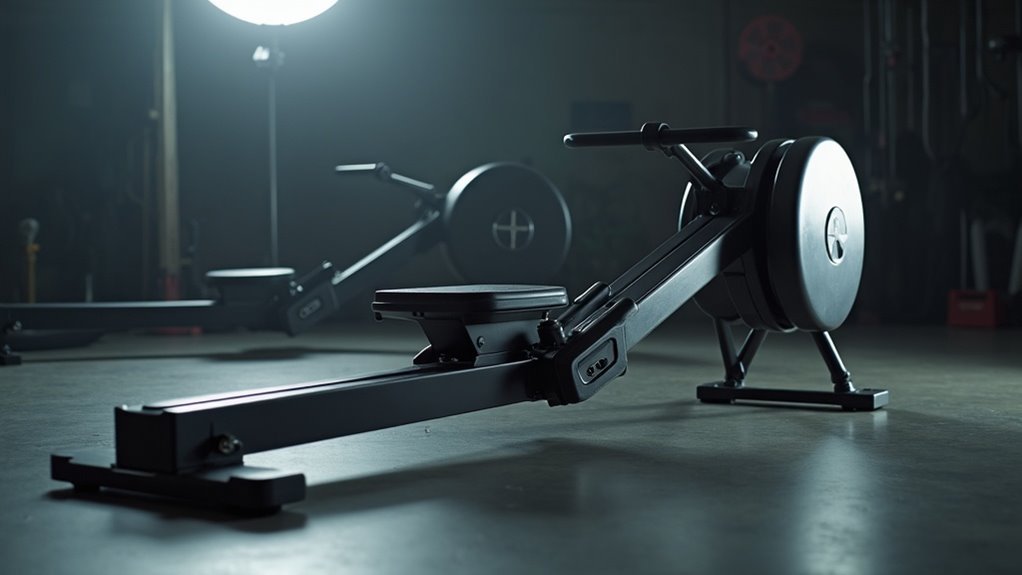
Magnetic rowers offer a quieter workout experience compared to air rowers, making them an excellent choice for home gym enthusiasts looking to stay healthy. Their unique resistance system utilizes magnets that adjust the distance from the flywheel, which minimizes friction and produces minimal noise. In contrast, air rowers create sound through fan blades, generating a whooshing effect that can be distracting. Magnetic rowers operate at approximately 51 decibels, allowing you to maintain focus during your workouts without disturbing others in your home. This near-silent operation makes them ideal for shared spaces, ensuring you can enjoy your fitness routine without interruption. Explore how these features can enhance your home workout experience and contribute to your health and fitness goals.
Key Takeaways
- Magnetic rowers utilize magnets to provide adjustable resistance, which significantly reduces friction and results in a quieter workout compared to air rowers.
- In contrast, air rowers create noise through their fan blades, with sound levels potentially reaching up to 73 dB during operation.
- Magnetic rowers maintain a much quieter environment at around 51 dB, making them perfect for home gym settings where you might be sharing space with family or roommates.
- The design of magnetic rowers features fewer moving parts, leading to lower noise production and a smoother rowing experience that many users appreciate.
- Additionally, magnetic rowers are engineered to minimize vibration, enhancing stability and comfort while allowing you to focus on your fitness routine without distractions.
Understanding the Basics of Rowing Machines
Rowing machines are designed to replicate the experience of rowing on water, providing an efficient full-body workout that’s both low-impact and excellent for cardiovascular fitness.
Rowing machines mimic the sensation of rowing on water, delivering a comprehensive low-impact workout that enhances cardiovascular health.
For home gym enthusiasts, there are two main types to consider: air rowers and magnetic rowers. Air rowers generate resistance through fan blades, which can lead to higher noise levels, often reaching around 73 dB.
On the other hand, magnetic rowers use a magnetic resistance system, offering a quieter workout experience, making them a perfect fit for shared living spaces or home gyms.
Moreover, magnetic rowers usually require less maintenance compared to air rowers, making them a practical option for those looking to stay fit at home without the distraction of noise or the hassle of high upkeep.
The Mechanism of Magnetic Resistance
Understanding how magnetic rowers operate reveals their advantages in both performance and user experience, making them an excellent addition to any home gym.
The mechanism of magnetic resistance is straightforward yet effective, providing a quiet operation that enhances your workout experience.
- Magnets adjust the distance from the flywheel, minimizing friction for a smooth rowing action.
- This mechanism guarantees consistent resistance, contributing to an efficient and uninterrupted rowing motion.
- With fewer moving parts, magnetic rowers produce less noise and require lower maintenance.
Operating around 51 decibels, magnetic rowers create a serene workout environment compared to air rowers, which can reach up to 73 decibels.
This makes magnetic rowers ideal for those looking to maintain focus and enjoy a peaceful exercise experience in the comfort of their own home.
Whether you’re a beginner or a seasoned athlete, incorporating a magnetic rower into your home gym can elevate your fitness routine and support your health goals.
How Air Resistance Functions
When delving into the mechanics of air resistance in rowing machines, you’ll discover that they utilize a flywheel with fan blades to create resistance by moving air as you row.
As you ramp up your rowing intensity, the resistance also increases, producing a distinctive whooshing sound that can make your workout feel more dynamic and engaging.
These machines are powered solely by your efforts, making them a fantastic addition to any home gym for both men and women looking to stay healthy and fit.
However, it’s important to note that the nature of air resistance might lead to distractions in quieter settings, potentially affecting your focus during workouts.
Noise Levels of Magnetic Rowers
When considering the noise levels of magnetic rowers, you’ll discover they provide an exceptionally quiet workout experience, operating at roughly 51 dB. This low noise output is a result of their magnetic resistance, which delivers a smoother operation without the whooshing sound characteristic of air rowers.
Magnetic rowers offer a remarkably quiet workout at approximately 51 dB, thanks to their smooth magnetic resistance.
Here are some key benefits for those looking to enhance their home gym experience:
- Consistent resistance without disruptive airflow noise, allowing for focused workouts
- Reduced maintenance needs, contributing to quieter long-term use and reliability
- Perfect for home environments, ensuring your fitness routine remains undisturbed, even in noise-sensitive settings
With magnetic rowers, you can effectively work towards your fitness goals while enjoying a peaceful workout atmosphere at home.
Noise Levels of Air Rowers
Air rowers produce a distinct whooshing sound due to the interaction between their spinning flywheel and fan blades, which can reach noise levels of up to 73 dB.
This operational noise makes air rowers less ideal for quiet environments, especially when rowing intensity increases. The dynamic resistance mechanism leads to louder sounds at higher stroke rates, potentially disturbing others in shared living spaces, which is something to consider if you’re setting up a home gym.
To ensure a smooth and quieter rowing experience, regular maintenance is essential, as neglect can result in squeaks and increased operational noise.
If you’re looking for a quieter option for your home workouts, magnetic rowers may offer a more suitable choice for noise-sensitive settings while still delivering an effective exercise routine.
Comparing User Experience and Comfort
When comparing user experience and comfort between magnetic and air rowers, noise levels are a crucial factor in creating an optimal workout environment at home.
The significantly quieter operation of magnetic rowers not only reduces distractions but also helps you maintain focus during your exercise sessions.
Furthermore, their stable resistance mechanism promotes a more controlled and comfortable rowing experience, making them an excellent choice for both men and women looking to enhance their home gym setup and stay healthy through effective workouts.
Noise Level Differences
While both magnetic and air rowers bring their own advantages, the differences in noise levels can significantly influence your home workout experience.
Magnetic rowers operate at approximately 51 decibels, while air rowers can reach up to 73 decibels, leading to noticeable distractions. This noise disparity affects various elements of your exercise routine:
- Enhanced Focus: Quieter environments promote better concentration on your workout intensity.
- Ideal for Shared Spaces: Magnetic rowers produce minimal noise, making them perfect for apartments or homes where you share living areas.
- Peaceful Workouts: The frictionless resistance of magnetic rowers ensures a nearly silent experience, allowing for early morning or late-night sessions without disturbing family members or neighbors.
Choose wisely for an improved workout experience at home.
Comfort During Workouts
Choosing the right rowing machine can significantly enhance your comfort during home workouts, particularly as individual preferences differ between magnetic and air rowers. Magnetic rowers provide a quiet operation and a smooth rowing motion, allowing you to concentrate on your performance without the distraction of noise. On the other hand, air rowers tend to create a louder environment that may interrupt your exercise focus. Here’s a quick comparison to help you decide:
| Feature | Magnetic Rowers | Air Rowers |
|---|---|---|
| Noise Level | ~51 dB | Up to 73 dB |
| Comfort | High | Moderate |
| Suitability for Spaces | Excellent for home gyms and shared living spaces | Less ideal for shared spaces |
For a more enjoyable and peaceful workout experience at home, opt for magnetic rowers to support your fitness journey.
Stability and Control
While both magnetic and air rowers offer unique benefits, magnetic rowers stand out for their exceptional stability and control, greatly enhancing your home workout experience.
Their compact design and sturdier build minimize vibration, allowing for:
- A smooth rowing experience that promotes comfort and keeps you focused on your fitness goals.
- Near-silent operation, ensuring an uninterrupted workout environment that fits seamlessly into your home routine.
- Precise resistance control, enabling consistent rowing rhythm without the unpredictability of varying difficulty levels.
This level of stability not only boosts your performance but also requires minimal maintenance, making it easier to stay committed to your fitness journey at home.
In contrast, air rowers may introduce jarring motions that can disrupt your focus and effectiveness during exercise sessions.
Whether you’re a man or woman looking to stay healthy and active, a magnetic rower can be a reliable addition to your home gym setup.
Choosing the Right Rower for Your Needs
When selecting a rowing machine for your home gym, it’s important to consider the noise level that best suits your living environment.
Magnetic rowers provide a quieter workout experience, making them ideal for shared spaces or apartments, while air rowers offer a more dynamic resistance but tend to be louder.
Your personal preference for resistance type and your tolerance for noise will significantly influence your choice, helping you create an effective and enjoyable home exercise routine.
Noise Level Considerations
Noise level is a crucial consideration when choosing a rowing machine, particularly for those who exercise at home in shared living environments or during late-night hours.
Magnetic rowers operate at approximately 51 dB, making them significantly quieter than air rowers, which can generate noise levels of up to 73 dB.
Here are some key points to consider:
- Ideal for Shared Spaces: Magnetic rowers provide a near-silent workout, ensuring you won’t disturb family members or roommates during your sessions.
- Perfect for Late-Night Workouts: Their quiet operation makes them an excellent choice for early risers and night owls who prefer to exercise when it suits them best.
- Enhanced Focus: With less noise, you can concentrate better on your workout, leading to a more effective and enjoyable exercise experience.
Choosing a rowing machine that prioritizes low noise levels can significantly enhance your home gym environment, allowing you to stay healthy and fit without compromising on comfort or convenience.
Resistance Type Preference
Choosing the right rowing machine for your home gym involves understanding the differences in resistance types, as they significantly impact your workout experience.
Magnetic rowing machines utilize advanced resistance technology, providing a nearly silent operation that makes them ideal for shared spaces. This feature is particularly beneficial for those who want to maintain a peaceful environment while exercising at home.
On the other hand, air rowers generate noise through spinning fan blades, which can disrupt the tranquility of your workout space.
If you prefer a steady and consistent routine, magnetic rowers offer reliable resistance, enhancing your full-body workouts without distractions.
Ultimately, when selecting a rowing machine, consider your workout preferences and living situation. If maintaining a quiet atmosphere is important to you, magnetic rowers are likely the better choice for your home gym needs.
Whether you’re a man or woman looking to stay healthy and fit, making an informed decision about your equipment will help you achieve your fitness goals effectively.