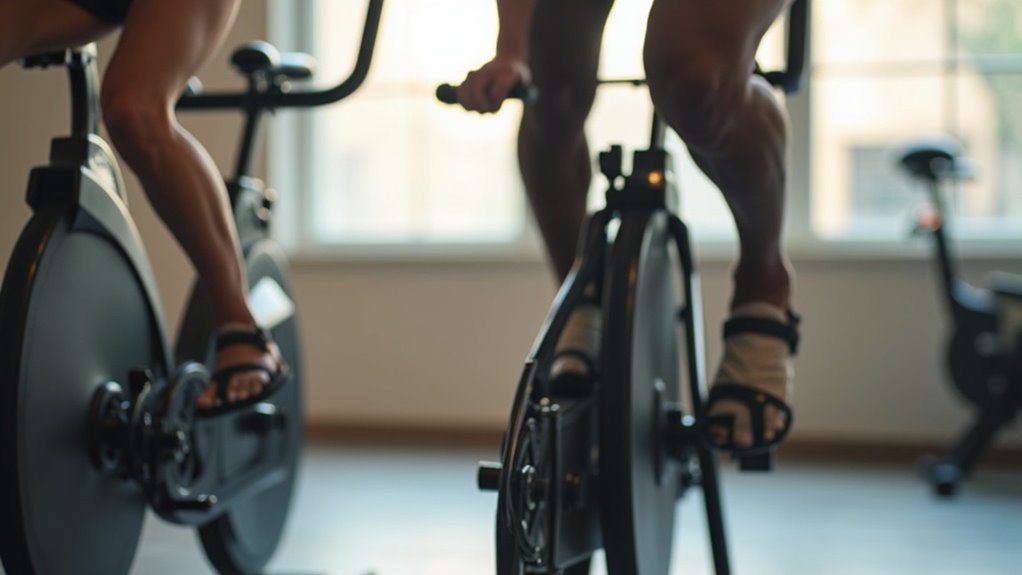
Spin bikes differ from upright bikes in terms of knee comfort, particularly relevant for those setting up a home gym. The forward-leaning posture of spin bikes can increase strain on your knees, especially when combined with challenging resistance levels. This aggressive position may lead to discomfort, particularly if your form isn’t optimal. On the other hand, upright bikes are designed to promote a near-vertical riding posture, which helps reduce strain and allows for smoother resistance adjustments, thus supporting better knee health. Understanding these differences is essential for choosing the right bike for your home fitness journey, ensuring you can exercise comfortably and effectively.
Key Takeaways
- Upright bikes offer a comfortable, upright riding position that reduces strain on knee joints, making them a great choice for home workouts focused on knee health.
- In contrast, spin bikes require a forward-leaning posture that can increase knee strain, particularly when using high resistance, which may not be ideal for everyone.
- The adjustable seat height on upright bikes is designed to prevent knee overextension, ensuring proper alignment and comfort during your cycling sessions.
- Spin bikes typically come with heavy flywheels, which can complicate resistance adjustments and may lead to abrupt pedaling, increasing the risk of injury.
- With smoother resistance control, upright bikes are perfect for low-impact workouts, especially for those with knee concerns, making them a smart addition to your home gym setup for both men and women.
Understanding Knee Comfort in Exercise Bikes
When selecting an exercise bike for your home gym, it’s crucial to consider how bike design impacts knee comfort.
The upright bike features a near-vertical riding position, which significantly enhances knee comfort by minimizing strain on the joints. This design includes adjustable seat height and position, ensuring your knees maintain a safe angle while pedaling.
These features not only promote joint mobility but also cater to individuals with knee concerns, making upright bikes an excellent choice for low-impact workouts suitable for both men and women.
On the other hand, spin bikes require a more aggressive posture that can put additional stress on the knees, making them less ideal for those with limited joint stability.
Prioritizing knee comfort can help you stay active and healthy while exercising at home.
Spin Bike Design and Its Impact on Knee Comfort
When using a spin bike at home, the forward-leaning position can increase strain on your knees, especially if your form isn’t correct or if you increase the resistance too high.
While the ability to quickly adjust resistance can enhance your workout, it also raises the risk of discomfort if not approached carefully.
It’s important for both men and women to understand how these design elements interact with your biomechanics to maintain knee comfort during your rides and ensure a productive home workout experience.
Forward Lean Position
While spin bikes are a popular choice for high-intensity workouts at home, their forward lean position can significantly affect knee comfort. This posture requires greater engagement from your core and upper body, which may lead to increased strain on the knees, especially if your form isn’t spot on.
The aggressive riding stance can intensify discomfort during quick changes in resistance. Moreover, an improper seat height can result in poor knee alignment, further worsening discomfort.
In contrast, upright bikes provide a more vertical riding position that encourages a natural pedaling motion, typically reducing strain on the knees. For those with pre-existing knee issues, upright bikes may be the preferred option for prioritizing knee comfort while exercising at home.
Resistance Control Impact
The design of spin bikes, especially their resistance control systems, is crucial for maintaining knee comfort during home workouts. Heavier flywheels can create momentum that complicates resistance adjustments, potentially leading to knee discomfort if not handled correctly.
Sudden changes in resistance can result in abrupt pedaling, which increases the risk of injury, particularly for those with pre-existing conditions. Additionally, the forward-leaning position often required on spin bikes may put extra strain on the knees compared to the more upright stance of traditional bikes.
To ensure a safer and more effective workout experience at home, it’s important to prioritize gradual increases in resistance. This approach helps minimize overexertion and reduces the risk of knee pain, making home exercise accessible and enjoyable for both men and women.
Upright Bike Features That Promote Knee Health
Upright bikes are a fantastic addition to any home gym, offering features that significantly enhance knee health, especially for those who may experience discomfort during workouts. The upright seating position is designed to promote proper knee alignment while minimizing strain on the lower back. With an adjustable seat height, users can ensure their knees maintain a slight bend at the furthest pedal point, effectively preventing overextension and reducing the risk of injury. Moreover, the inclusion of cushioned, wider seats provides the necessary support for longer sessions, making workouts more enjoyable. The lighter flywheels enable smooth pedaling and quick stops, enhancing overall safety. By encouraging steady-state cardio, upright bikes promote consistent resistance levels, which is ideal for building endurance without placing undue stress on the knee joints.
| Feature | Benefit | Impact on Knee Health |
|---|---|---|
| Upright Seating Position | Minimizes lower back strain | Promotes proper knee alignment |
| Adjustable Seat Height | Ensures a custom fit | Prevents knee overextension |
| Cushioned Seats | Enhances comfort | Alleviates discomfort during long workouts |
The Role of Riding Posture in Knee Strain
Riding posture is crucial in managing knee strain during home cycling workouts.
When using spin bikes, the aggressive forward-leaning position can lead to heightened knee strain, especially for those with existing joint issues. The fixed-drive system can make abrupt stops difficult, increasing the likelihood of discomfort.
On the other hand, upright bikes promote a more vertical posture, which supports better joint alignment and a more natural knee flexion angle. This position not only reduces strain but also enhances control, making it easier to alleviate knee discomfort during workouts.
This is particularly beneficial for individuals recovering from injuries, ensuring that both men and women can safely enjoy their home gym routines.
Resistance Levels and Their Effect on Joint Comfort
While many home gym enthusiasts focus on speed and intensity, the resistance levels on a bike play an essential role in determining joint comfort, especially for the knees.
Spin bikes, often found in home gym setups, typically feature a wide range of resistance levels, which can tempt you to push harder and potentially exacerbate knee issues.
Spin bikes offer a tempting range of resistance levels, but pushing too hard can worsen knee problems.
In contrast, upright exercise bikes are designed with smoother, adjustable resistance systems that facilitate low-impact workouts, minimizing stress on your joints.
With lighter flywheels and magnetic resistance, these bikes allow for gradual changes in intensity, promoting a safer exercise experience for those concerned about knee health.
The Importance of Adjustability for Knee Safety
Proper seat placement on a spin bike is vital for maintaining a safe range of motion, ensuring your knees aren’t subjected to unnecessary strain during your home workouts.
If the saddle height isn’t adjusted correctly, you risk discomfort and potential injury, which can hinder your fitness journey.
Proper Seat Placement
Ensuring correct seat placement is essential for minimizing knee strain during cycling, as it directly influences your pedaling mechanics, especially when exercising at home.
- Proper seat placement affects knee angle.
- Spin bikes offer superior adjustability for home workouts.
- Upright bikes require a minimum of 100 degrees of knee flexion.
- Incorrect height increases injury risk.
For ideal knee comfort while exercising at home, adjust your spin bike’s seat to match your leg length and riding style.
Unlike upright bikes, which have fixed angles, spin bikes allow for fine-tuning. This adjustability minimizes overextension or excessive flexion, promoting knee safety during high-intensity workouts and ensuring a more comfortable cycling experience overall for both men and women.
Range of Motion
Adjustability is crucial for optimizing your range of motion on a spin bike, significantly contributing to knee safety during your home workouts.
With improved adjustment options for saddle height and position, you can achieve an ergonomic riding posture that enhances knee comfort. Proper seat placement is essential; if the saddle is too low or high, it can misalign your knees, increasing the risk of injury.
Spin bikes offer a full range of motion, promoting muscle engagement and rehabilitation while minimizing strain. In contrast, upright bikes often lack these adjustability features, which can limit their effectiveness for individuals with specific knee concerns.
Prioritizing a proper fit is key to achieving better results in your home fitness journey.
Ideal Users for Spin Bikes and Upright Bikes
When deciding between spin bikes and upright bikes for your home gym, it’s essential to consider your fitness goals and any physical conditions you may have.
- Spin bikes are perfect for dedicated individuals looking for high-intensity workouts that can take your fitness to the next level.
- Upright bikes are a great choice for those who may have joint concerns or are in rehabilitation, providing a safer, more comfortable workout experience.
- It’s recommended that users have at least 100 degrees of knee flexion before transitioning from recumbent to upright bikes to ensure safety and comfort.
- While spin bikes can offer an exhilarating workout, they may exacerbate knee discomfort if not used correctly.
In contrast, upright bikes are designed to provide a lower-impact option, making them more suitable for gentle workouts.
Ultimately, choose the bike that aligns with your fitness journey at home, placing a priority on knee comfort and overall well-being for the most effective and enjoyable exercise experience.
Recommendations for Knee Rehabilitation With Exercise Bikes
Choosing the right exercise bike for knee rehabilitation is essential for both men and women looking to stay healthy and fit while exercising at home. Certain bike models can significantly impact your recovery process.
Upright bikes are often recommended due to their lower joint impact and comfortable seating, which helps minimize strain on your knees. They provide a controlled environment that allows for gradual strengthening without overloading the joint.
However, if you’re in the early stages of recovery, it may be beneficial to start with recumbent bikes. These offer enhanced support and reduced knee stress, making them ideal for those who are just beginning their rehabilitation journey.
Always consult with a physical therapist to ensure you select a bike that aligns with your recovery goals and comfort levels, optimizing your rehabilitation process while allowing you to maintain your home fitness routine.